Native Plant Resources
Websites
I rely heavily on certain websites to write my descriptions. I’ve tried to refer to them within the write-ups, but it’s important to acknowledge sources, so I will list them here and include the reasons they are so helpful.
—Illinois Wildflowers: this website has some of the most detailed descriptions of individual plants that I have found. Many of the plants native to Michigan are also native to Illinois, Information includes minute details about the plant, cultivation, habitat, photos, animal interactions, and extra notes. The best way I’ve found to use the website is to search, “ Illinois Wildflowers Genus species”
—Minnesota Wildflowers: this website has lots of good information and usually quite a few photos to show the described characteristics. But the best part of a Minnesota Wildflowers is in the lower paragraphs on each species page. There is a paragraph that informs about species you could confuse with the one you are looking at and how to tell them apart. Especially important for sedges.
—Michigan Flora: this website is imperative to understand the distribution of the plant in the state, to look through keys to understand how to ID the species compared to others in the genus, to view photos and see what can be gleaned from the descriptions. Go into the website and do your searches within it. Often I have to look the species up with a web search to find more photos of specific characteristics.
—Prairie Moon Nursery: this retail website sells seeds and plants. They carry 750 species of seed and have a description as well as a standard list of chacteristics of each plant (height, bloom time, color of flower, etc. The photos usually include pictures of the seed and of the bare root. They use BONAP maps to show distribution, but those are not the most up-to-date, so it’s good to cross-reference with Michigan Flora
—Prairie Nursery: this retail website has great descriptions, but the most helpful to me is the section informing which soil types a plant can grow in. Often Illinois Wildflowers does a bit better job of this, but there isn’t a page for every species and/or some species aren’t native there.
—I occasionally use other websites like the Lady Bird Johnson website, Native Plant Trust and others if I can’t find the information I need on the others.
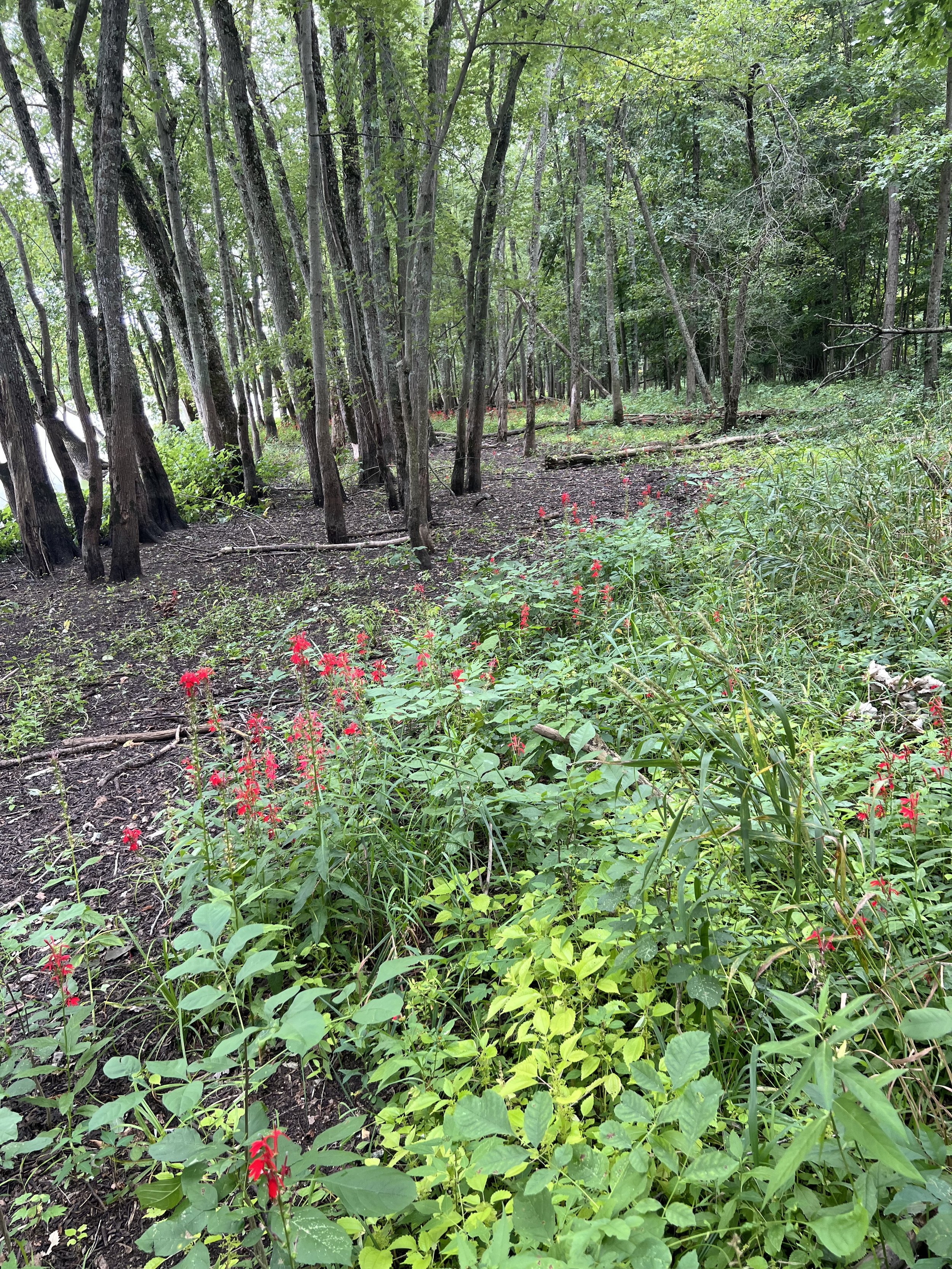
Cardinal Flower (Lobelia cardinalis) in bloom in a floodplain forest next to the Grand River.
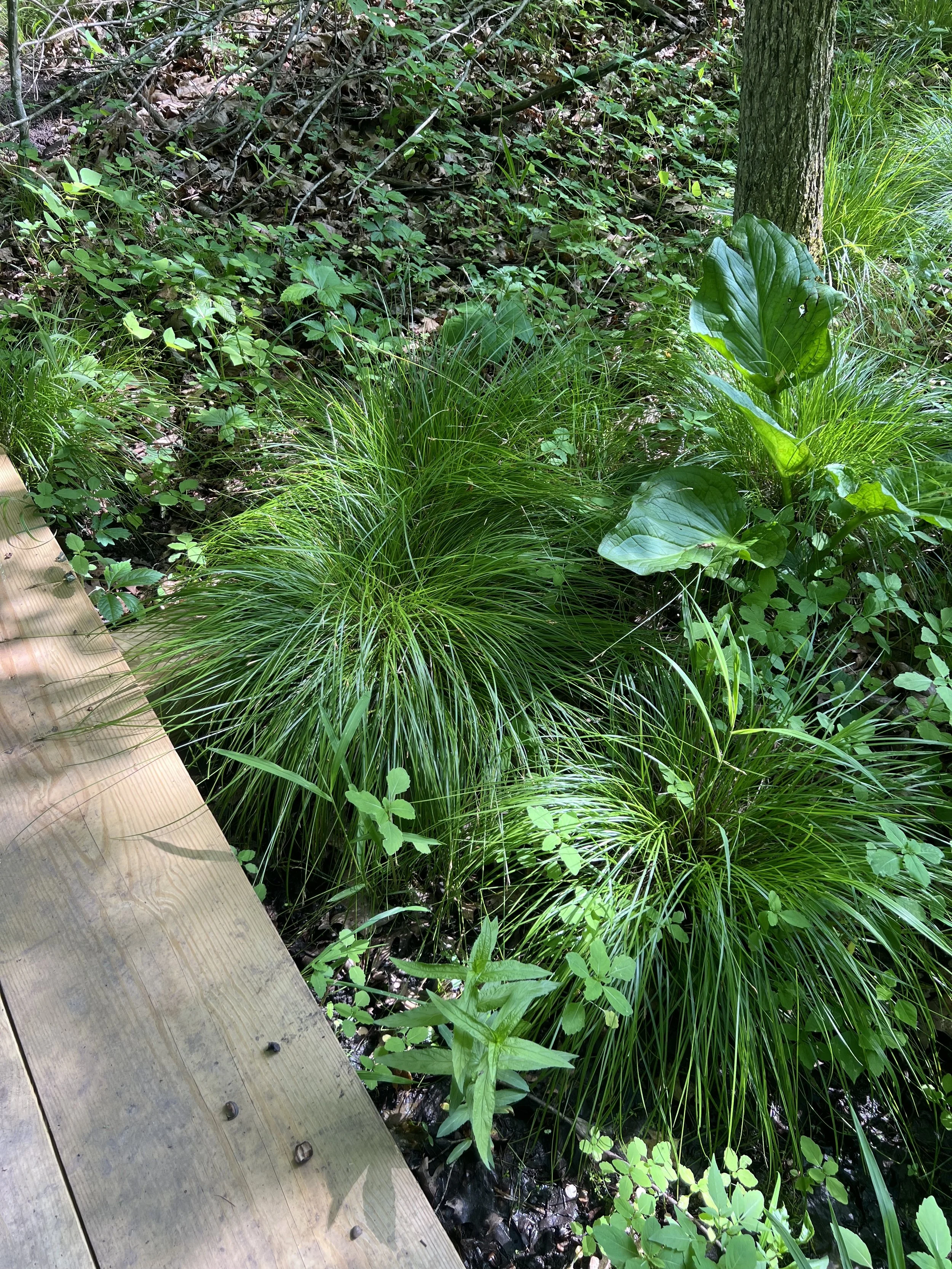
Carex bromoides (Brome-like Sedge) trailside with skunk cabbage and other woodland plants.
Books
Carex of Illinois and Surrounding States: The Oval Sedges, by Michael Murphy, Greg Spyreas & Paul Marcum
The oval sedges are notorious for being difficult to identify. I must admit that even using this book can be challenging, but mostly because I still forget to take the correct photos.
Sedges of the Northern Forest: A Photographic Guide by Jerry Jenkins
I love this book so much. It has fantastic photos all on a black background and is chock ful of good sedge information. The only sad thing about this book is that the southern part of Michigan is not the Northern Forest.
The New England Wild Flower Society Guide to Growing and Propagating Wildflowers of the United States and Canada, by William Cullina
This book not only has a lot of information about many plants, including woodland plants, but also has directions on how to grow them from seed. As I’ve mentioned, woodland plants are often tricky to grow, so it’s great to have the help.
Braiding Sweetgrass, Gathering Moss & The Serviceberry: Abundance and Reciprocity in the Natural World, by Robin Wall Kimmerer
You cannot go wrong reading anything by Dr. Kimmerer. I highly recommend listening to the audio books which she reads herself. One of my favorite humans! You not only learn a lot about plants by reading her work, but she speaks of ethics, emotions, being human, and positive things about humans and the environment. We all hear bad news consistently. She soothes the soul with her words.
People & Organizations
Jean-ious Gardener
Jean is a wonderful human who is enthusiastic about wildlife, plants, ecosystems, and people.
She is an Advanced Master Gardener, Master Rain Gardener, Conservation Steward, Master Naturalist, and certified Landscape Designer in Michigan.
Jean can visit your site, or consult online to help you grow your best native plant garden.
Find her contact information at jean-iousgardener.com