Woodland Garden Photo Gallery

Use this gallery of photos to gain some inspiration for planning your own woodland garden. Whether you want to pattern your garden after nature herself, or have a more formal garden plan, you may want to consider these photos in your planning. Descriptions are below the gallery.

Best viewed on a computer. On a phone these will not line up.

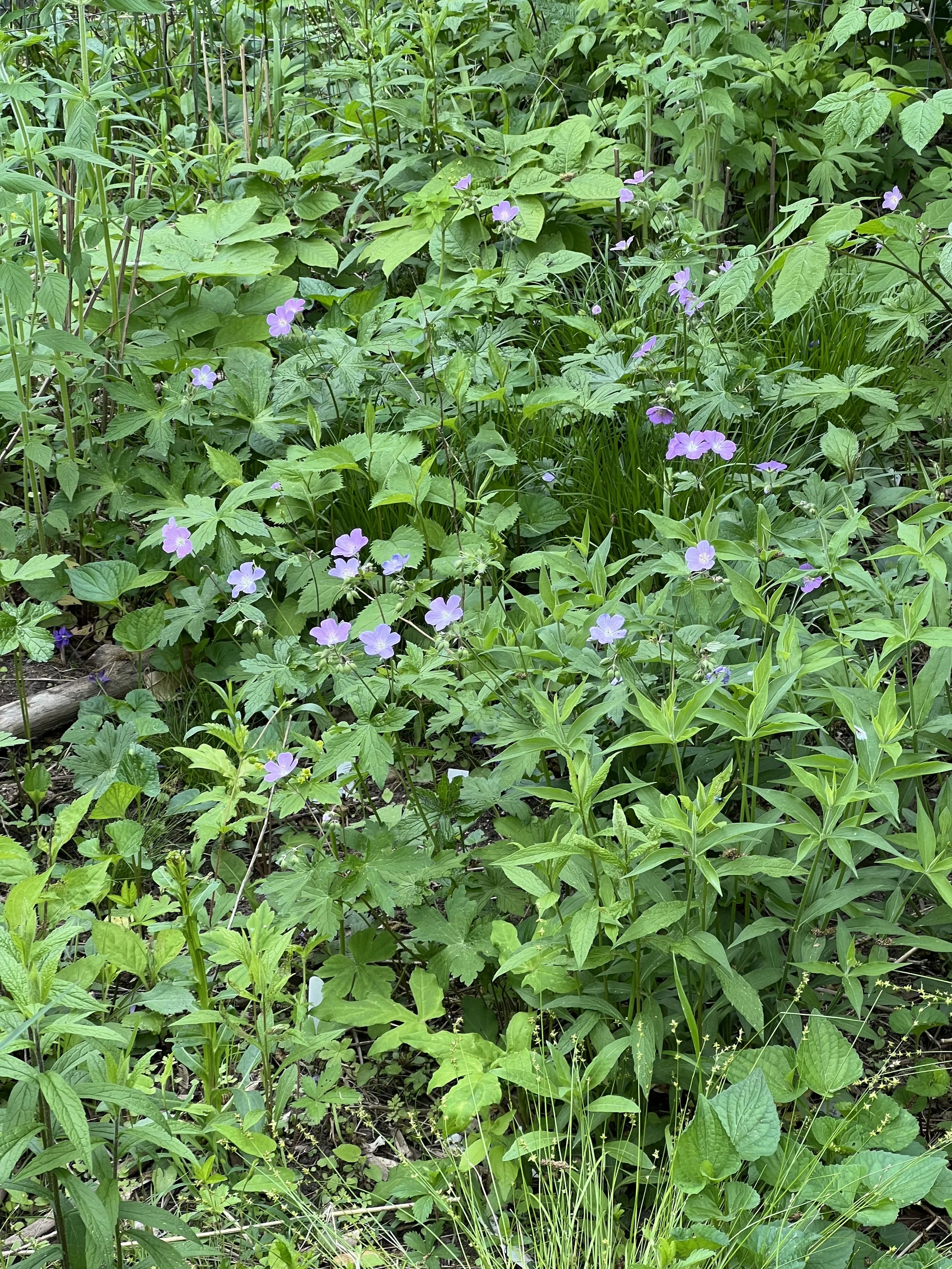
Upper left: Starry Solomon's Seal and Wild Geranium have been planted together in a garden setting.

Upper middle: Woodland Phlox is intermingled with Dutchman's Breeches and Spring Beauty in a natural setting.

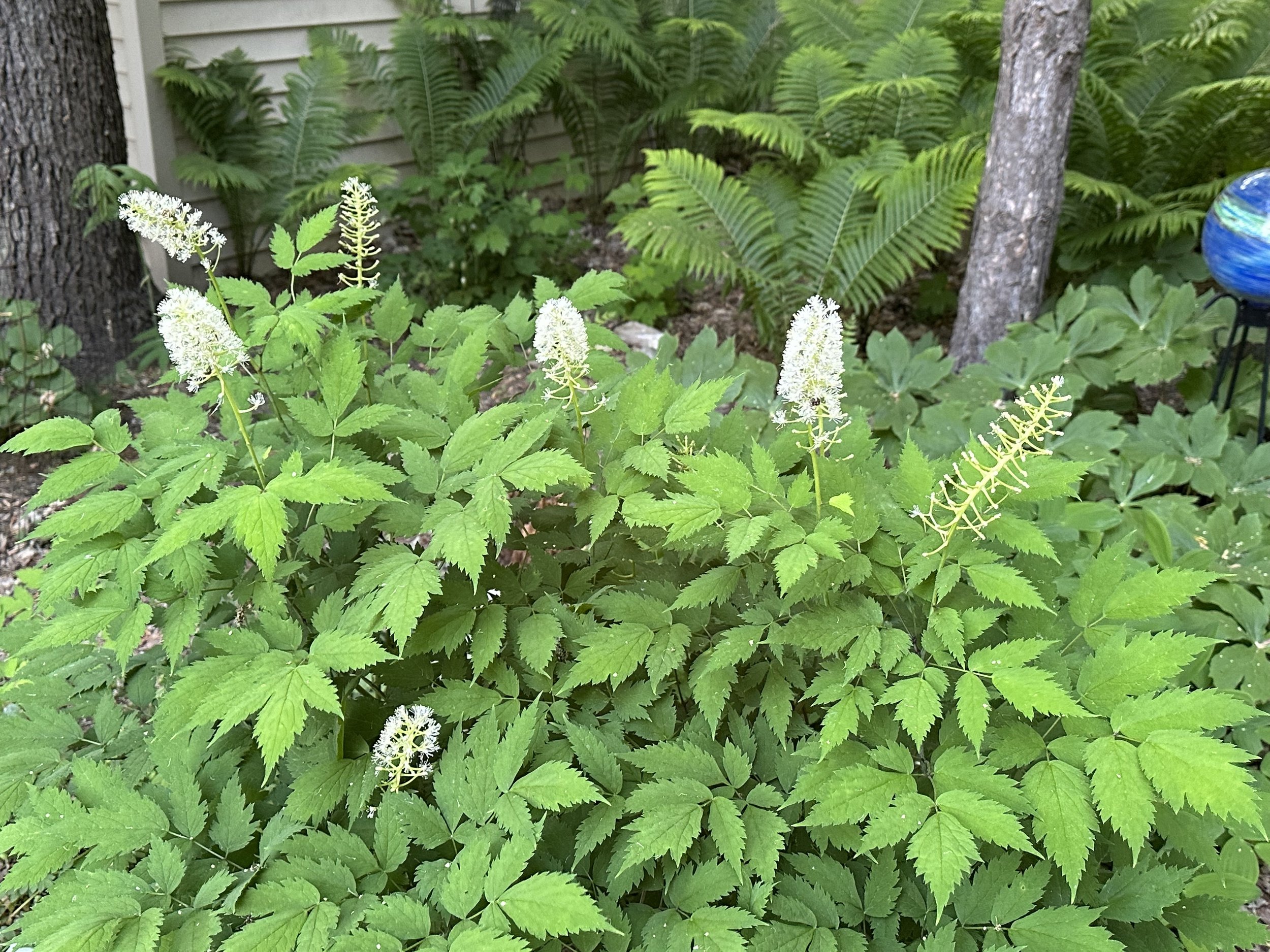
Upper right: Tall White Baneberry plants are in front of Mayapple and Ostrich Fern with a gazing ball in the background.

2nd row left: In the foreground is Carex radiata (Eastern Star Sedge). Mixed with the Wild Geranium (Geranium maculatum) is Carex rosea (Rosy Sedge)and Starry Campion. There are violets and common cinquefoil throughout serving as a green mulch.

2nd row center: This garden has spring green ferns in the background with a gazing ball and large groupings Wood Poppy, Jacob’s Ladder and May Apple.

2nd row right: This garden includes White Baneberry, Jacob’s Ladder, ferns, White Trillium and a tree. The garden is mulched between the plants, which is ok when you first plant your woodland garden, but leaves are preferable later on. Wood chips make an imbalance in the soil and can even make the soil hydrophobic.

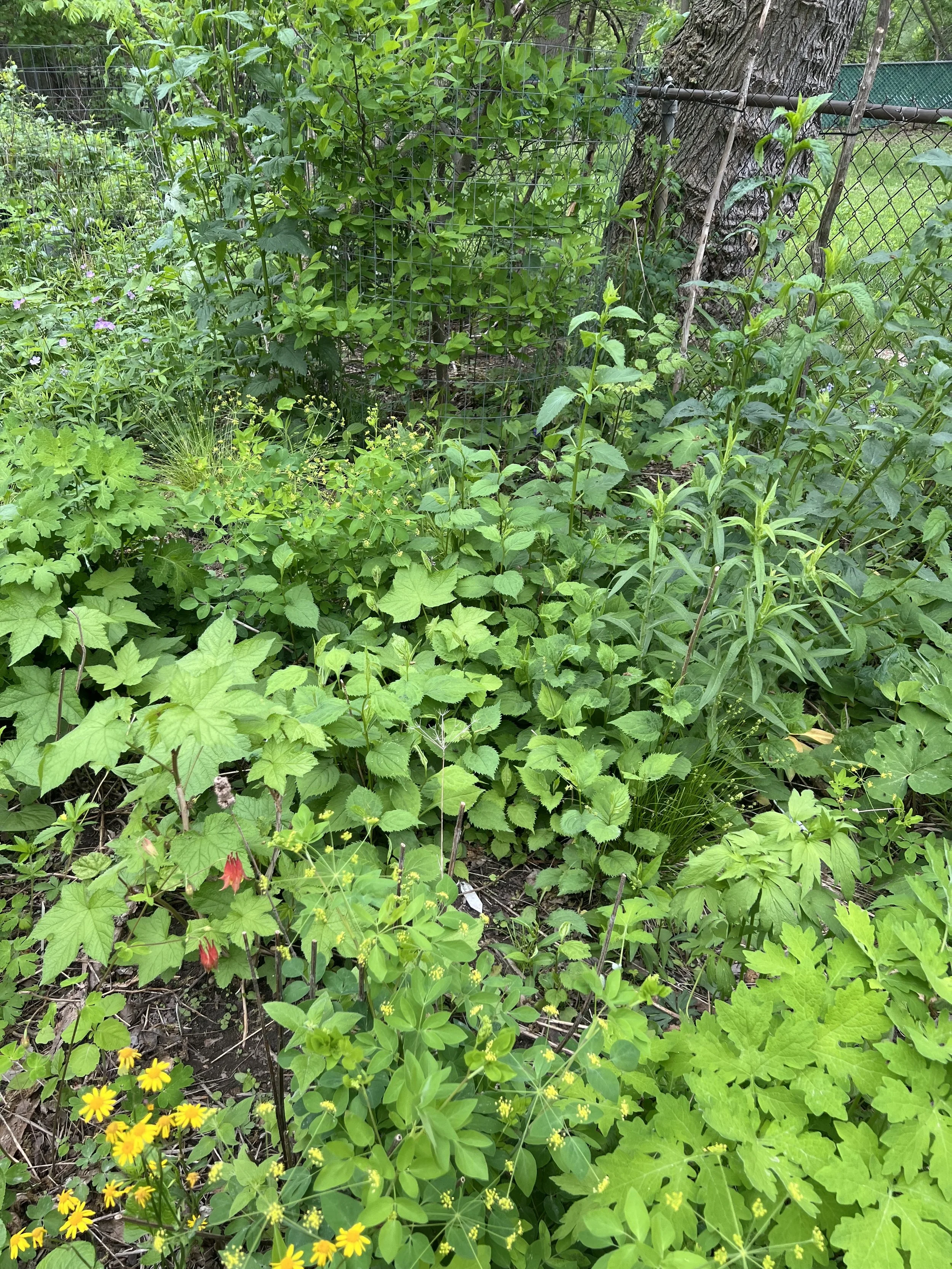
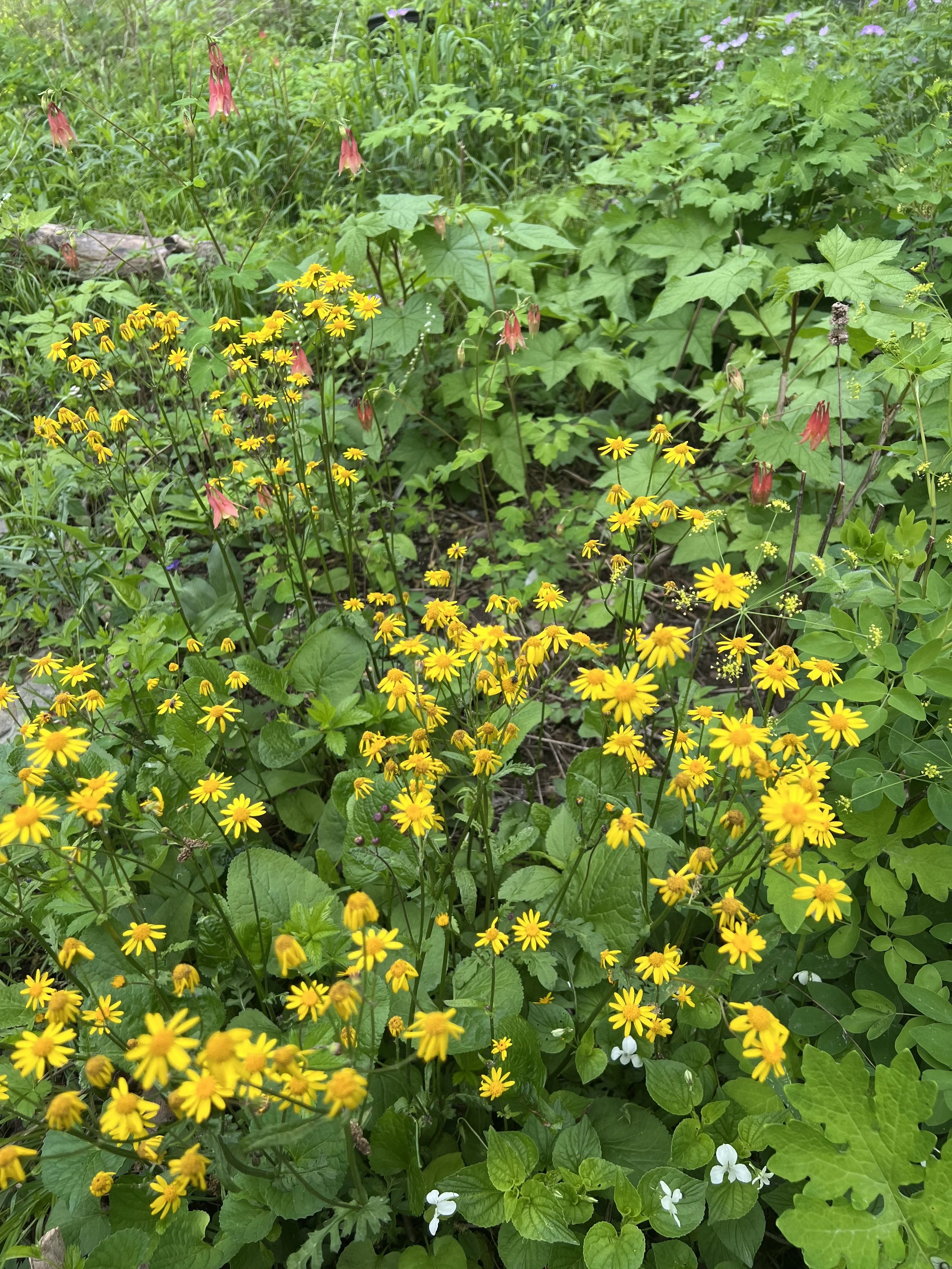
3rd row left: Golden Ragwort (Packera aurea) and Wild Columbine (Aquilegia canadensis) steal the show in May. Bishop’s Cap, Cream Violet and Wild Geranium are also blooming. What a lovely time of year. Later in the season, the plants in this area are a lot taller: Heart-leaved Aster, Rough-leaved Goldenrod, New England Aster, and Short’s Aster.

3rd row middle: This woodland garden is in its 3rd year. It has filled in nicely and is mixed species garden including Wood Poppy, Yellow Pimpernel, Golden Ragwort, Zig Zag Goldenrod, Early Figwort, Spicebush, Jewelweed, Thimbleweed and more! Early spring bloomers are mixed with later season bloomers so that there is always something available to wildlife.

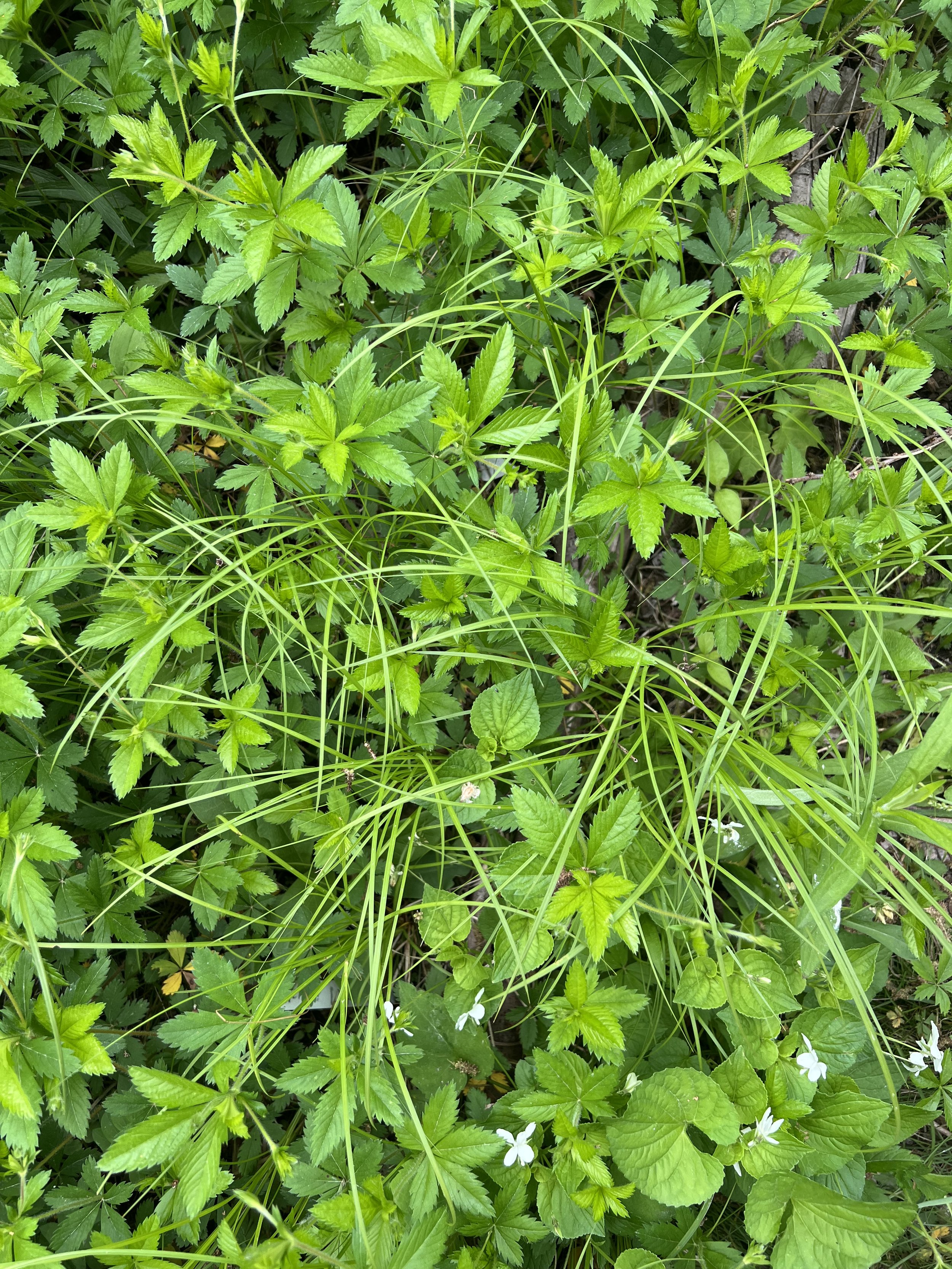
3rd row right: Common Cinquefoil (Potentilla simplex) is mixed here with Penn Sedge (Carex pensylvanica) to a satisfying effect. This is an example of green mulch. Cream violet can be seen in the bottom left corner.

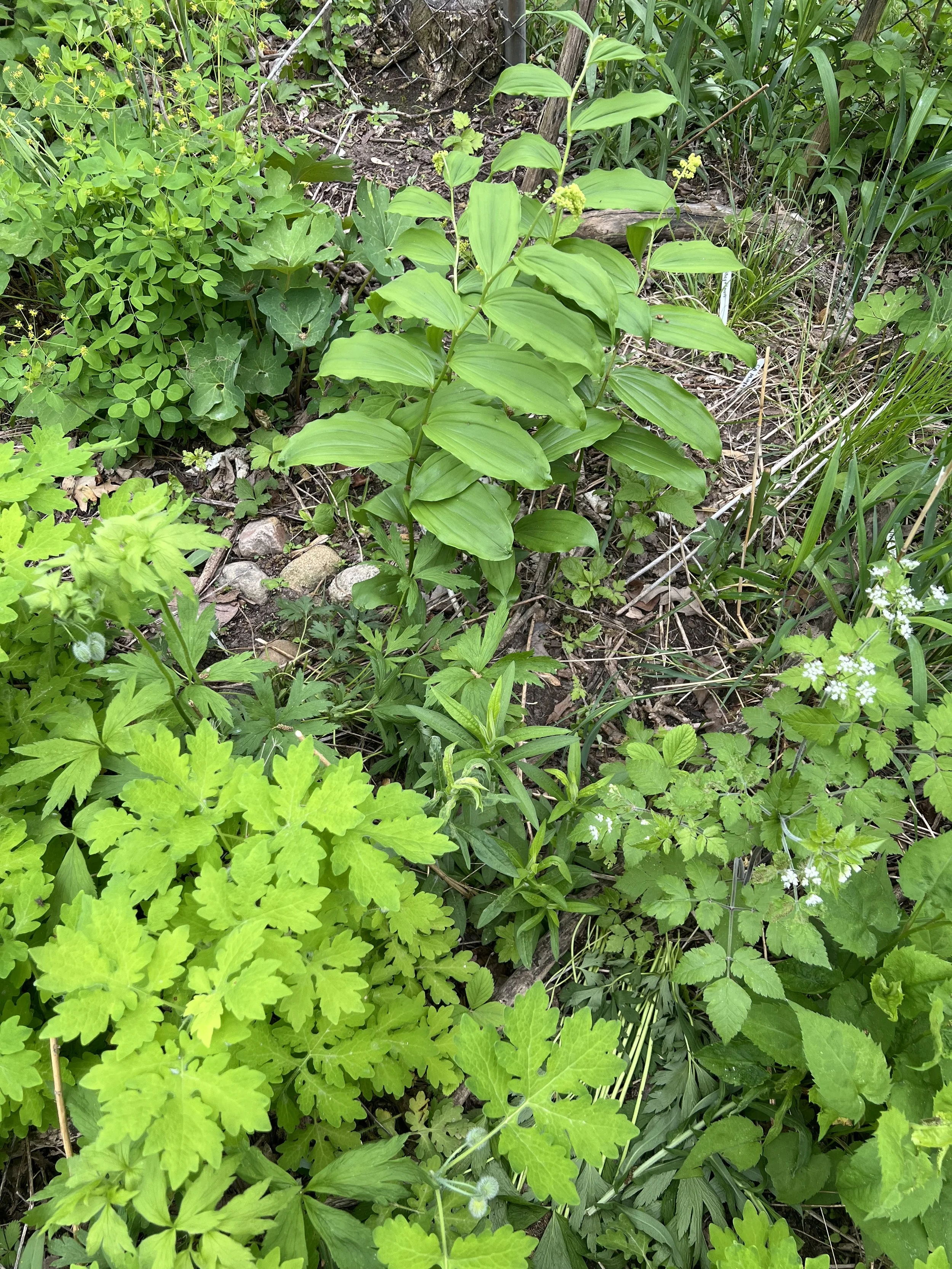
Fourth row left: Mixed in this area is False Solomon’s Seal in the center with Aniseroot, Wood Poppy, Yellow Pimpernel, Bloodroot, and some sedges. This garden has a pathway that is out of view.

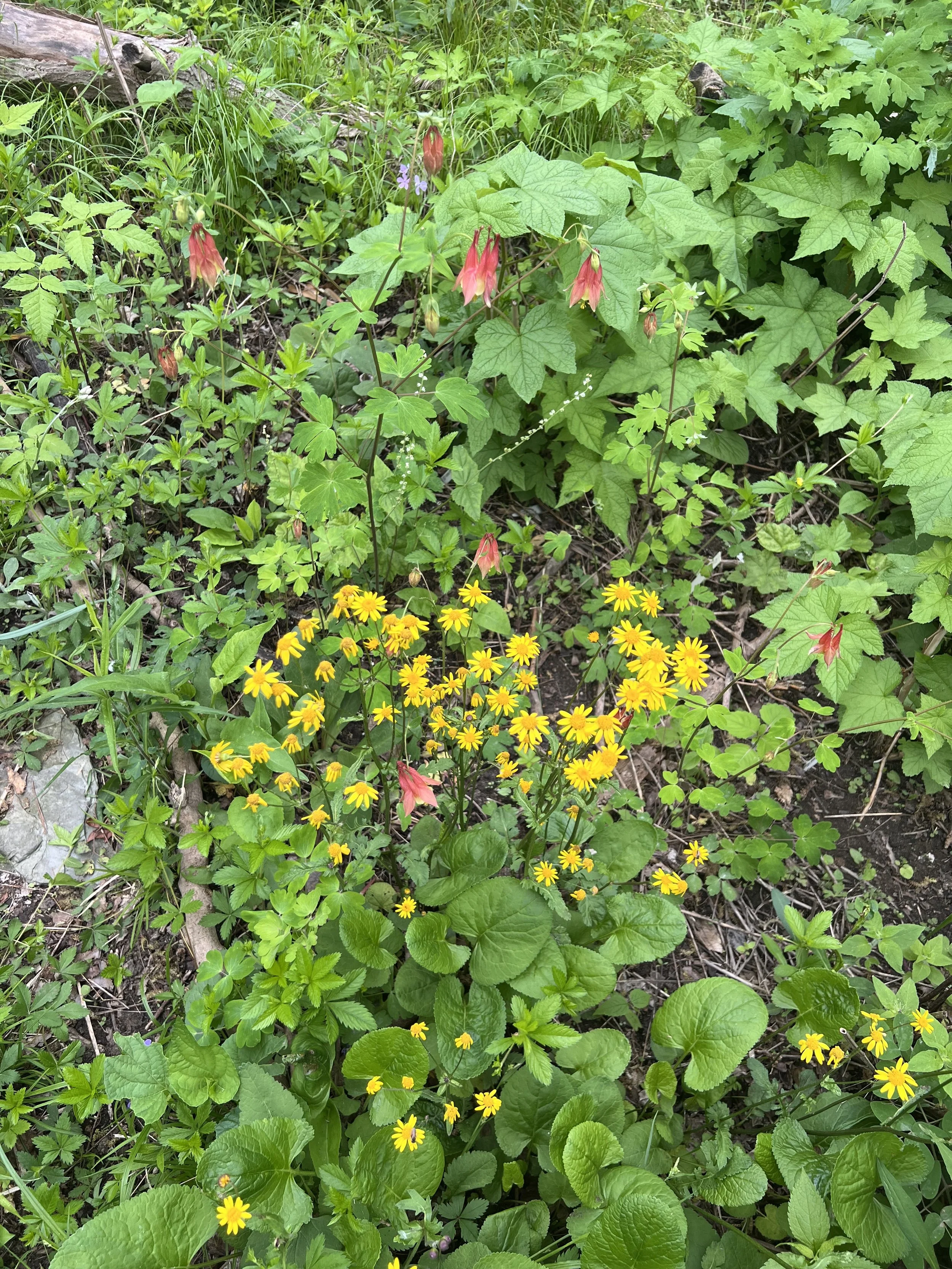
Fourth row center: Wild Columbine, Golden Ragwort and Bishop’s Cap are blooming together in the garden.

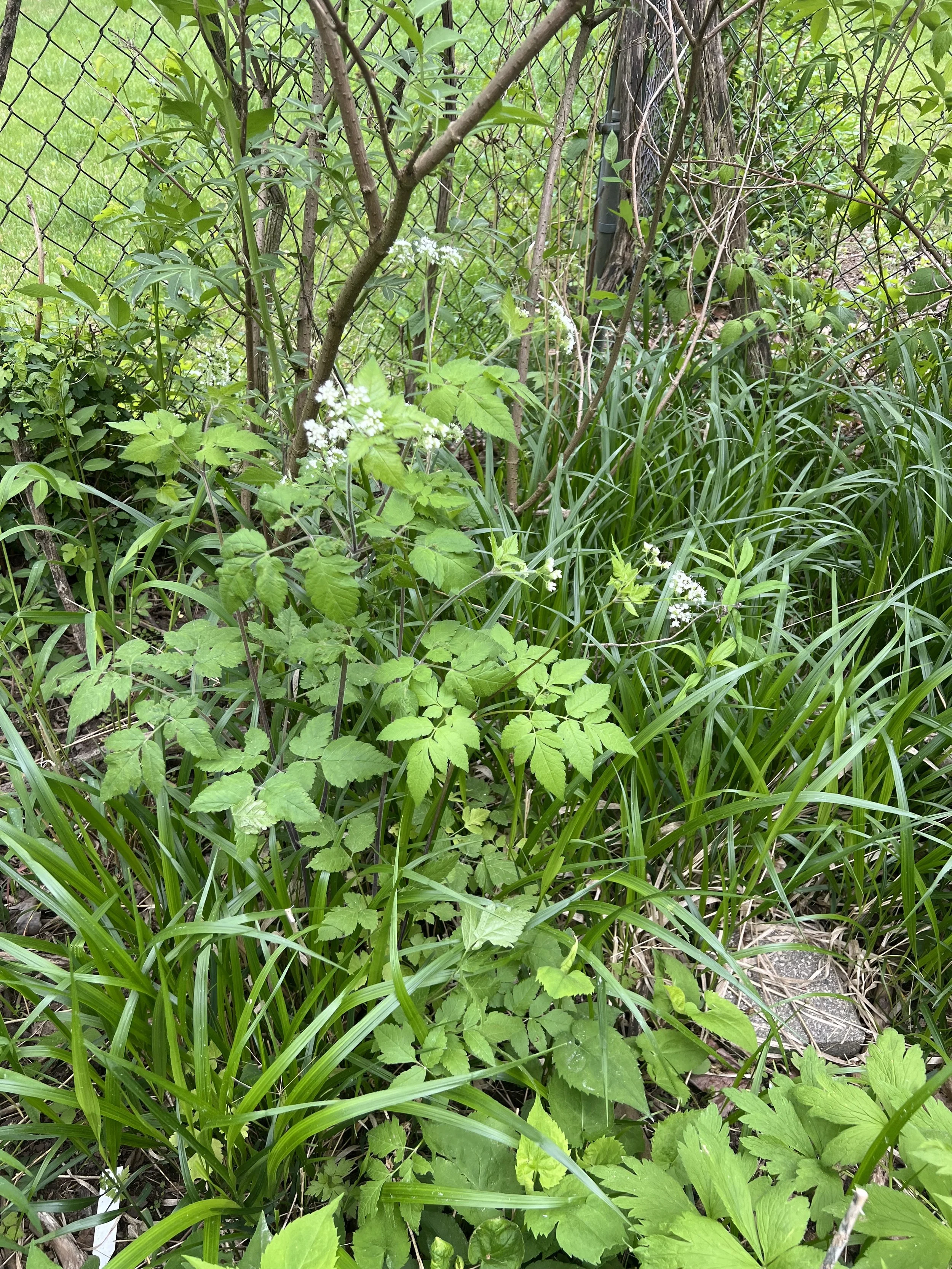
Fourth row right: The beautifully shiny grass you see is Beak Grass (Diarrhena obovata) which occurs naturally in floodplains, but does well here in dry shade. In the center is Aniseroot (Osmorhiza longistylis) and the leaves of Thimbleweed & Heart-leaved Aster are poking out. Grasses and sedges help make a matrix planting.

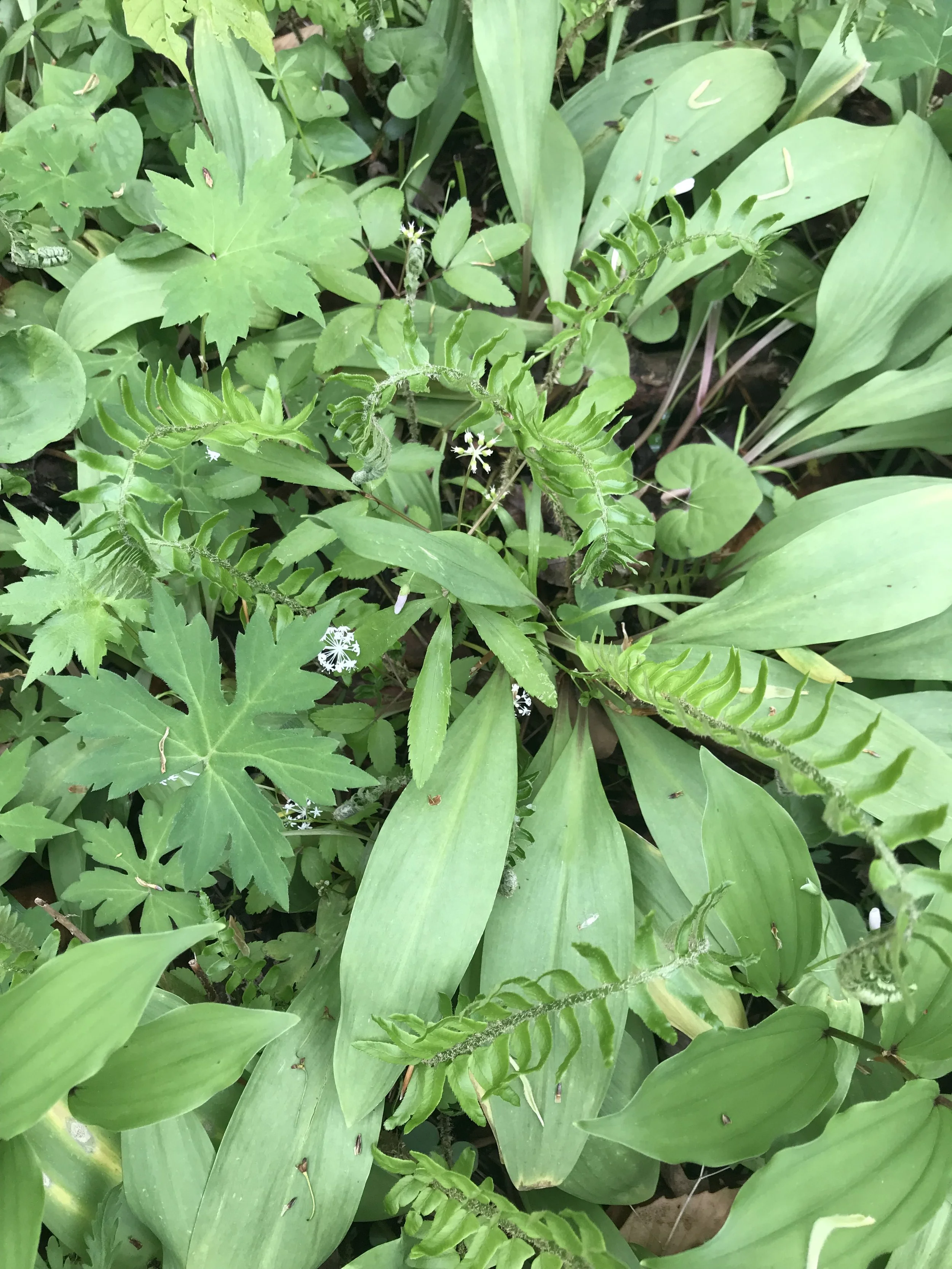
Fifth row left: This image was taken in a high quality woodland which would be a great thing to model your garden after. This is Wild Leeks, Dwarf Ginseng, Waterleaf, Christmas Fern, False Solomon’s Seal, and Wild Ginger.

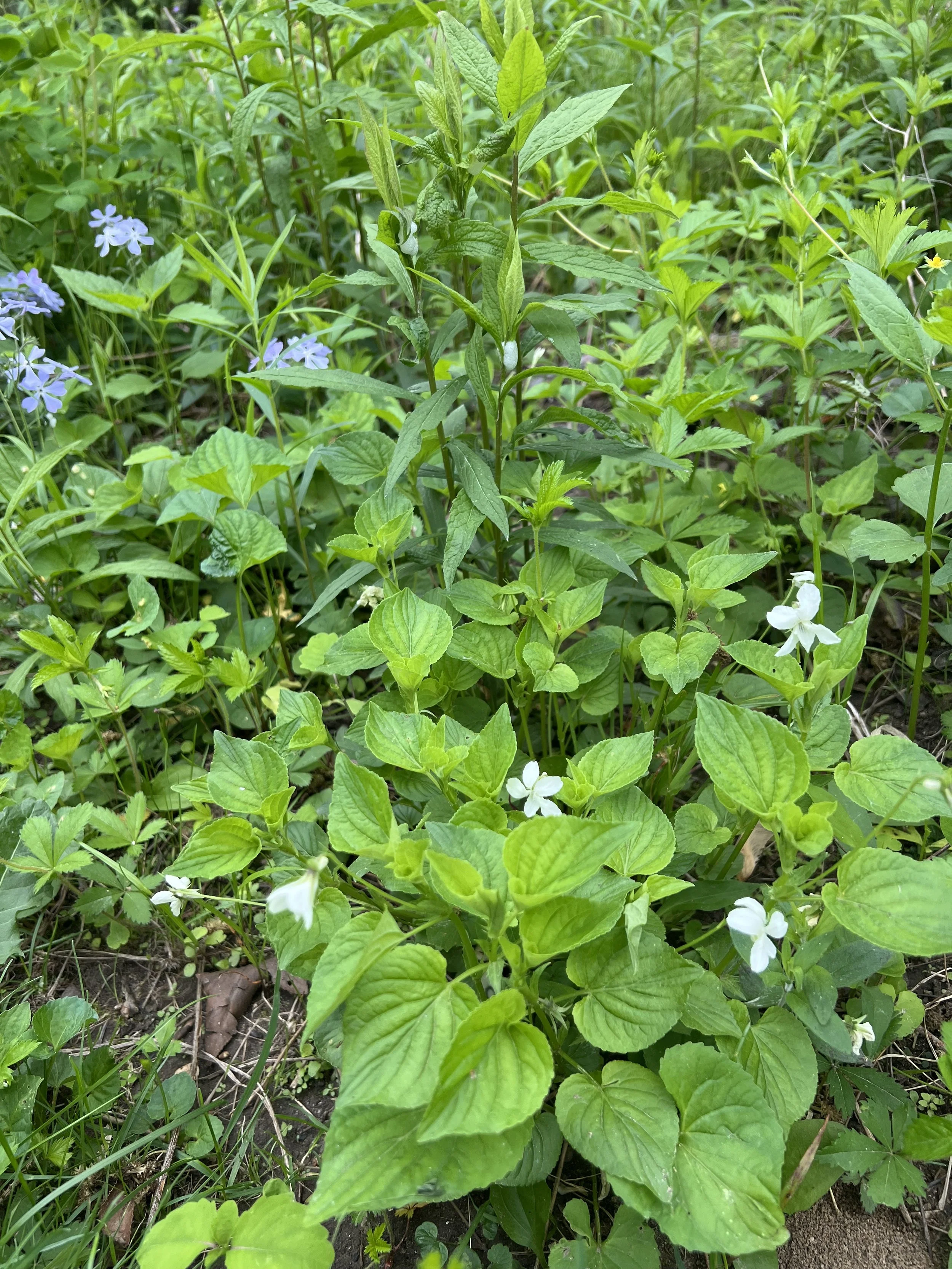
Fifth row right: Cream violet (Viola striata) and Woodland Phlox (Phlox divaricata) are blooming here amongst common cinquefoil and rough-leaved goldenrod.

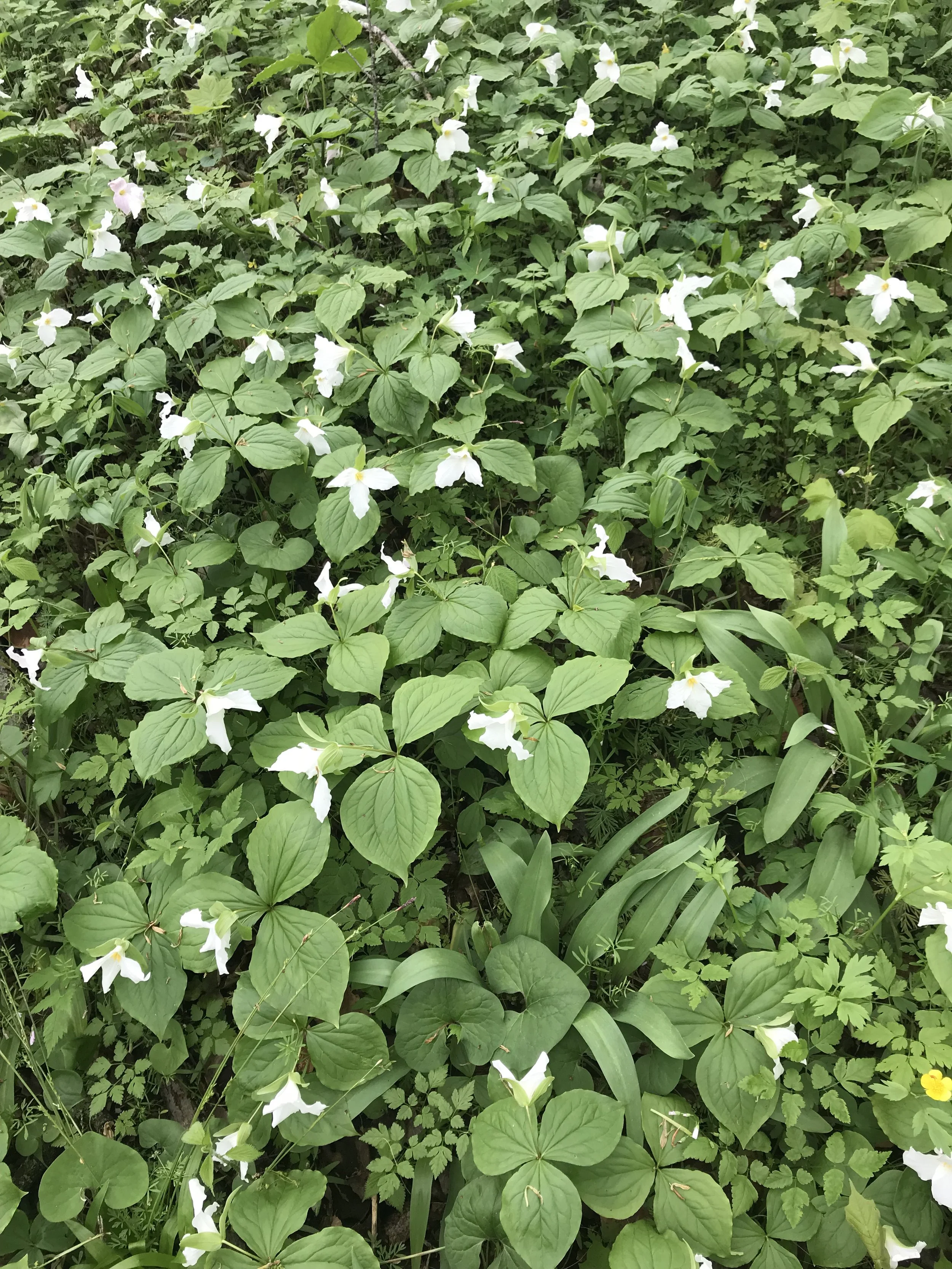
Bottom row center: Another planting by Mother Nature herself, this is White Trillium, Wild Leeks, Swamp Buttercup, Aniseroot, Wild Ginger, False Solomon’s Seal, Dutchman’s Breeches and Plantain-leaf Sedge.

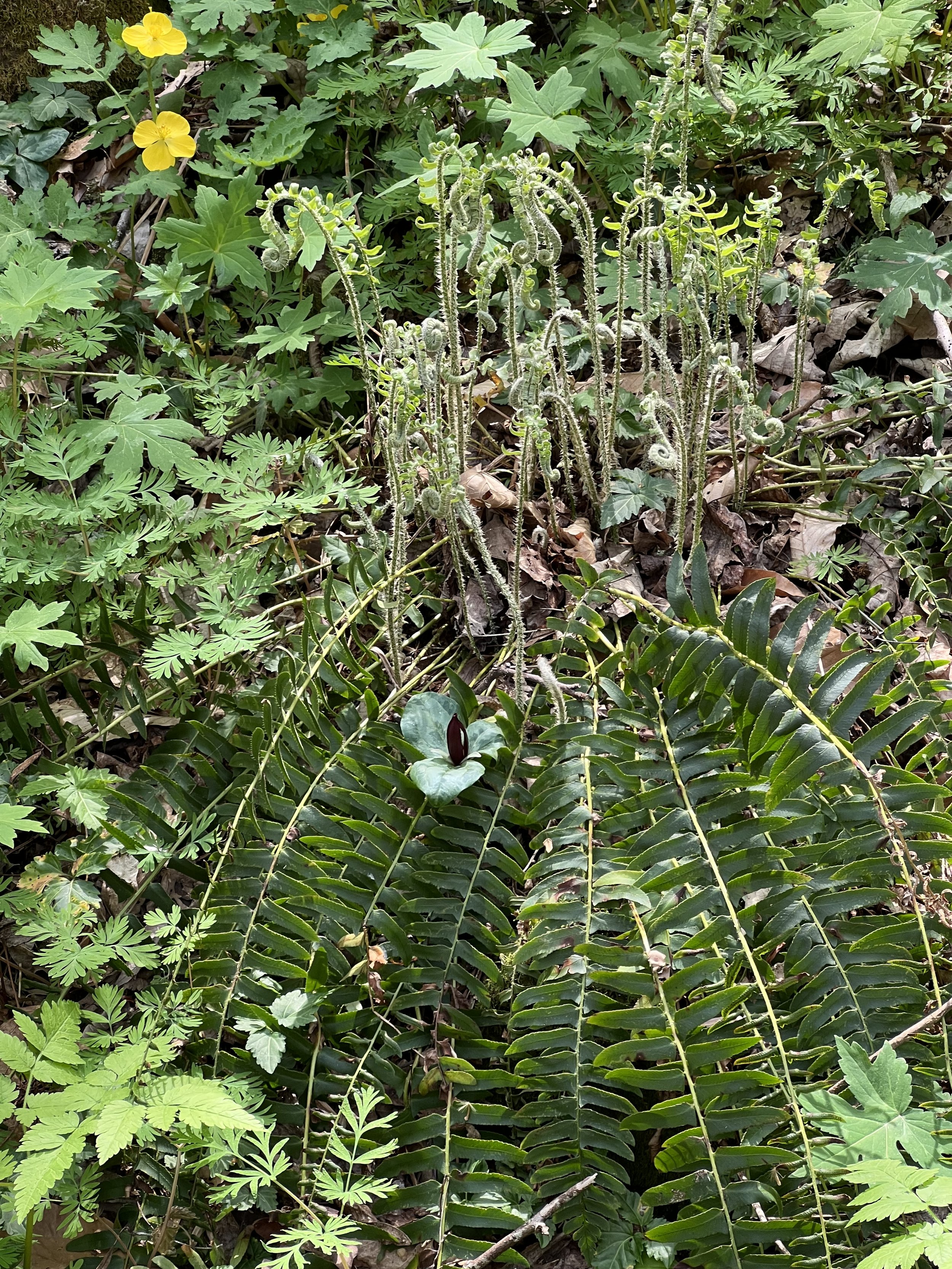
Bottom row right: Christmas Fern’s old fronds are laying down as the fiddleheads are coming up. Wood Poppy is in the background with Aniseroot, Dutchman’s Breeches, White Trillium, and Waterleaf all in a natural setting.