 Image 1 of 4
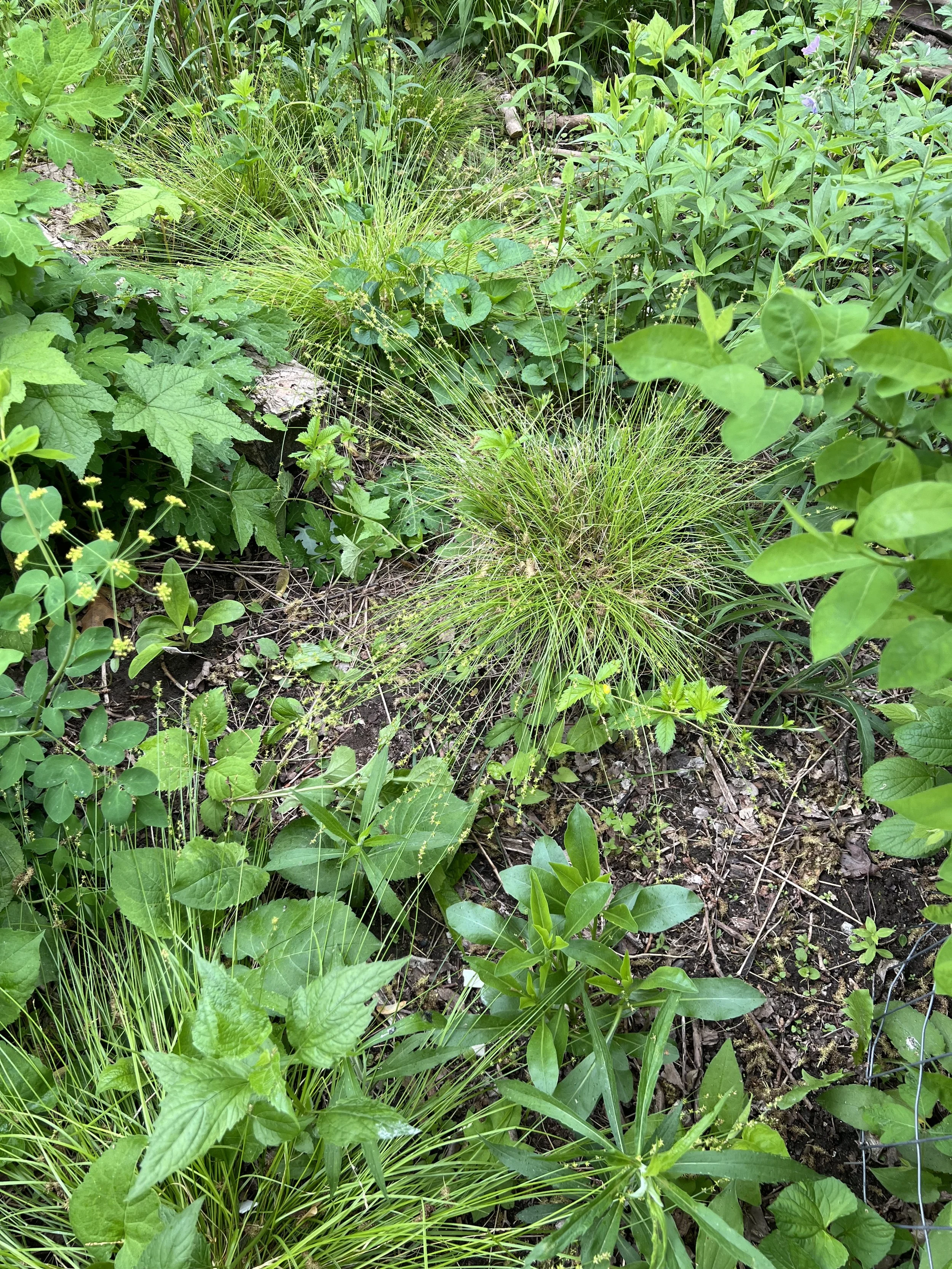 Image 2 of 4
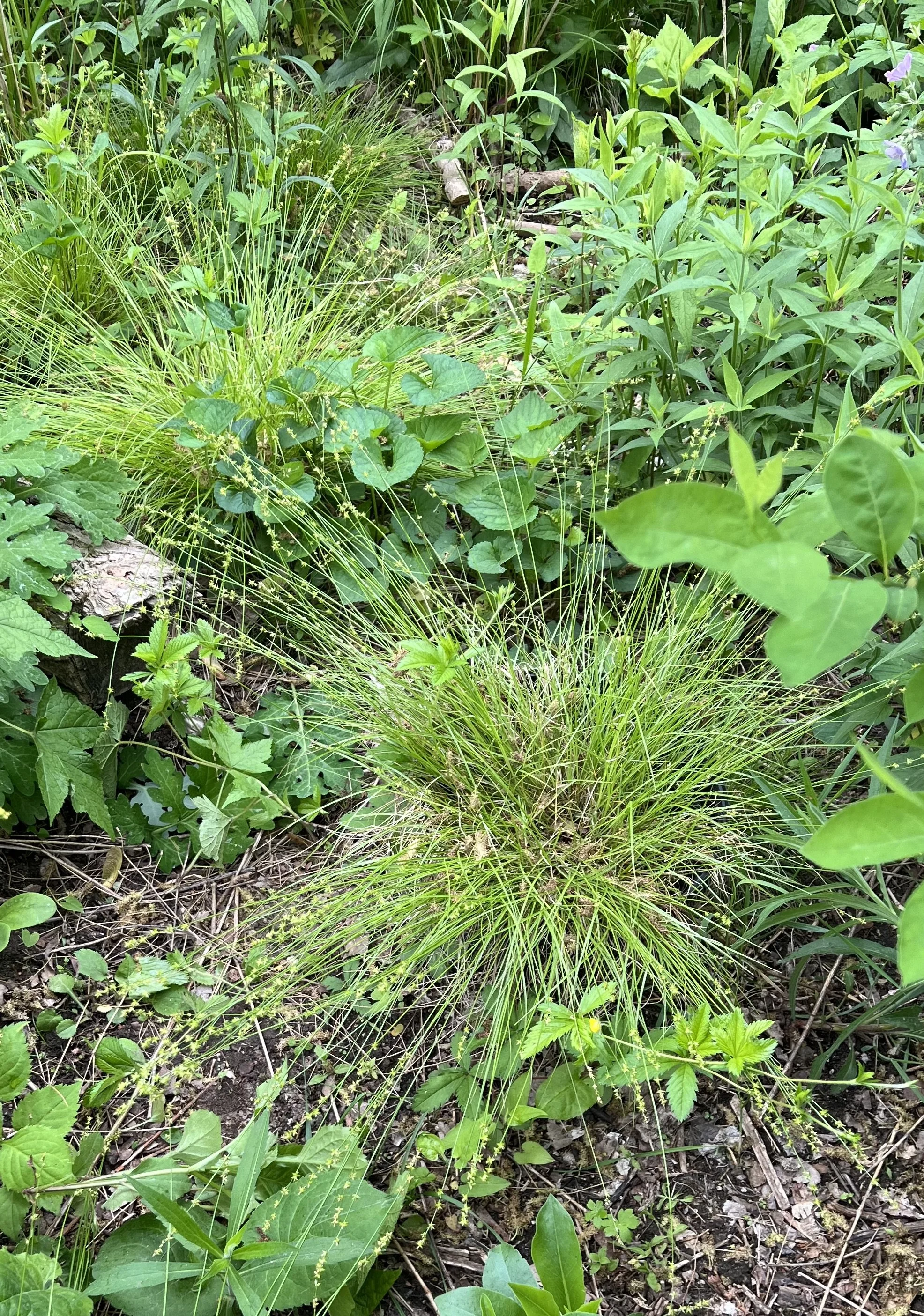 Image 3 of 4
 Image 4 of 4
Eastern Star Sedge is also called Straight-styled Wood Sedge. Another look-alike sedge is Carex rosea. Carex rosea is known as Rosy Sedge (named after the pinkish color of the stigmas) and also Curly-styled Wood Sedge. This points to a characteristic that can separate the two species. This is a characteristic that is hard to see. That’s because the style usually stays intact for a while coming out of the end of the perigynia, but they are tiny.Then the curly or non-curly must be deciphered, best done with a hand lens or microscope. But, keep in mind that the Straight-styled sedge can be slightly sinuous, which makes the identification extra fun!
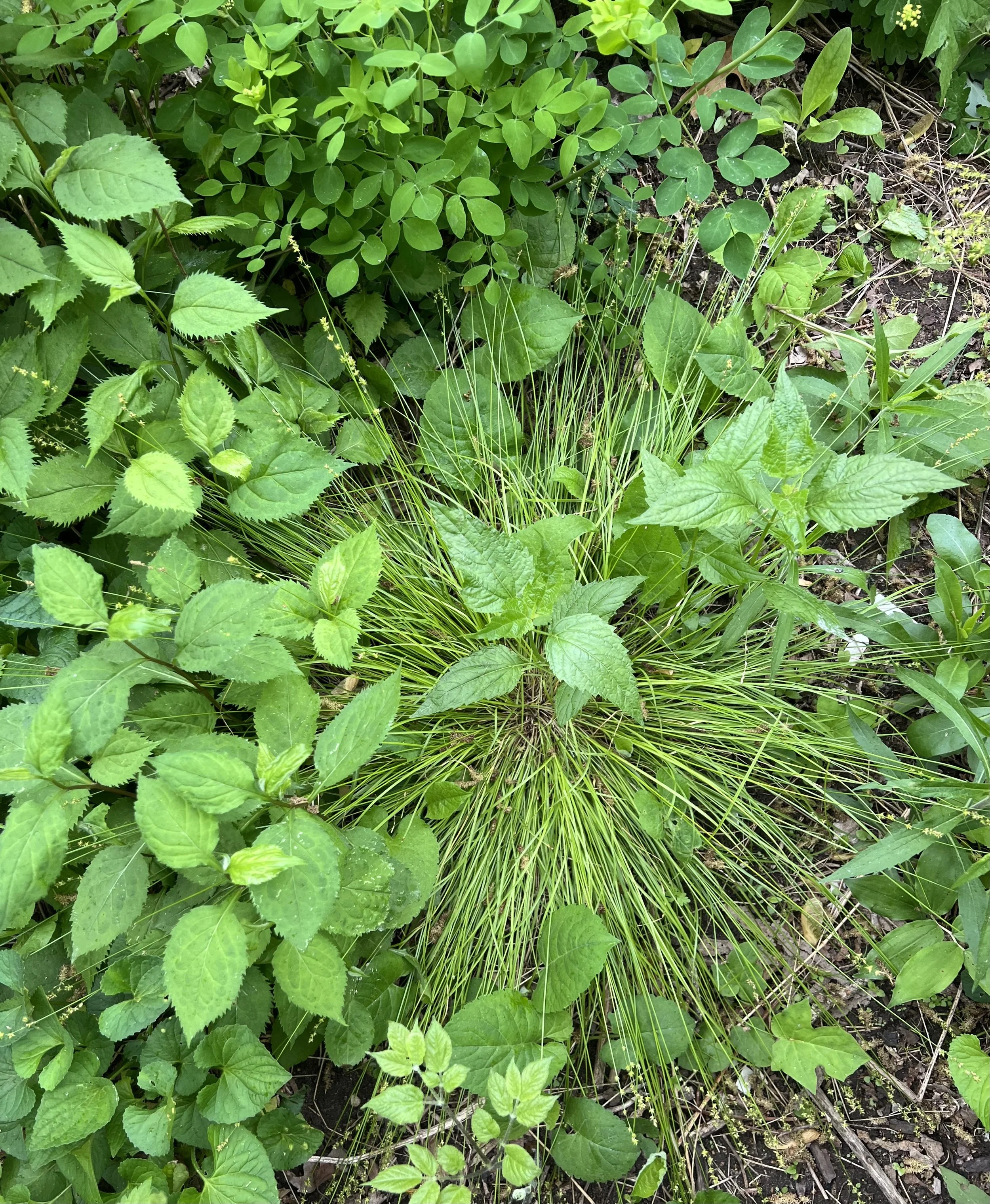
Even though Michigan Flora key and description does inform about the different widths of leaves in the two species, it wasn’t until I read about these species on Minnesota Wildflowers—an excellent website for species that are difficult to tell apart—that I was able to see the difference more easily. Essentially, Carex rosea has slightly thicker leaves making the overall look of the plant, stouter. It also has a deeper green color. Cares radiata is very fine leaved and paler green. These sedges can occur together. Both are shorter in the spring, maybe 12-18 inches, but the leaves continue to grow and then both of these sedges have a tendency to flop, so keep this in mind when deciding how to plant it. If you plant to try to identify these sedges in the field, it is helpful to carry a small metric ruler.