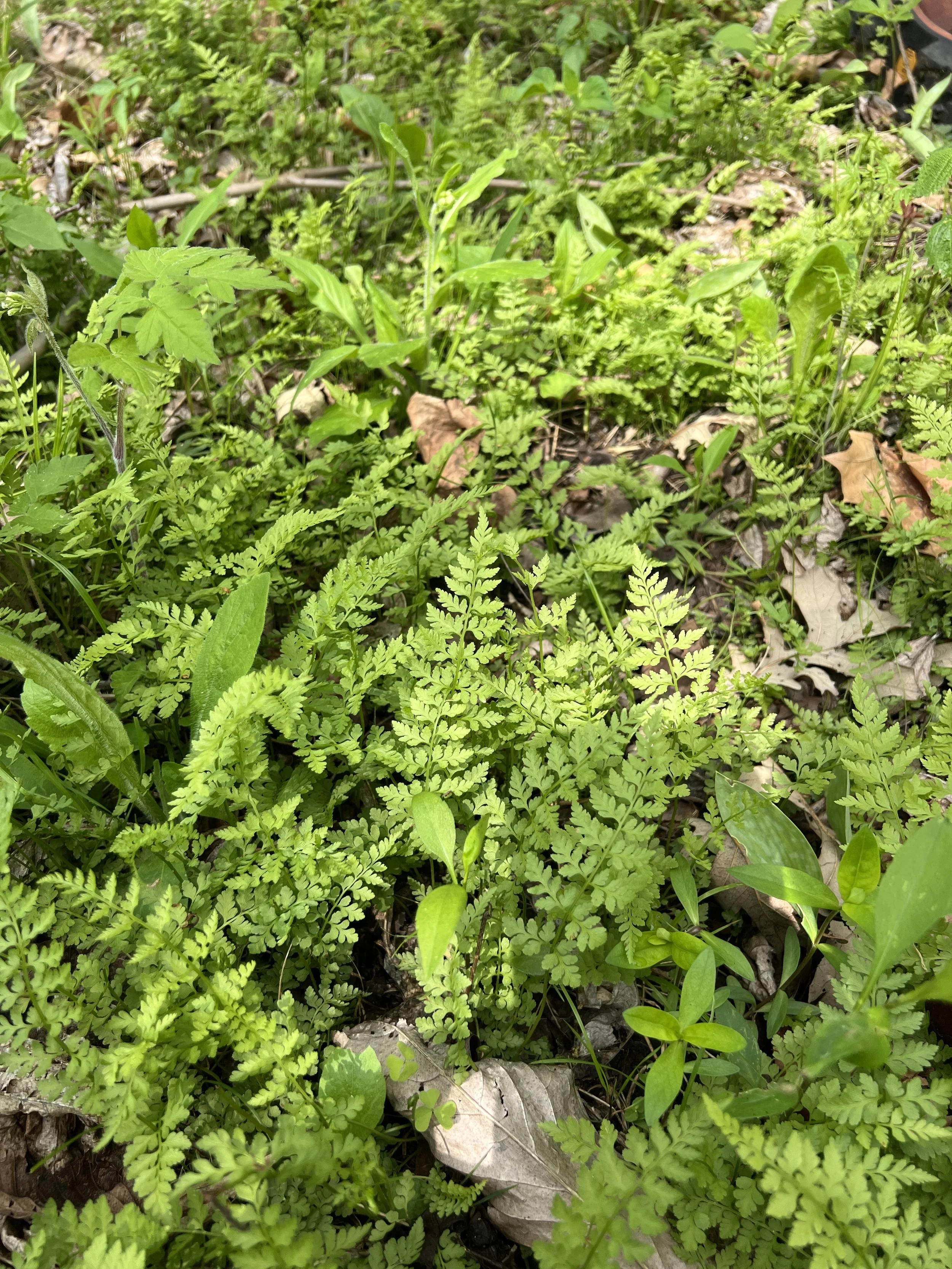
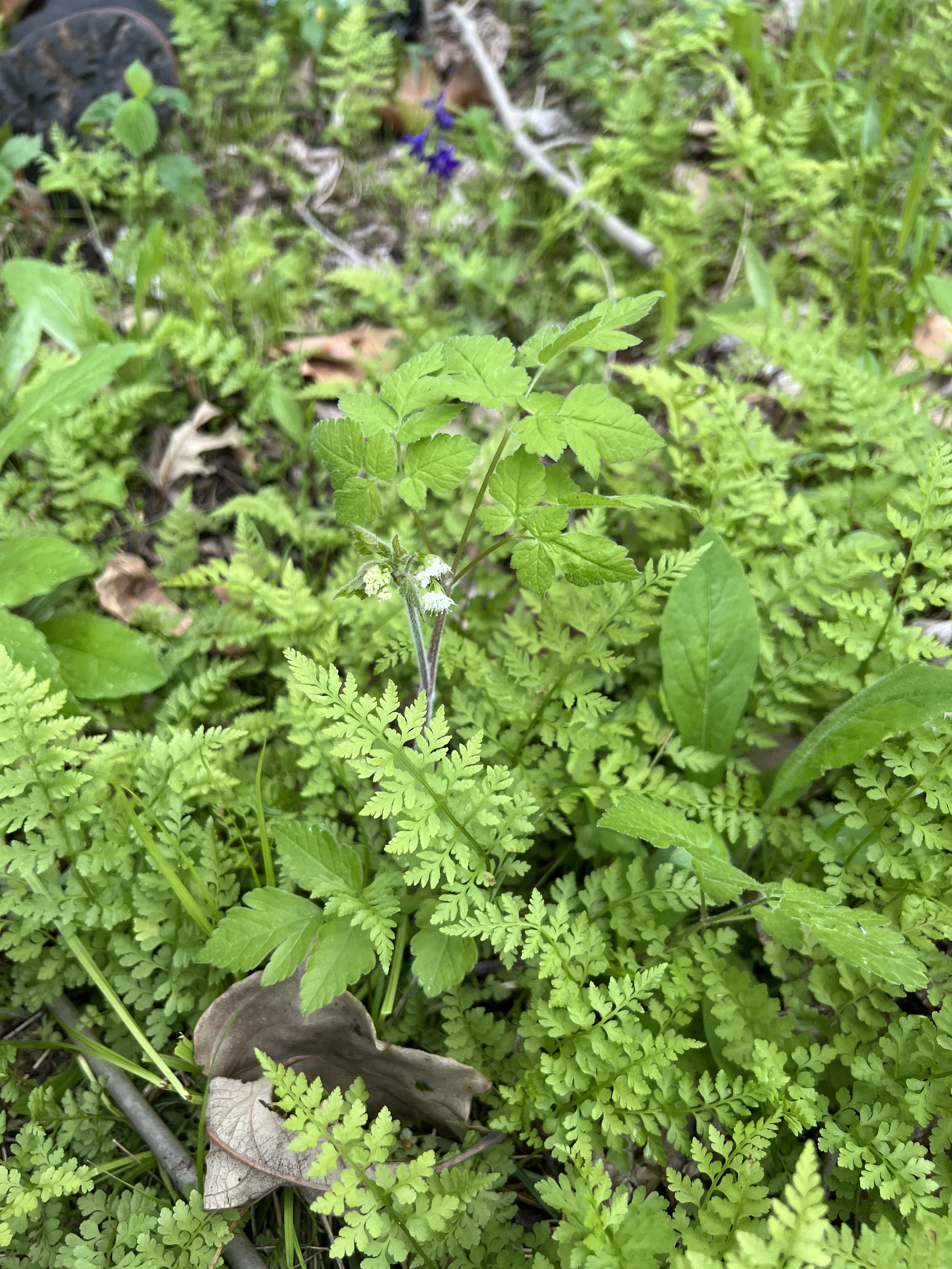
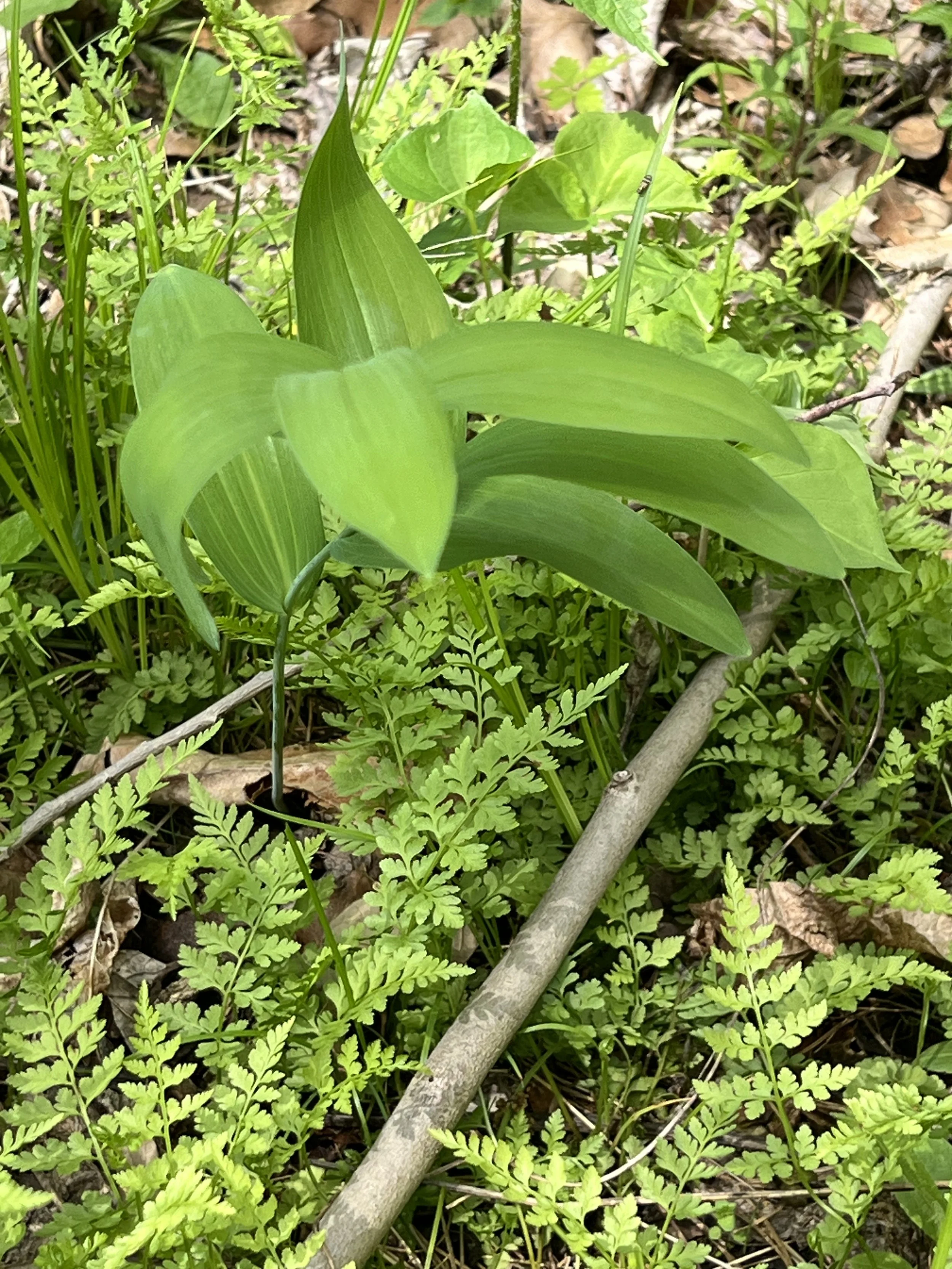
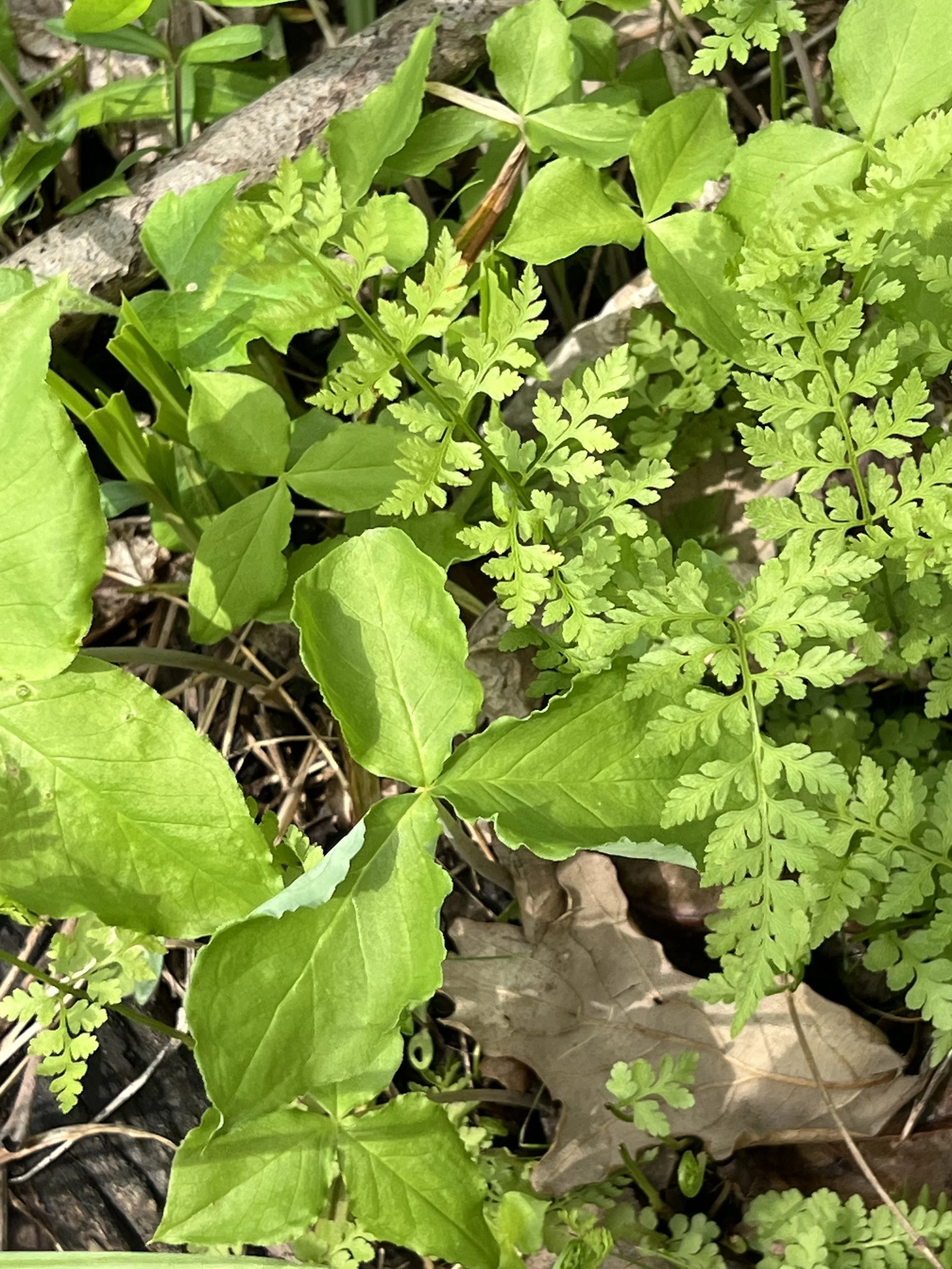
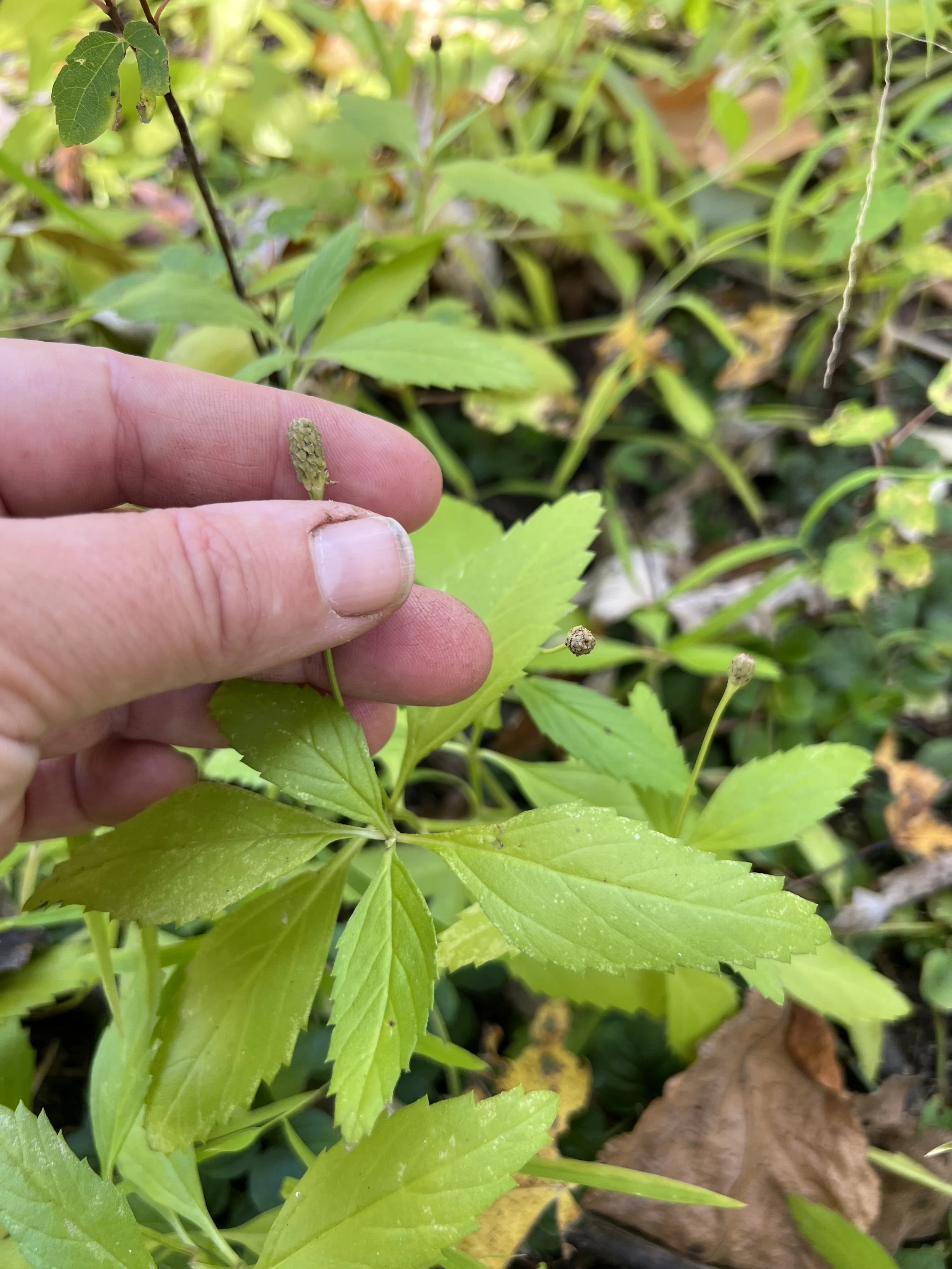
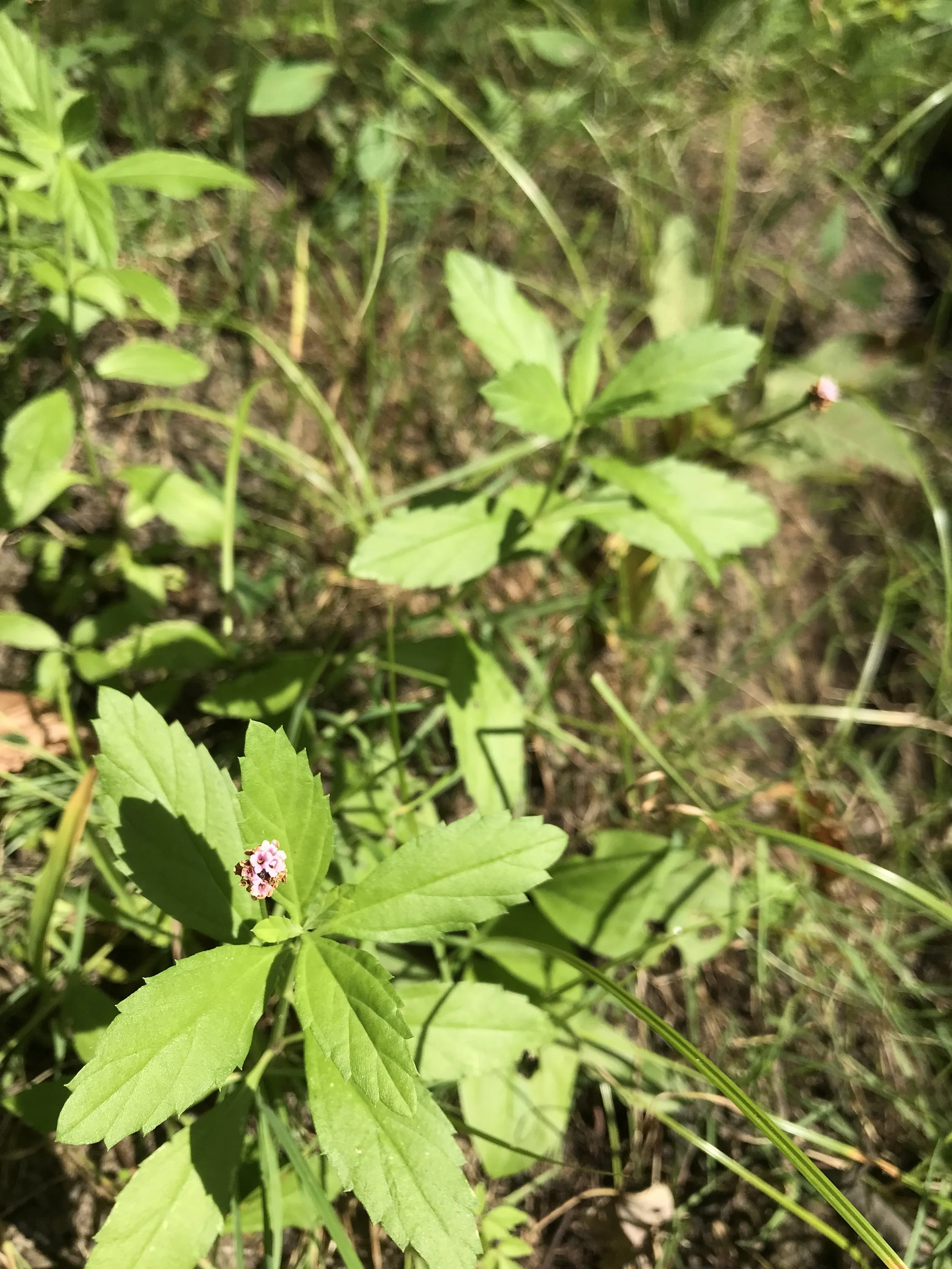
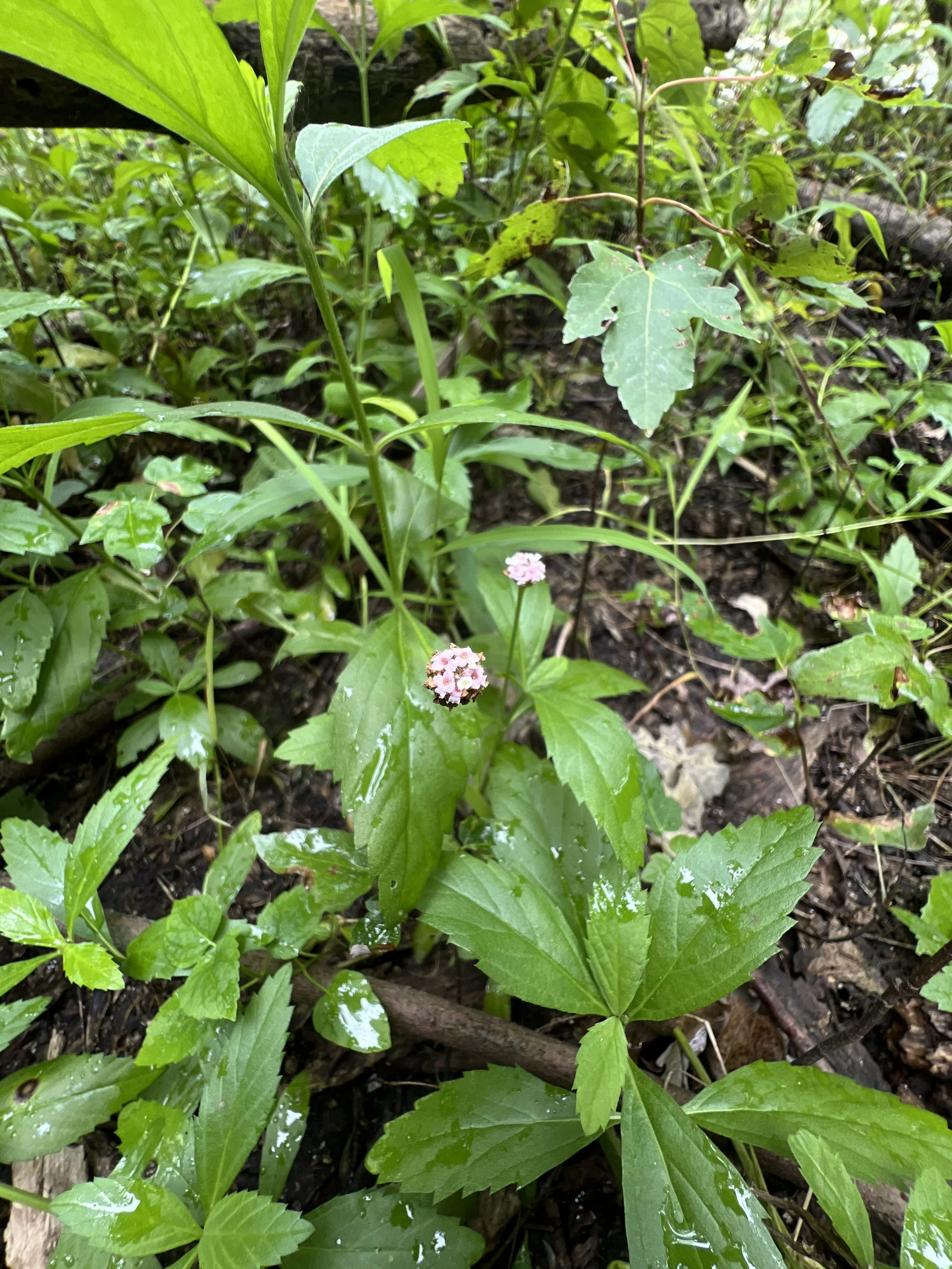
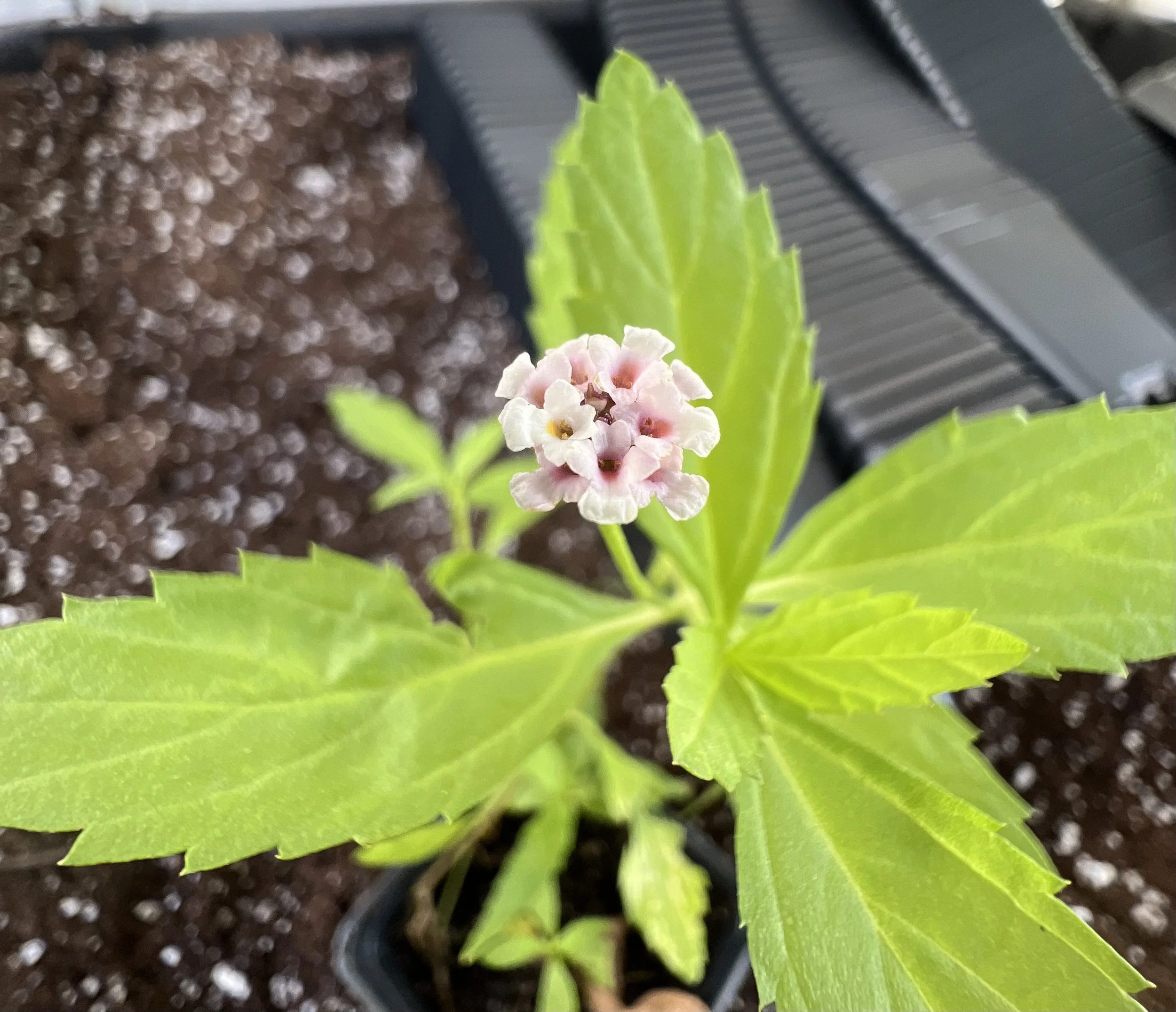
Hairy Wood Rush is similar to the other wood rush we sell, Common Wood Rush (Luzula multiflora). The inflorescences are the main difference between these two, with Hairy Wood Rush having only one flower at the end of each stem and common wood rush having groups of 8-16 flowers. The two wood rushes can often be seen growing together.
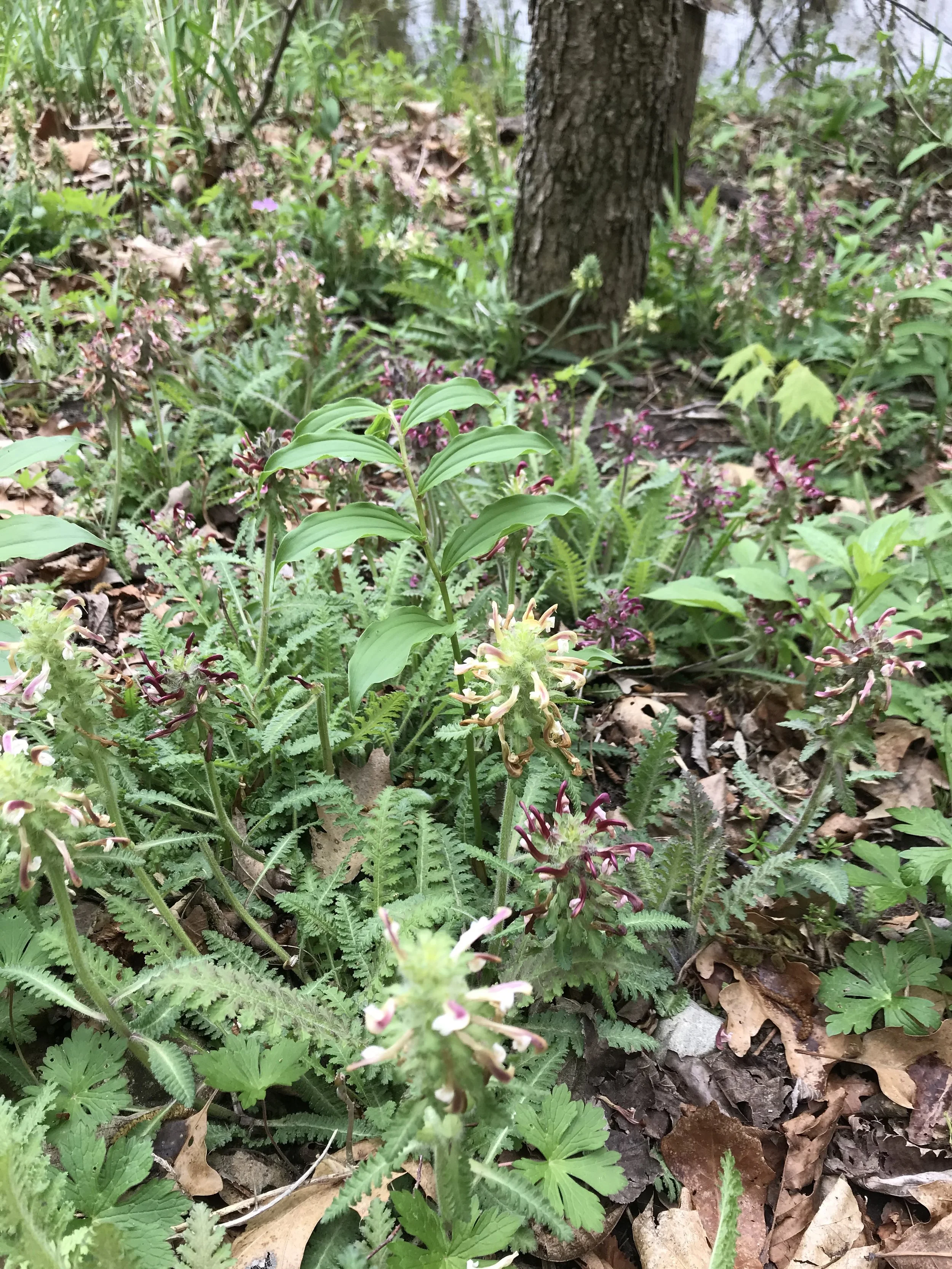
Both of these small plants are adapted to dry shade, which is wonderful because sometimes it can be difficult to fit that bill. They are naturally found in most kinds of forests and especially, at least in mid-Michigan, on the top tier of the floodplain forest.
This plant is native to much of the state, but not all counties. This is according to where collections have been made in the past.
The woodrushes do flower in early spring and you have to get in close to observe the flowers which are likely pollinated by the wind. Once pollination occurs, three seeds form in each of the small seed pods. The seeds have appendages like spring ephemeral that attract ants to carry away the seed.
The leaves are up to ¼ inch across and up to 5 inches long. The edges of the leaves have long white hairs on them.
More study needs to be done of these plants to determine how other wildlife may use them.
Companion Plants: Christmas fern, common woodrush, round-lobed hepatica, fire pink, downy woodmint, robin’s plantain, smooth pussytoes
Hairy Woodrush (Luzula acuminata)
Michigan Flora reference page for state distribution: Hairy Woodrush
Bloom Time: April-May
Height: 2-5 inches
Soil: moist to dry loam, loamy clay, can have rocky material
Sun: part-sun, light shade to full sun
Plant spacing: 6-12 inches
Flower: reddish tepals, white, yellow anthers
Seed source: Michigan
Hairy Wood Rush is similar to the other wood rush we sell, Common Wood Rush (Luzula multiflora). The inflorescences are the main difference between these two, with Hairy Wood Rush having only one flower at the end of each stem and common wood rush having groups of 8-16 flowers. The two wood rushes can often be seen growing together.
Both of these small plants are adapted to dry shade, which is wonderful because sometimes it can be difficult to fit that bill. They are naturally found in most kinds of forests and especially, at least in mid-Michigan, on the top tier of the floodplain forest.
This plant is native to much of the state, but not all counties. This is according to where collections have been made in the past.
The woodrushes do flower in early spring and you have to get in close to observe the flowers which are likely pollinated by the wind. Once pollination occurs, three seeds form in each of the small seed pods. The seeds have appendages like spring ephemeral that attract ants to carry away the seed.
The leaves are up to ¼ inch across and up to 5 inches long. The edges of the leaves have long white hairs on them.
More study needs to be done of these plants to determine how other wildlife may use them.
Companion Plants: Christmas fern, common woodrush, round-lobed hepatica, fire pink, downy woodmint, robin’s plantain, smooth pussytoes
Hairy Woodrush (Luzula acuminata)
Michigan Flora reference page for state distribution: Hairy Woodrush
Bloom Time: April-May
Height: 2-5 inches
Soil: moist to dry loam, loamy clay, can have rocky material
Sun: part-sun, light shade to full sun
Plant spacing: 6-12 inches
Flower: reddish tepals, white, yellow anthers
Seed source: Michigan
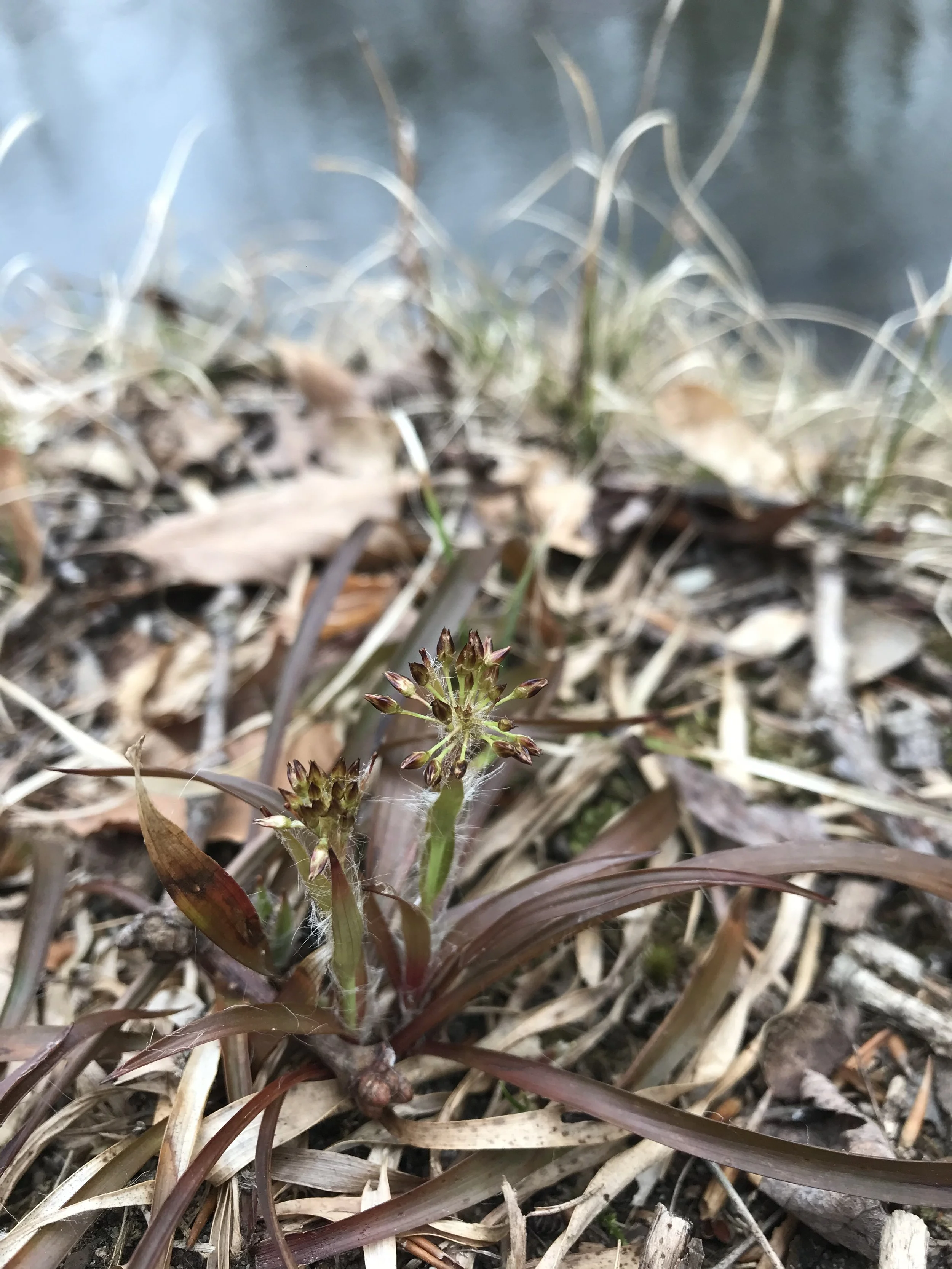 Image 1 of 4
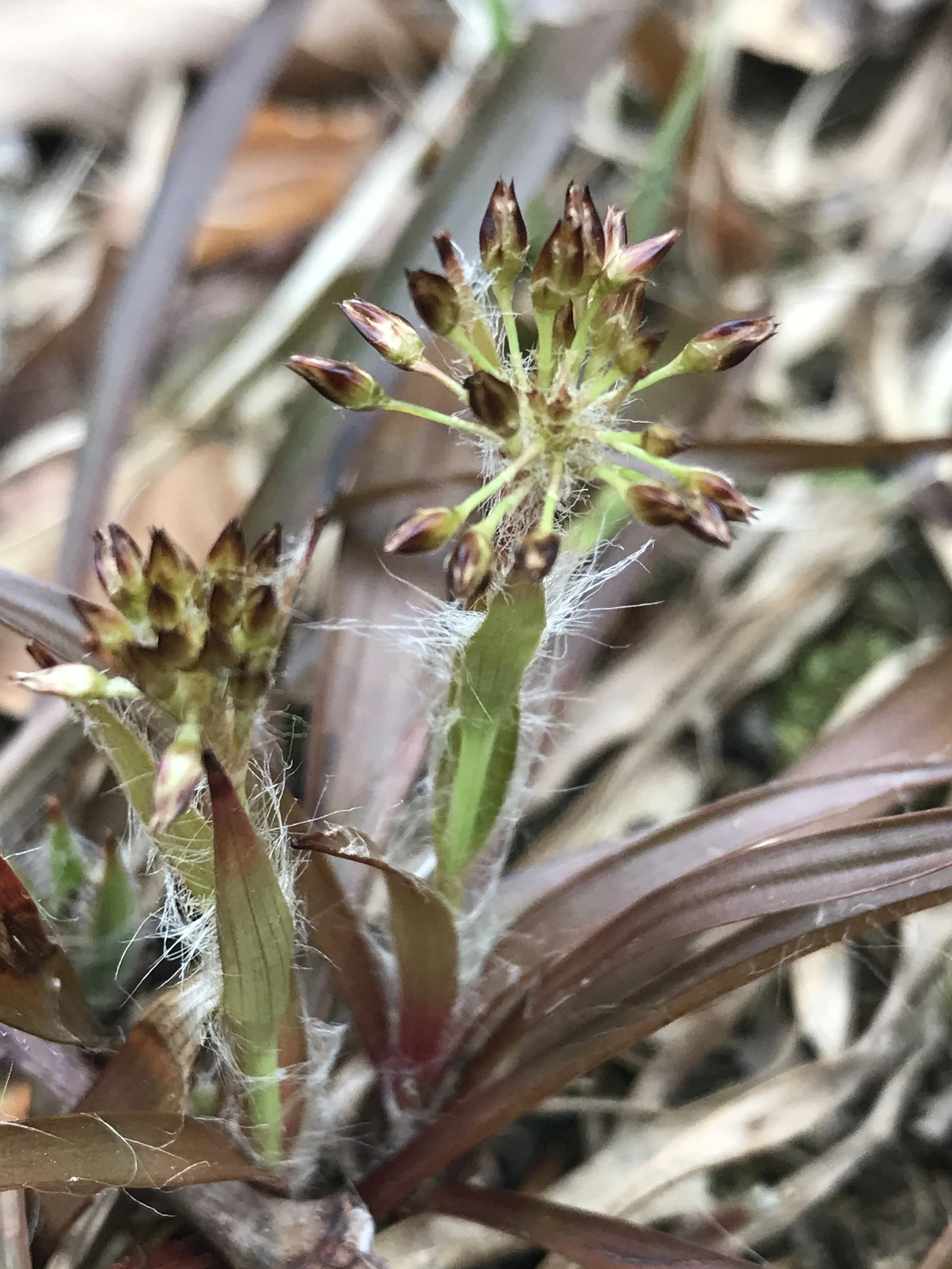 Image 2 of 4
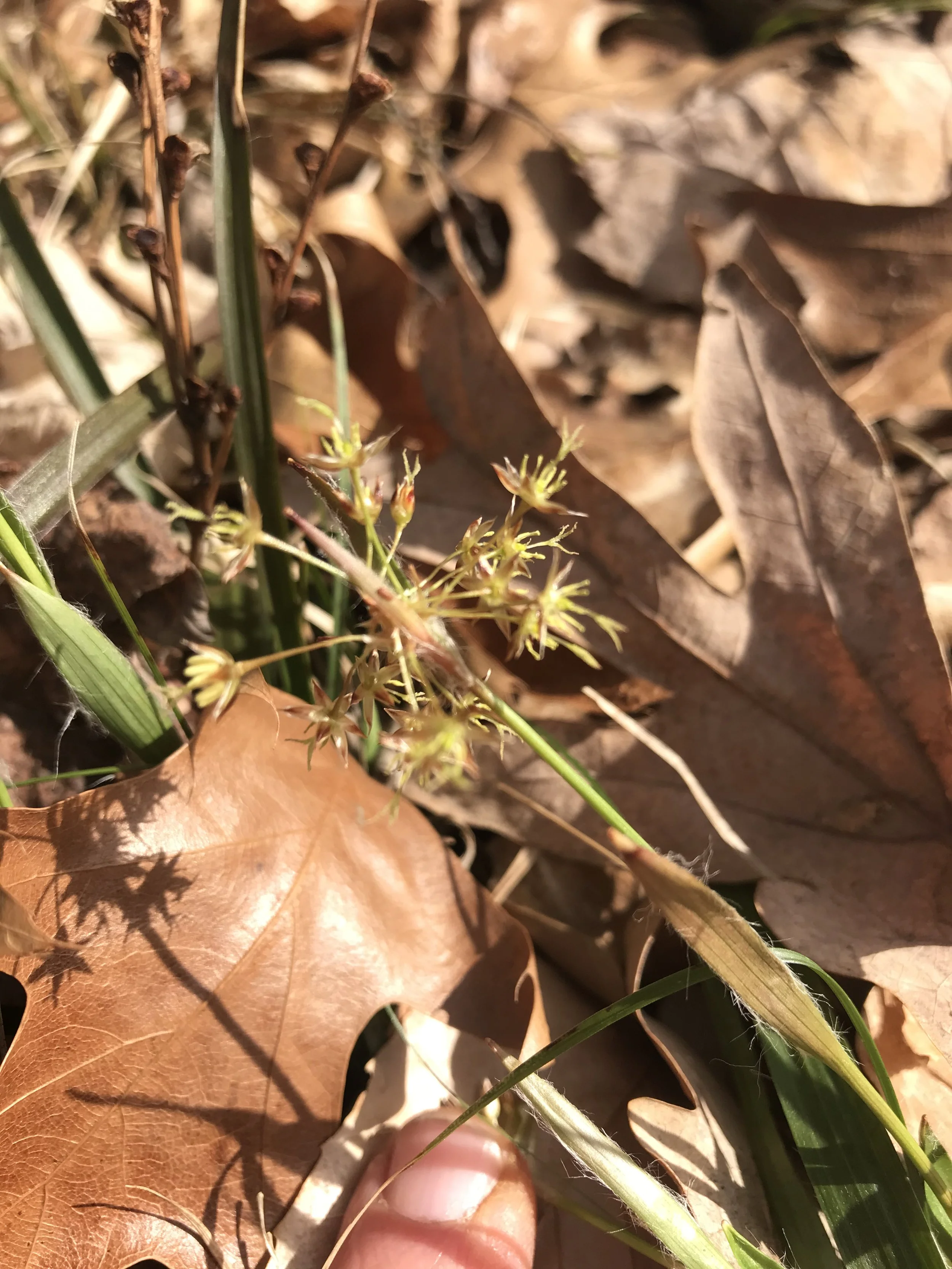 Image 3 of 4
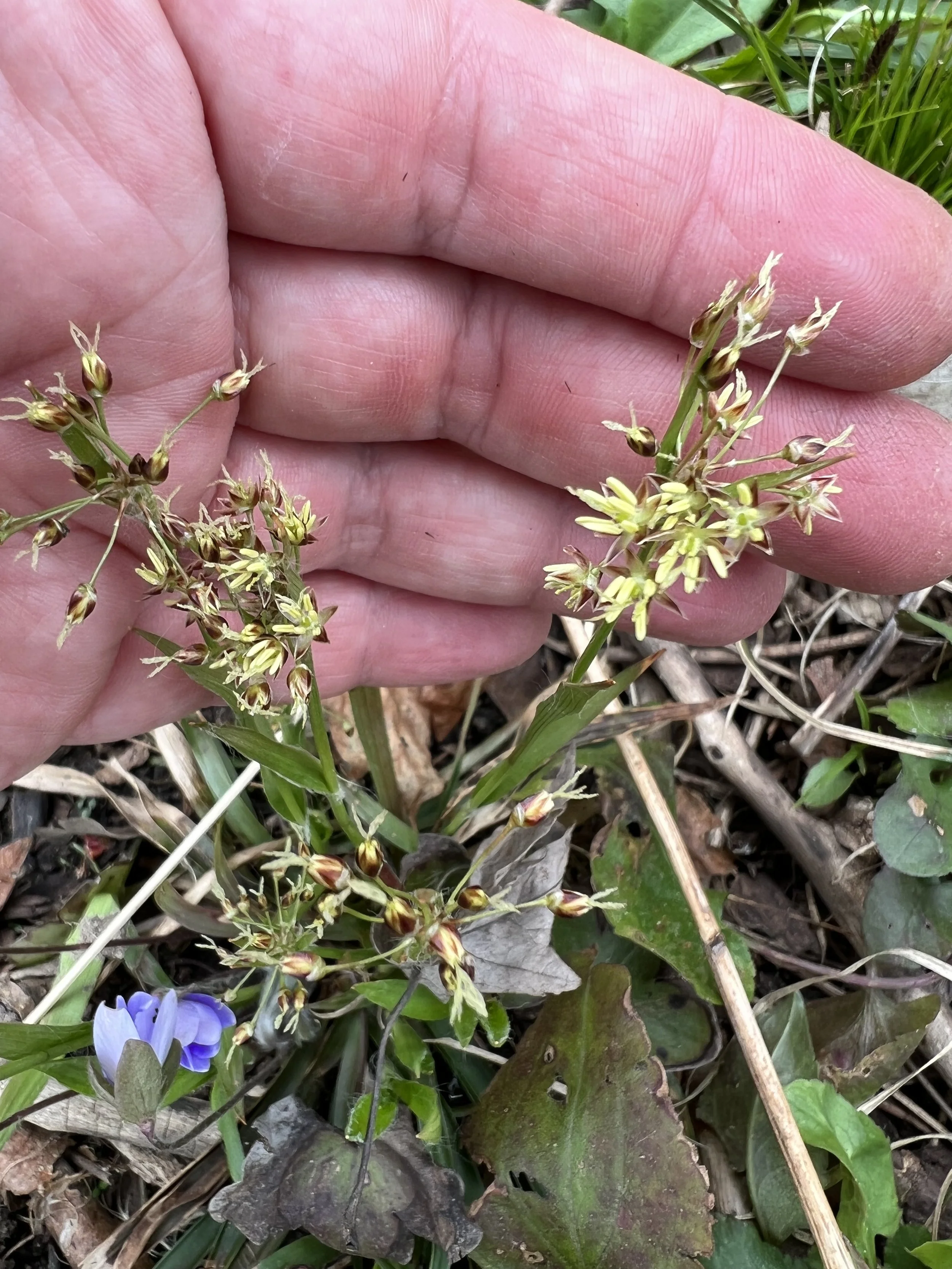 Image 4 of 4