Matrix Planting for the Woodland Garden

Have you heard the term “Matrix Planting” in native plant circles in the past few years, but you aren’t sure which plants you need or quite how to plant a matrix garden? If this describes you, let’s dig in and learn more!

Taking a walk in a natural setting, people are usually drawn to the flowers in bloom. There’s a reason for this. Flowers have evolved over eons to be attractive to pollinators so that they can propagate themselves. From scents, to colors and shapes, flowers are a joy to humans too! Before I started learning more about plants, I was in this category, only pausing to “smell the roses.” Once I began my interest in sedges and grasses, I realized that there is a whole community of plants that live together and depend upon each other in the prairies and forests.

The “matrix” in matrix planting consists of shorter plants like ground-cover flowering plants, sedges, rushes and grasses. In a natural setting these plants are usually over 50% and usually a lot higher of the total biomass. Throughout this matrix are flowering plants in groups. They often occur in groups because they spread by underground rhizome, above ground stolons, or reseed themselves well. Occasionally throughout a large landscape there will be taller plants like small shrubs or larger flowering plants that draw attention, whether they are flowering or not. I’ve got photos below to demonstrate these characteristics.

NOTE: It is easier for me to photograph wide open habitats like prairies, than it is to photograph woodlands, so many of my photos helping to describe matrices are prairie habitat.
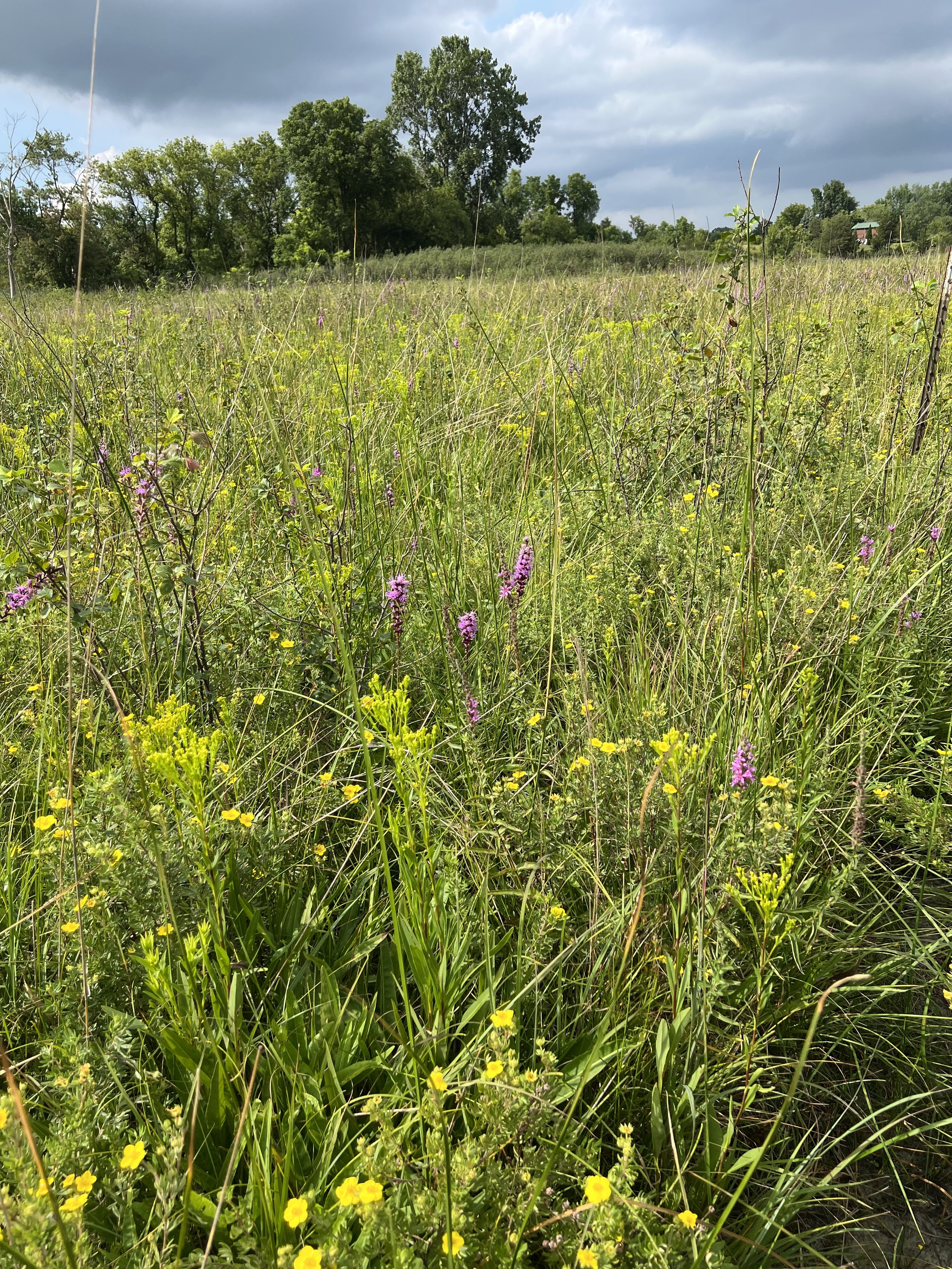
Natural Matrix in a Prairie Fen

This prairie fen has marsh blazing star, Ohio goldenrod and shrubby cinquefoil blooming. If you look between these plants there are sedges and rushes. The sedges and rushes are the matrix.

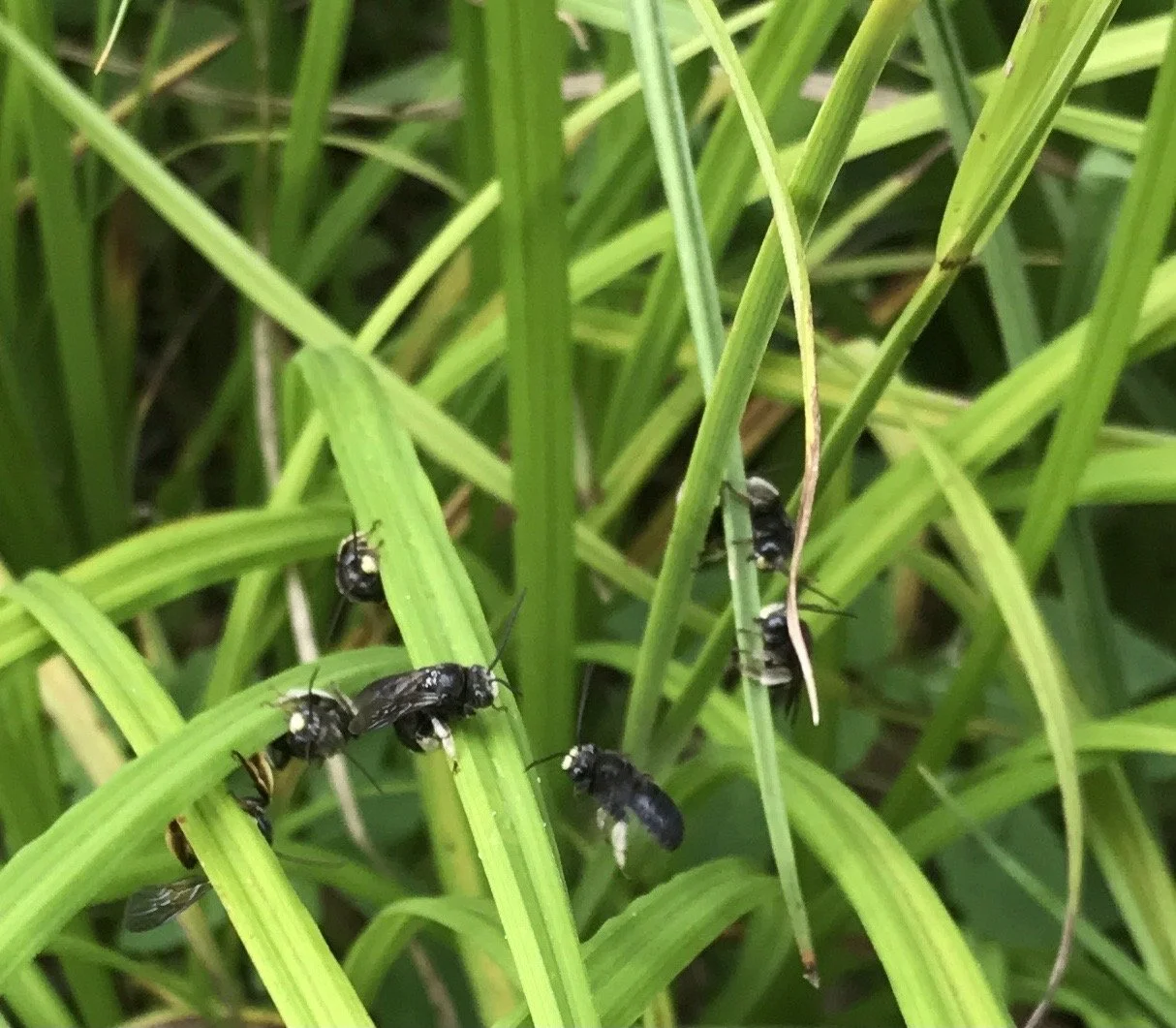
The matrix layer of the habitat, especially sedges, rushes and grasses have fibrous roots. These roots hold soil in place, slow rain water so it absorbs properly instead of running off, and help the overall structure of the ecosystem. They also provide cover for small animals including insects. An example of this is male longhorn bees that often gather on grass or sedge blades to sleep for the night. See photo below.

Male Longhorn Bees Gathering Together

Male longhorn bees stay together at night. Here they are gathering on the blades of a sedge, Carex crinita.

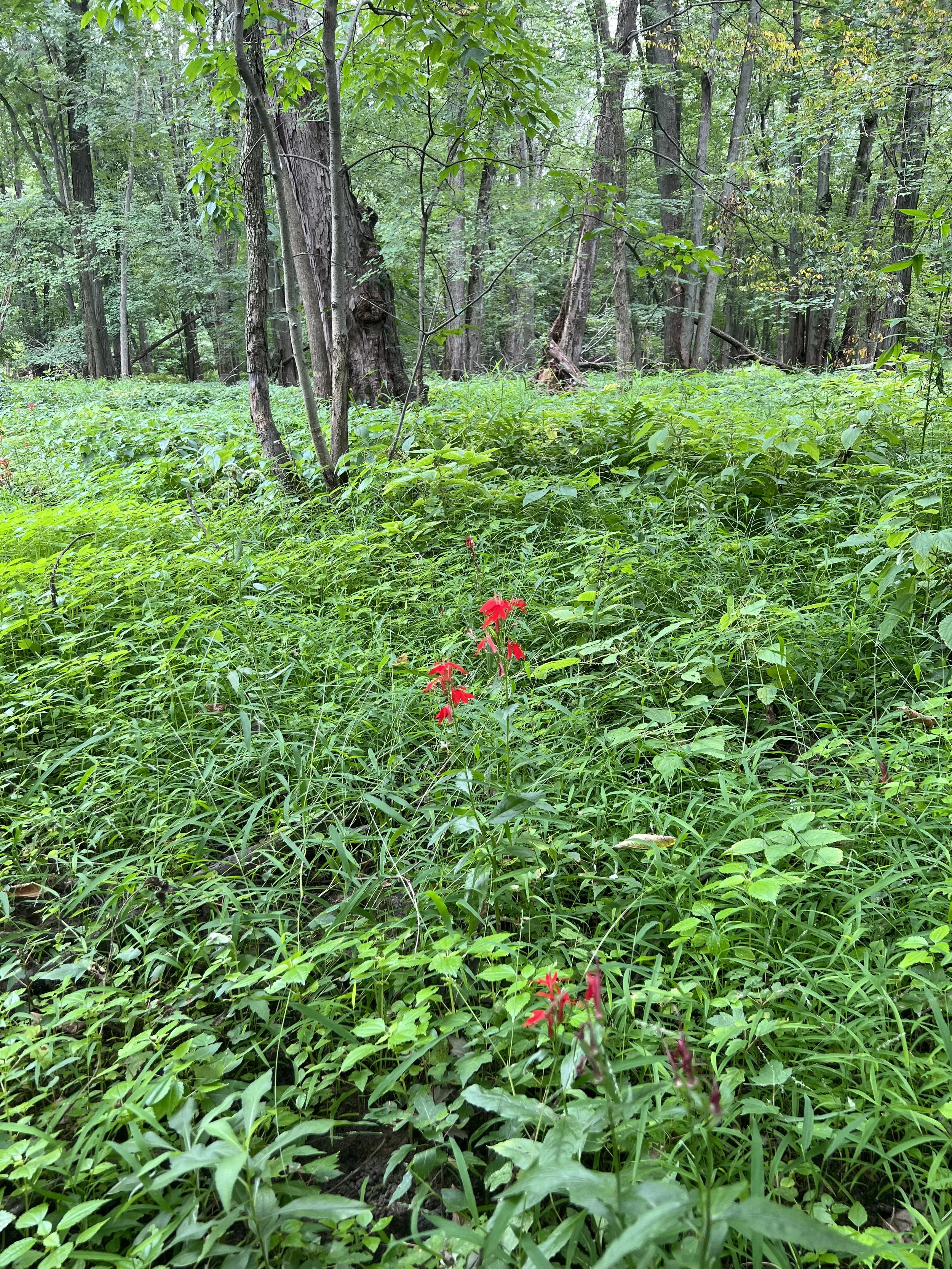
A Woodland Matrix

In this photo of a woodland, the cardinal flower is in groups (and is the only plant flowering) within the matrix of grasses, false nettle and wood nettle.

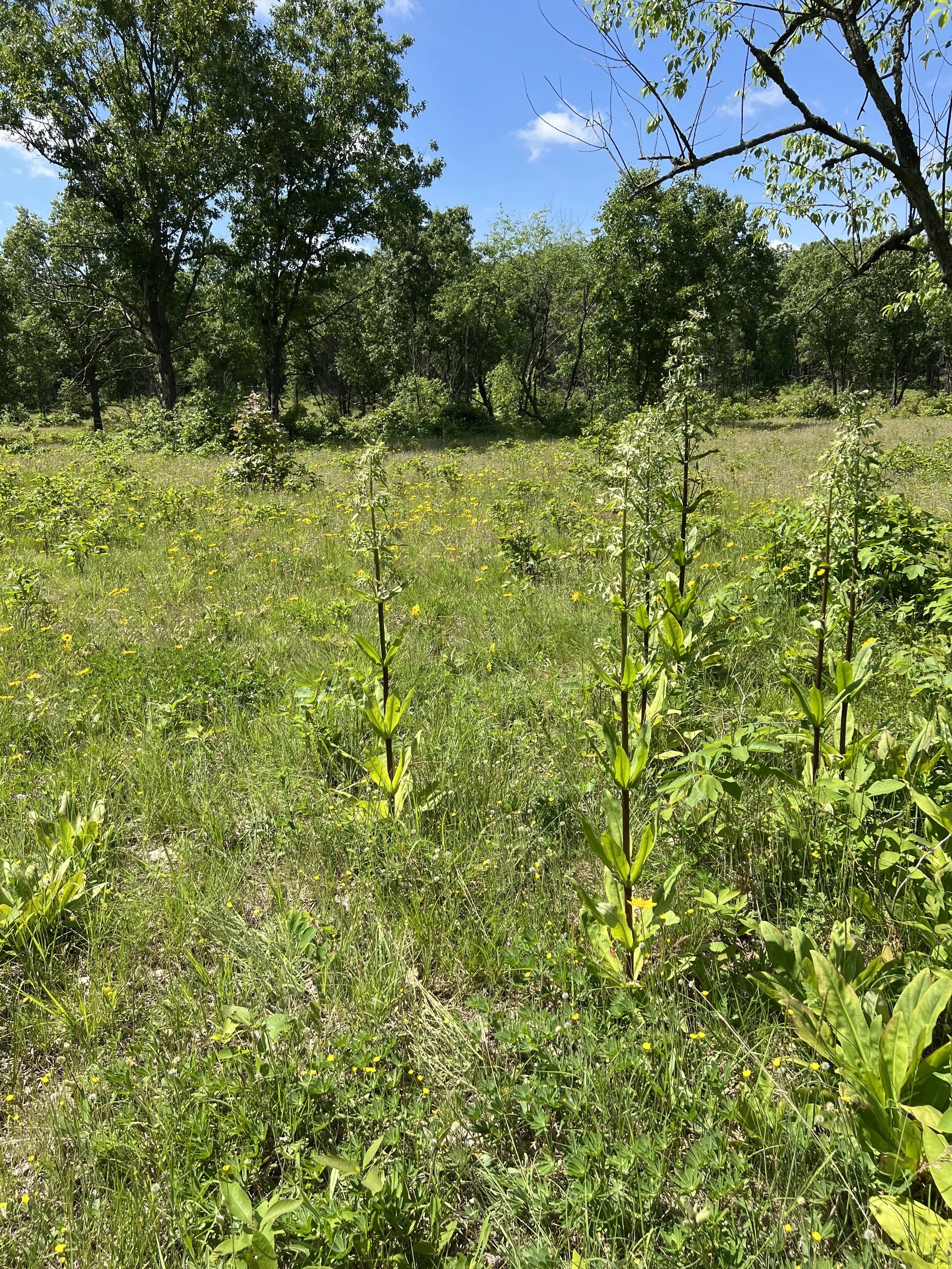
An Oak Savannah Matrix

On the right (or above), you can see an oak savannah type of habitat. It’s a little hard to see the plants in the background, but the yellow is lanceleaf coreopsis. At the base of the tall plants, are lupine that have finished flowering. In between all of those are grasses, like june grass and some fescue. The tall plants on the right are the “eye catchers” here. They are American Columbo and can grow 6-8 feet high!

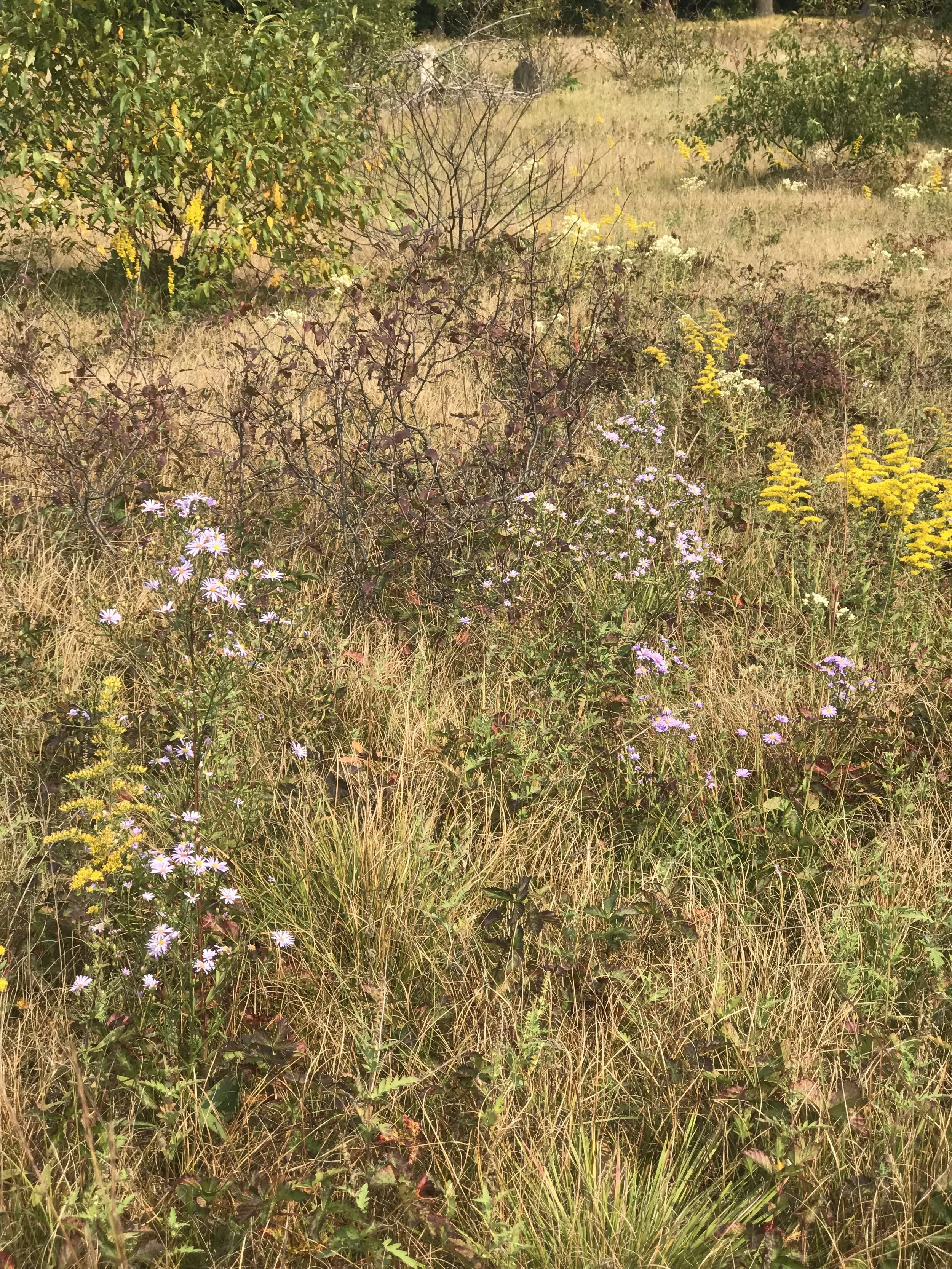
A Fall Prairie Matrix

This prairie has grasses, mostly June grass and panic grass, as the matrix plant, gray goldenrod and smooth blue aster as the plants in groups and a couple of shrubs that are large structural elements like the American Columbo is in the photo above.

As you can see from the examples above, there are a lot of matrices in natural settings. You can pattern your own gardens after these examples, whether they are in full sun or shade. We offer a large array of sedges, grasses and other ground covers in our shop. This is a good starting point for planting a matrix. We currently have ivory sedge and penn sedge offered as whole flats for this reason. We hope to offer other flats of this type of plant in the near future. (If you are looking for a certain plant as your matrix, be sure to let us know and we will try to provide it.)

Then, you will choose the plants that will appear in groups in your planting. Start small. With one flat of sedges, one flat ( 32, 2.5” pots) of flowering plants is enough. You will want 6-8 species to offer variety, including plants that bloom in all seasons. Finally, you might want 1-2 eye catching plants that are on the taller side.

The plants will all be planted fairly close together. This helps make a barrier to weeds, helps keep the soil shaded, and creates a setting that most insects and animals are comfortable living in.

It helps to map this type of garden out on graph paper. Start with the flowering plants. Put your grouped plants in 3’s and 5’s. Then add your eye-catching plants if you want to. When you are planting, your sedges or ground cover will take up all the rest of the space in between those plants. Check out the book “Prairie Up” by Benjamin Vogt. He has more information about creating a design.

Looking for something even simpler? We have added an option for 2026: garden kits. You have the option of Woodland Garden, Dry Shade Garden, Woodland Matrix Garden, or Dry Shade Matrix. These kits will help you plant your matrix because they come with a plan for planting under a deciduous tree. If you order one of the matrix gardens, you will also receive 2 quart pot size eye-catching plants.

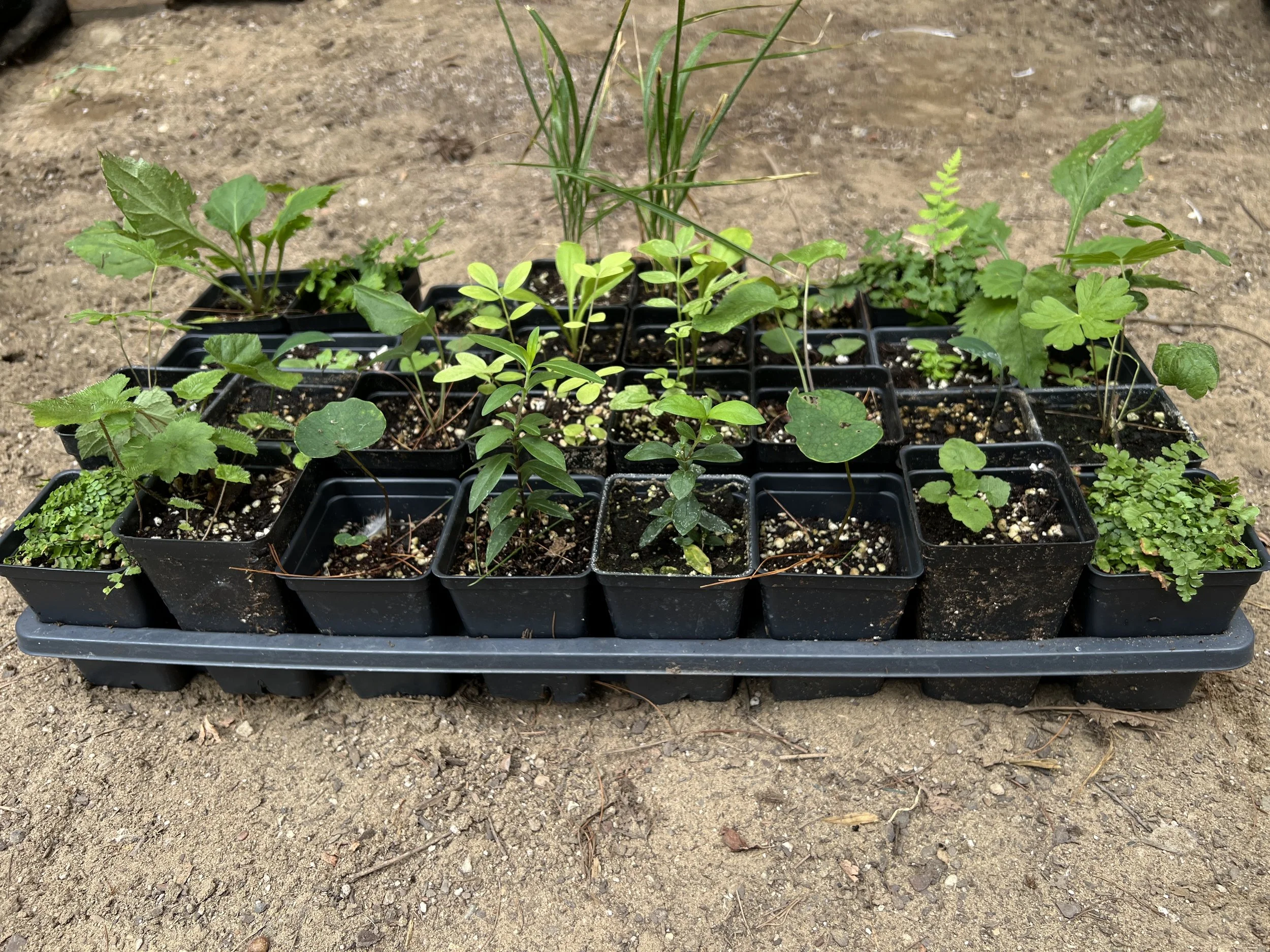
Woodland Garden Kit

This is an example of a Woodland Garden Kit. A Woodland Matrix Garden Kit will have less species overall to account for groupings.

Happy Matrix Planting!

Next
Next

The Importance of Organic Matter in the Soil