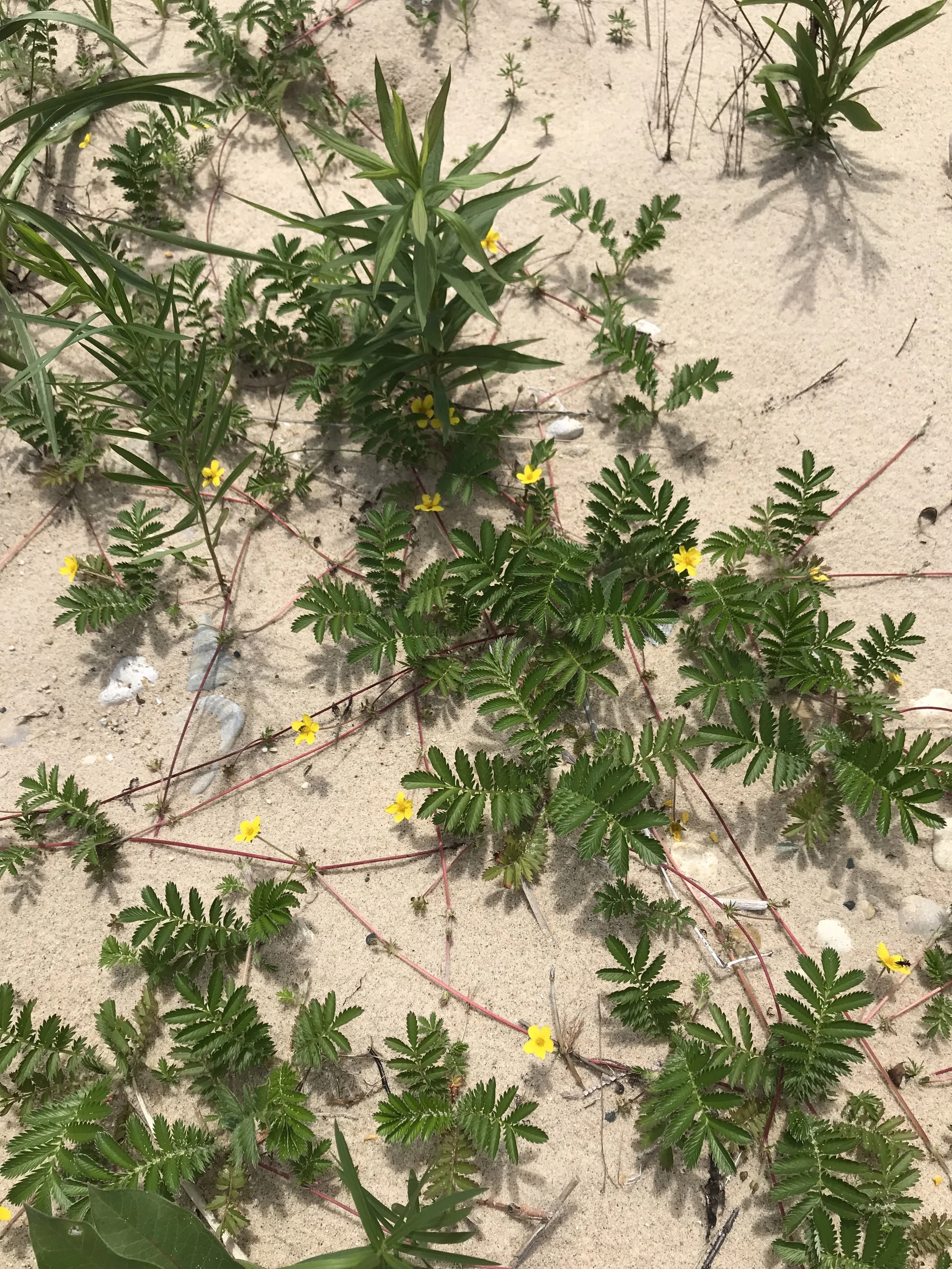
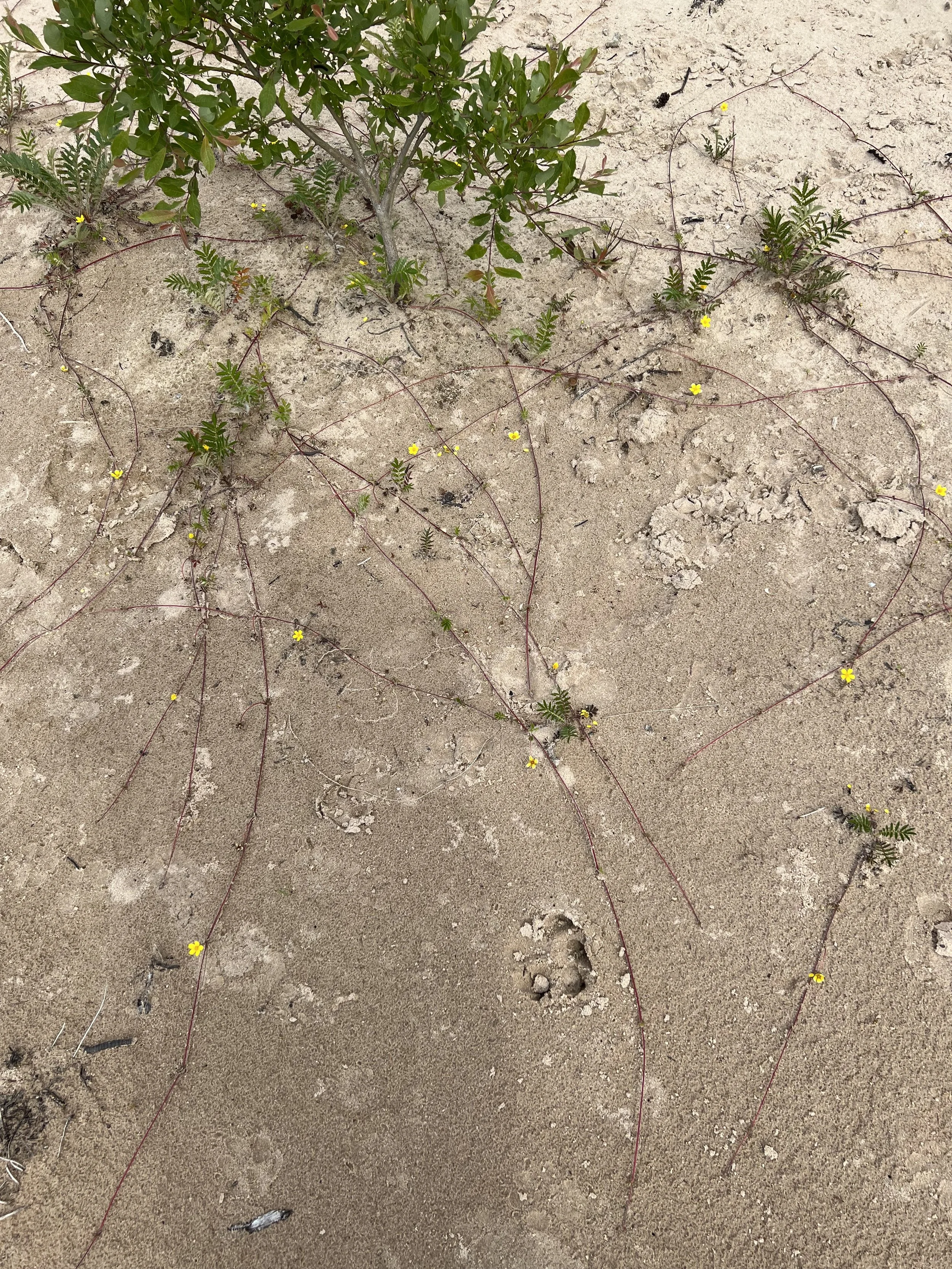
Common cinquefoil is as the name says, COMMON. It is found in a variety of sun and soil conditions, though in my experience, it isn’t happy in dry, full sun. It spreads by long stolons (above ground).
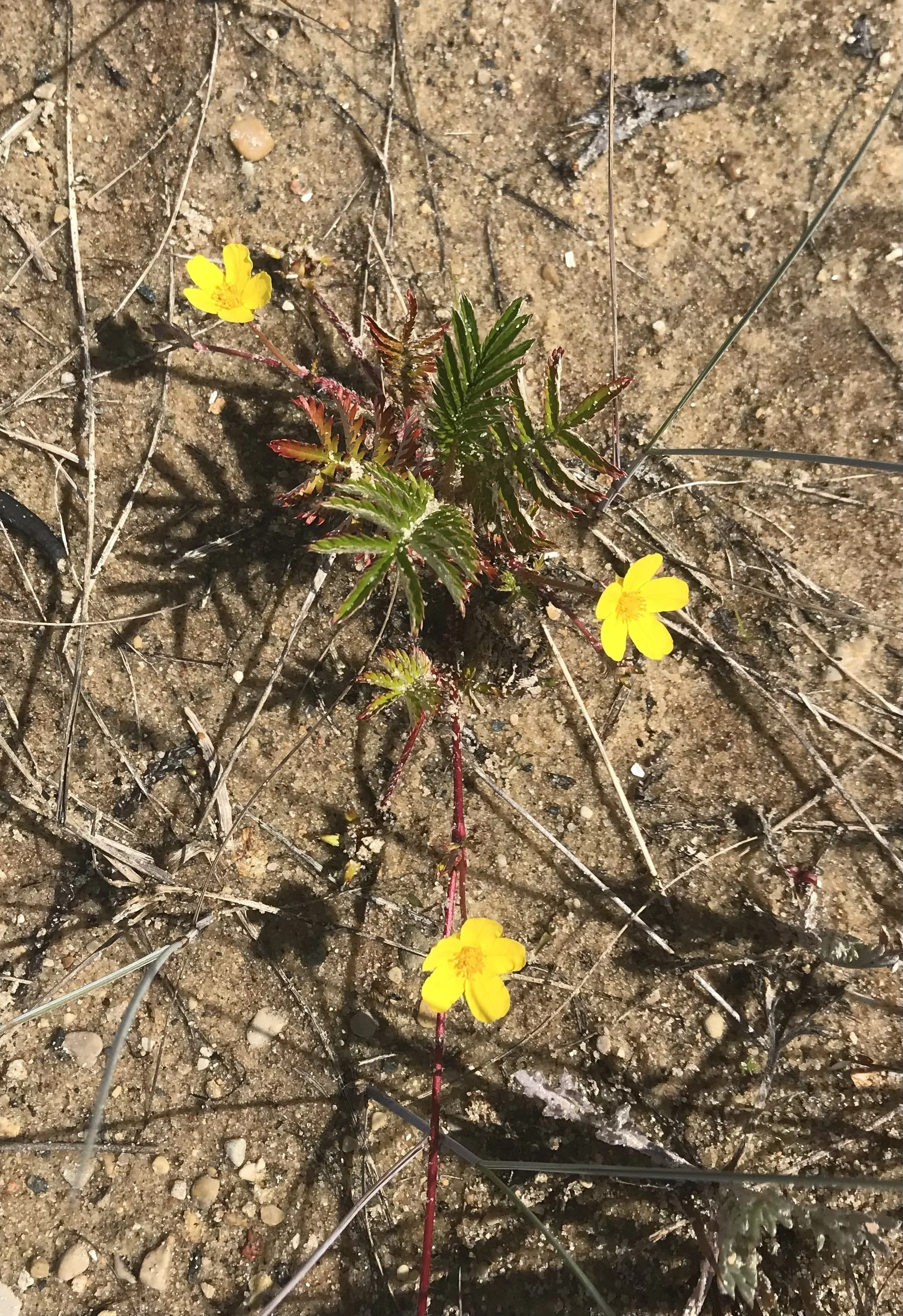
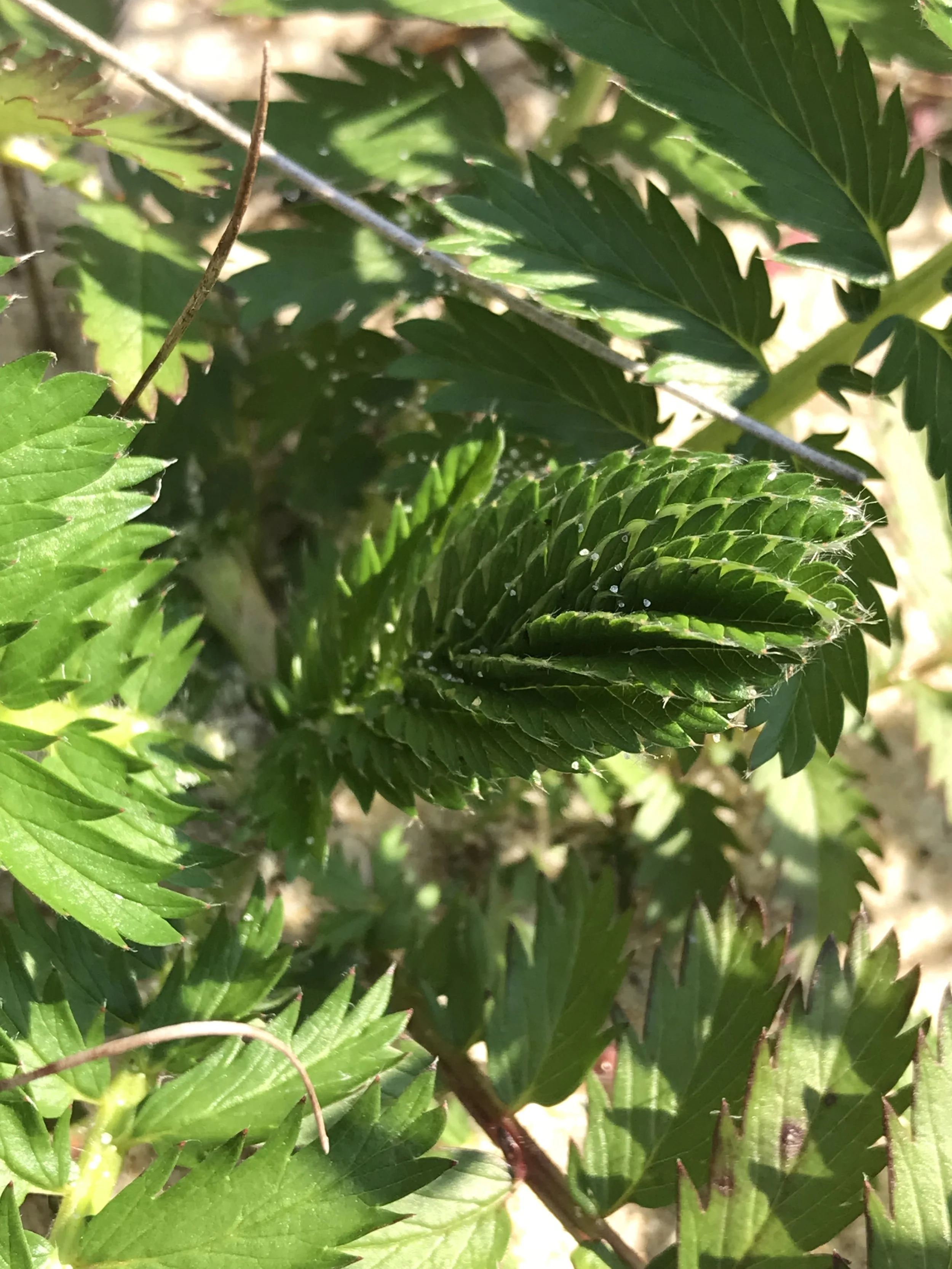
Leaves are compound and palmate (hand-shaped). The flowers are bright yellow with five petals and look rather like barren strawberry flowers. The flowers, though not profusive, provide nectar and pollen for bees and flies.
This is another wonderful groundcover plant like wild strawberry, lanceleaf frogfruit, and robin’s plantain that you can plant almost anywhere to grow in and among other plants providing a “green mulch.”
Using regular wood mulch continuously over time can be damaging to the natural soil communities. If you stop and think about nature, there aren’t many cases when Mother Nature mulches herself. Pileated woodpeckers or freezing rain conditions are two cases I can think of, where some natural mulching might occur, but not 3-6 inches of mulch year over year. You can use green mulch instead which benefits the organisms that use the green mulch plants. Green mulch shades the soil, protecting it from the rays of the sun, keeping more moisture in the soil. Green mulches help suppress weeds, helps build new soil, and creates micro-habitats.
Companion plants for Common Cinquefoil: Wild strawberry, wintergreen, common wood rush, ivory sedge, Penn sedge, violets. But, really you can put it anywhere as a ground cover as long as it isn’t too dry.
Common Cinquefoil (Potentilla simplex)
Michigan Flora reference page for state distribution: Common Cinquefoil
Height: 6-15”
Bloom time: May-August
Soil: rich, moist to dry, clay, sand, gravelly
Sun: part-sun to shade
Plant spacing: 12”
Flower: yellow
Life cycle: perennial
Family: Rosaceae
Seed source: Michigan
Common cinquefoil is as the name says, COMMON. It is found in a variety of sun and soil conditions, though in my experience, it isn’t happy in dry, full sun. It spreads by long stolons (above ground).
Leaves are compound and palmate (hand-shaped). The flowers are bright yellow with five petals and look rather like barren strawberry flowers. The flowers, though not profusive, provide nectar and pollen for bees and flies.
This is another wonderful groundcover plant like wild strawberry, lanceleaf frogfruit, and robin’s plantain that you can plant almost anywhere to grow in and among other plants providing a “green mulch.”
Using regular wood mulch continuously over time can be damaging to the natural soil communities. If you stop and think about nature, there aren’t many cases when Mother Nature mulches herself. Pileated woodpeckers or freezing rain conditions are two cases I can think of, where some natural mulching might occur, but not 3-6 inches of mulch year over year. You can use green mulch instead which benefits the organisms that use the green mulch plants. Green mulch shades the soil, protecting it from the rays of the sun, keeping more moisture in the soil. Green mulches help suppress weeds, helps build new soil, and creates micro-habitats.
Companion plants for Common Cinquefoil: Wild strawberry, wintergreen, common wood rush, ivory sedge, Penn sedge, violets. But, really you can put it anywhere as a ground cover as long as it isn’t too dry.
Common Cinquefoil (Potentilla simplex)
Michigan Flora reference page for state distribution: Common Cinquefoil
Height: 6-15”
Bloom time: May-August
Soil: rich, moist to dry, clay, sand, gravelly
Sun: part-sun to shade
Plant spacing: 12”
Flower: yellow
Life cycle: perennial
Family: Rosaceae
Seed source: Michigan
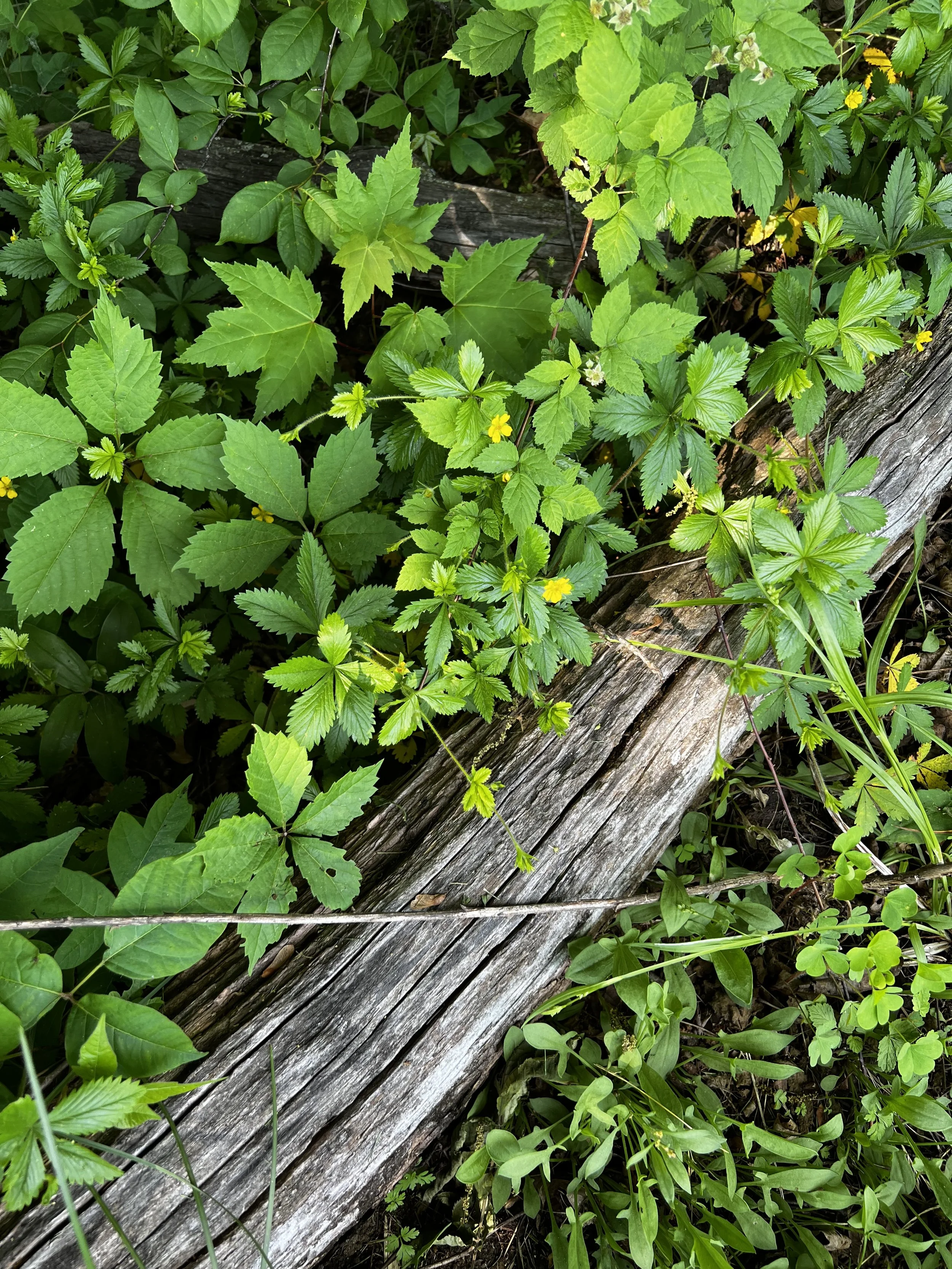 Image 1 of 5
 Image 2 of 5
 Image 3 of 5
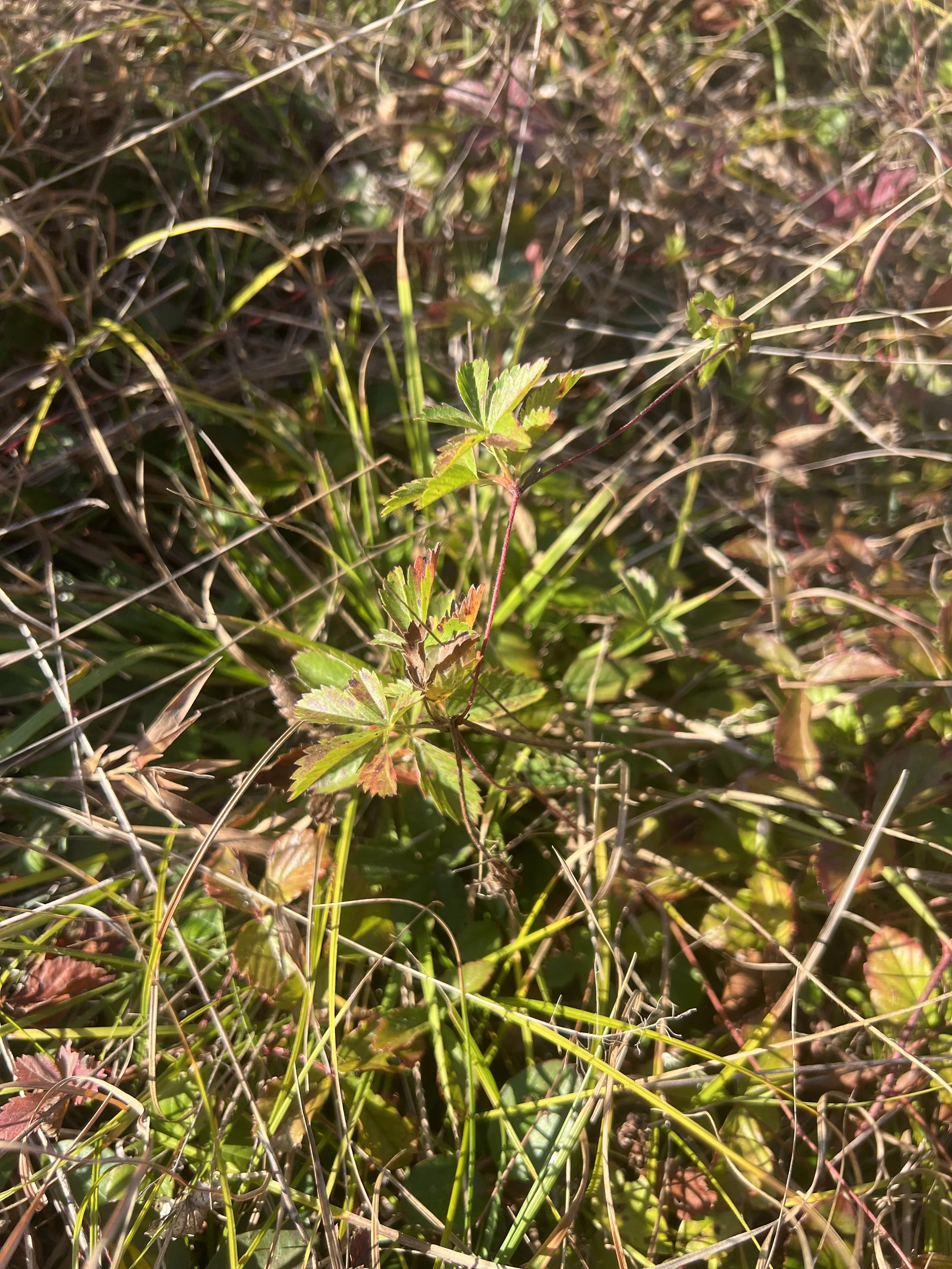 Image 4 of 5
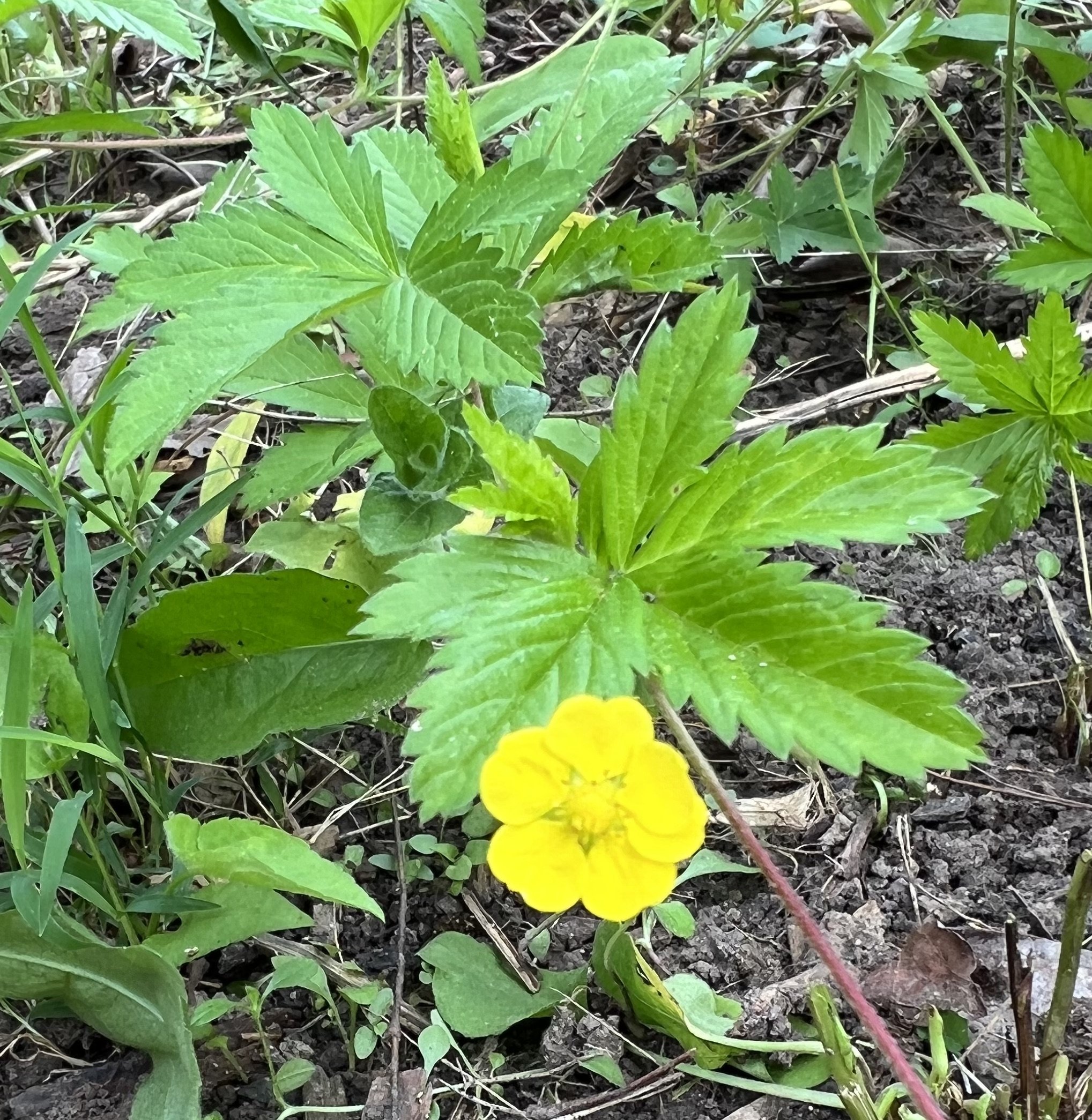 Image 5 of 5