Michigan Lily is one of two native lilies in Michigan. Michigan Lily likes ample moisture in the soil. It can be found in ditches, wetlands, and swampy forests. It is native in the bottom 2/3 of the lower peninsula and in the western upper peninsula.
This plant grows from 2-4 feet tall and has whorls of leaves that are on the unbranching stem. At the top there are usually four or more large, drooping orange flowers with recurving petals (technically tepals) that have red/purple dots on them. The stamens with anthers hang below the petals and are covered in dark orange pollen and the flowers aLao offer nectar that hummingbirds and butterflies enjoy.
Cross pollination is necessary for seeds to be formed. Once pollination occurs, tepals fall away and a seed pod forms with three stacks of flat seeds.
Something that may preclude you from having these lovely plants in your yard are the bright red Scarlet Lily Beetles. They showed up in my yard and decimated my Michigan Lilies. I may try again in a few years.
Companion Plants: Bishop’s Cap, Marsh Marigold, Wild Leeks, Plantain Leaf Sedge, Virginia Waterleaf
Michigan Lily (Lilium michiganense)
Michigan Flora reference page for statewide distribution: Michigan Lily
Bloom: June-July
Height: 2-4 feet
Soil: medium wet loam, sandy loam
Sun: full sun to full shade
Plant spacing: 2 feet
Flower color: orange
Life cycle: perennial
Family: Liliaceae
Seed source: Michigan
Michigan Lily is one of two native lilies in Michigan. Michigan Lily likes ample moisture in the soil. It can be found in ditches, wetlands, and swampy forests. It is native in the bottom 2/3 of the lower peninsula and in the western upper peninsula.
This plant grows from 2-4 feet tall and has whorls of leaves that are on the unbranching stem. At the top there are usually four or more large, drooping orange flowers with recurving petals (technically tepals) that have red/purple dots on them. The stamens with anthers hang below the petals and are covered in dark orange pollen and the flowers aLao offer nectar that hummingbirds and butterflies enjoy.
Cross pollination is necessary for seeds to be formed. Once pollination occurs, tepals fall away and a seed pod forms with three stacks of flat seeds.
Something that may preclude you from having these lovely plants in your yard are the bright red Scarlet Lily Beetles. They showed up in my yard and decimated my Michigan Lilies. I may try again in a few years.
Companion Plants: Bishop’s Cap, Marsh Marigold, Wild Leeks, Plantain Leaf Sedge, Virginia Waterleaf
Michigan Lily (Lilium michiganense)
Michigan Flora reference page for statewide distribution: Michigan Lily
Bloom: June-July
Height: 2-4 feet
Soil: medium wet loam, sandy loam
Sun: full sun to full shade
Plant spacing: 2 feet
Flower color: orange
Life cycle: perennial
Family: Liliaceae
Seed source: Michigan
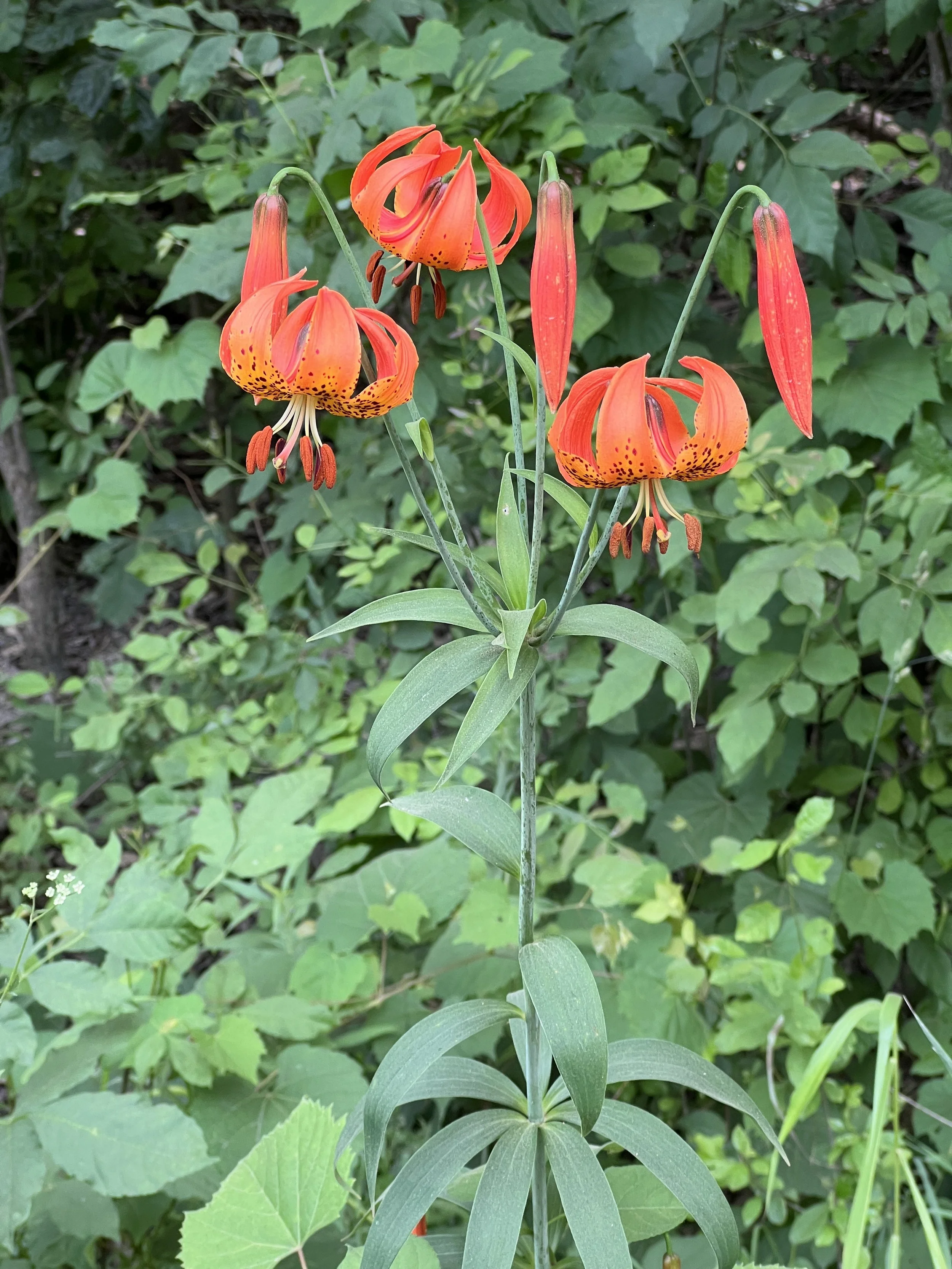 Image 1 of 3
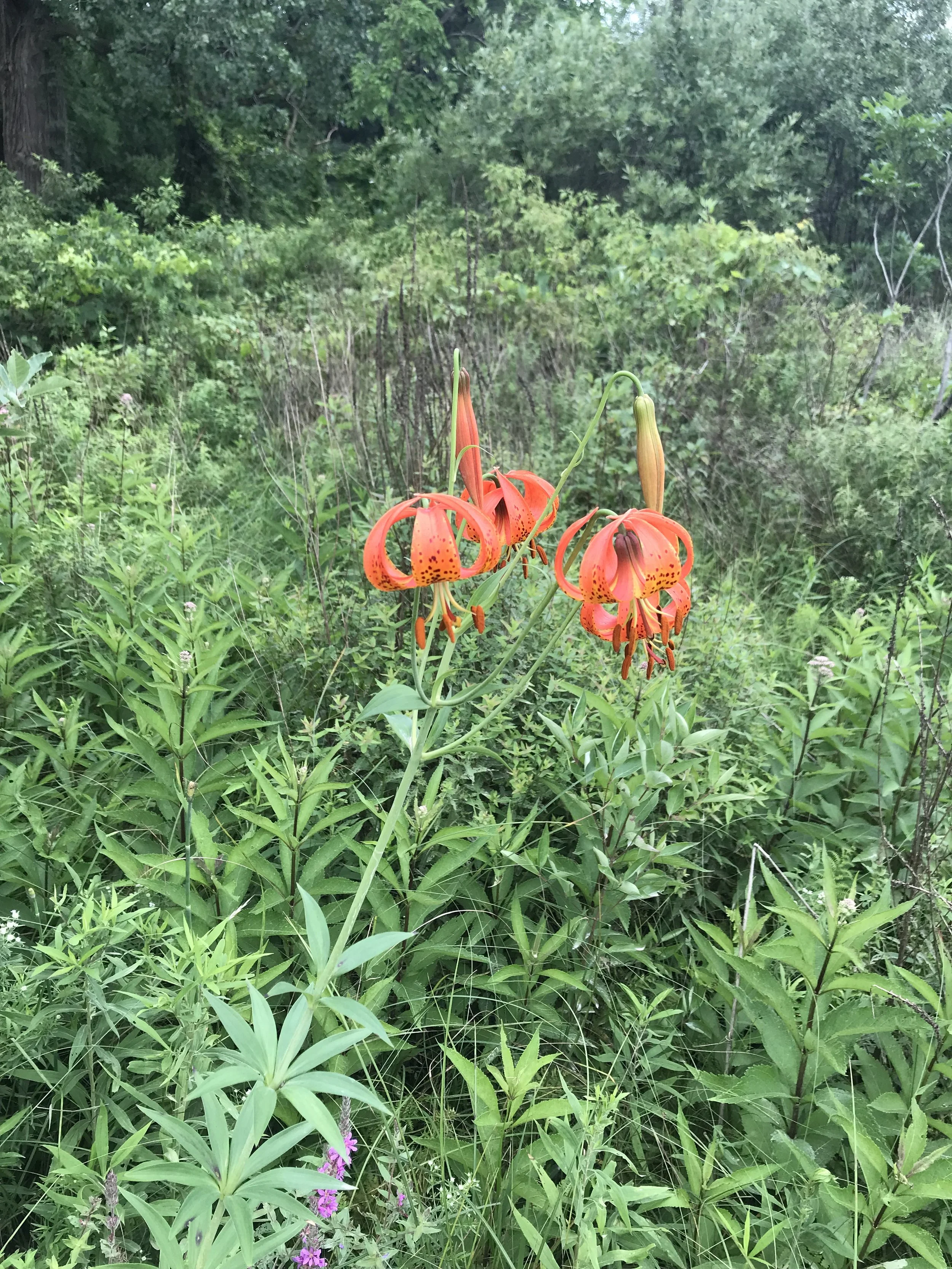 Image 2 of 3
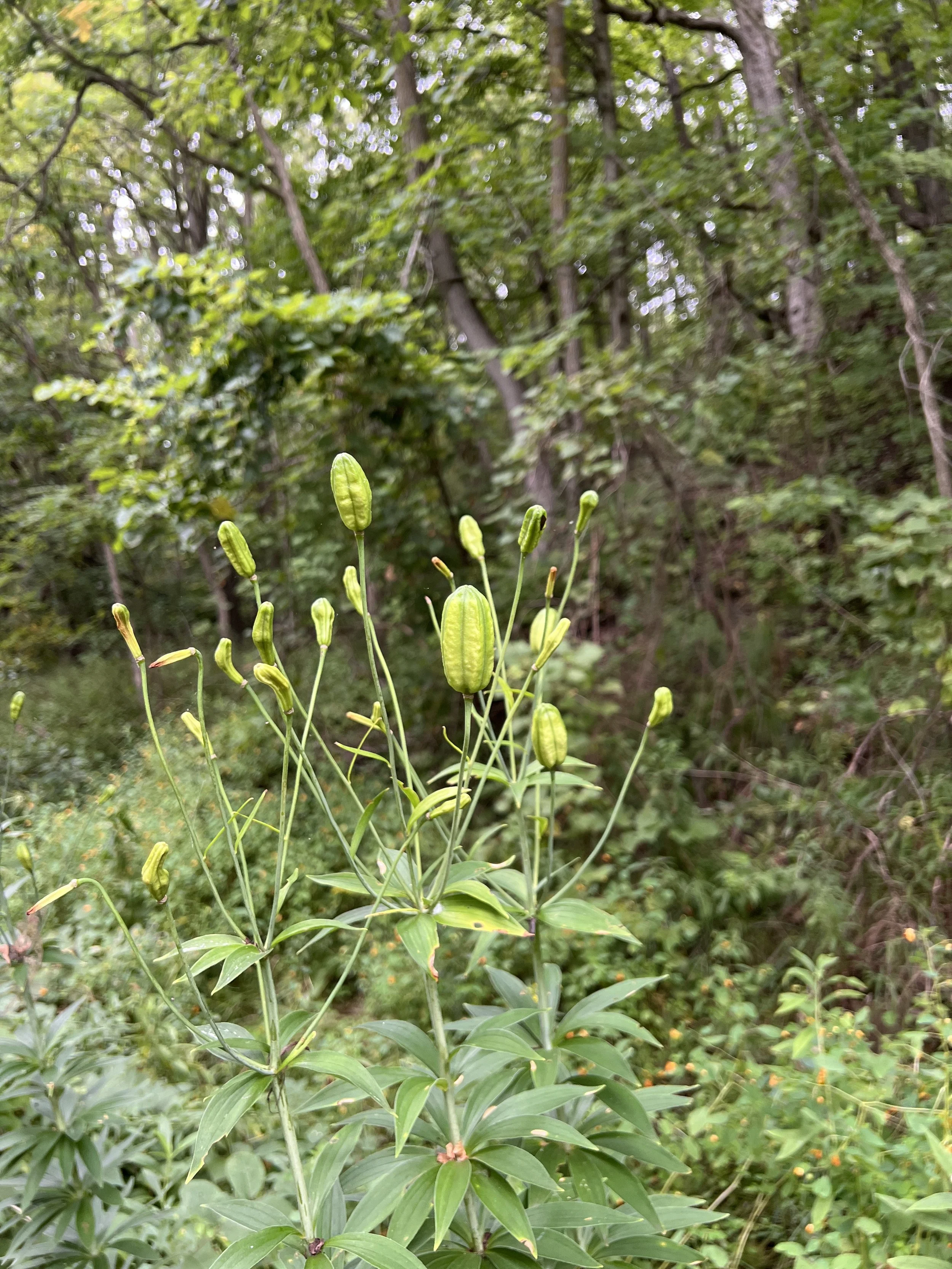 Image 3 of 3