Did you know that there are two species of prickly pear cactus in Michigan?
Fragile Prickly Pear (Opuntia fragilis) iis a neat little cactus that is more widespread west and northwest of us. It has tiny pads that break off easily from the other pads. It is found only in the Huron Mountains in the UP within exclusive club lands.
Opuntia cespitosa (Eastern Prickly Pear Cactus) is native mostly to the western counties of the lower peninsula. According to Michigan Flora, there are many areas where prickly pear species from more western areas have been planted in cemeteries and also in dry sandy areas. There are many species of prickly pear cactus in the United States and it can be tricky to tell them apart.
Our species has yellow flowers with pink/red centers. They grow from the top curve of the pad. They have many stamens and then a central ovary. The flowers only last a single day. Fruits that are initially green and then reddish in color are edible, but mostly they are full of hard brown seeds. Mammals and some birds may eat these fruits.
The pads are a blue-green color and are about 3-6 inches long and and 2-5 inches wide. The plant can grow from 6 inches to 24 inches high because the pads grow “stacked” on top of other pads. These plants will spread by their fibrous roots. Pads are evergreen, though they wrinkle up like a raisin during the winter months.
Interestingly, there are moth species whose caterpillars feed on the pads of prickly pears. See the photos for a moth I found on a pad, but this moth is apparently not one of the few who use it as host plant.
We are including this plant in the category of “Our Favorite Things.” It can grow in part shade and in soil other than sand if the soil drains well.
Eastern Prickly Pear Cactus (Opuntia cespitosa)
Michigan Flora reference page for state distribution: Eastern Prickly Pear
Height: 6-24 inches
Bloom Time: June-July
Soil: well draining, sand, loam, or even with some clay as long as it drains
Sun: part to full sun
Plant spacing: 12 inches
Flower: Yellow with reddish center
Life cycle: perennial
Family: Cactaceae
Seed source: Michigan
Did you know that there are two species of prickly pear cactus in Michigan?
Fragile Prickly Pear (Opuntia fragilis) iis a neat little cactus that is more widespread west and northwest of us. It has tiny pads that break off easily from the other pads. It is found only in the Huron Mountains in the UP within exclusive club lands.
Opuntia cespitosa (Eastern Prickly Pear Cactus) is native mostly to the western counties of the lower peninsula. According to Michigan Flora, there are many areas where prickly pear species from more western areas have been planted in cemeteries and also in dry sandy areas. There are many species of prickly pear cactus in the United States and it can be tricky to tell them apart.
Our species has yellow flowers with pink/red centers. They grow from the top curve of the pad. They have many stamens and then a central ovary. The flowers only last a single day. Fruits that are initially green and then reddish in color are edible, but mostly they are full of hard brown seeds. Mammals and some birds may eat these fruits.
The pads are a blue-green color and are about 3-6 inches long and and 2-5 inches wide. The plant can grow from 6 inches to 24 inches high because the pads grow “stacked” on top of other pads. These plants will spread by their fibrous roots. Pads are evergreen, though they wrinkle up like a raisin during the winter months.
Interestingly, there are moth species whose caterpillars feed on the pads of prickly pears. See the photos for a moth I found on a pad, but this moth is apparently not one of the few who use it as host plant.
We are including this plant in the category of “Our Favorite Things.” It can grow in part shade and in soil other than sand if the soil drains well.
Eastern Prickly Pear Cactus (Opuntia cespitosa)
Michigan Flora reference page for state distribution: Eastern Prickly Pear
Height: 6-24 inches
Bloom Time: June-July
Soil: well draining, sand, loam, or even with some clay as long as it drains
Sun: part to full sun
Plant spacing: 12 inches
Flower: Yellow with reddish center
Life cycle: perennial
Family: Cactaceae
Seed source: Michigan
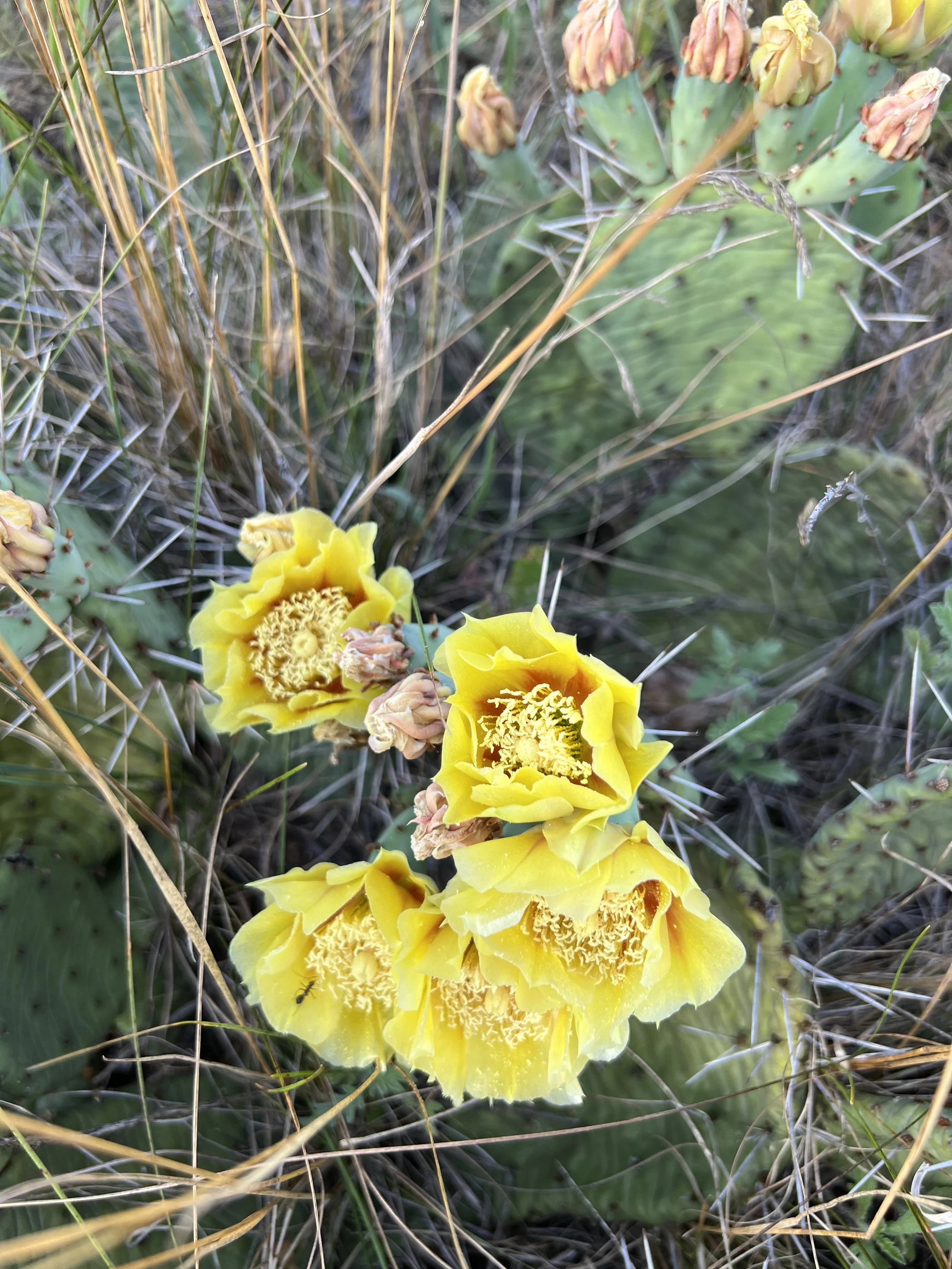 Image 1 of 4
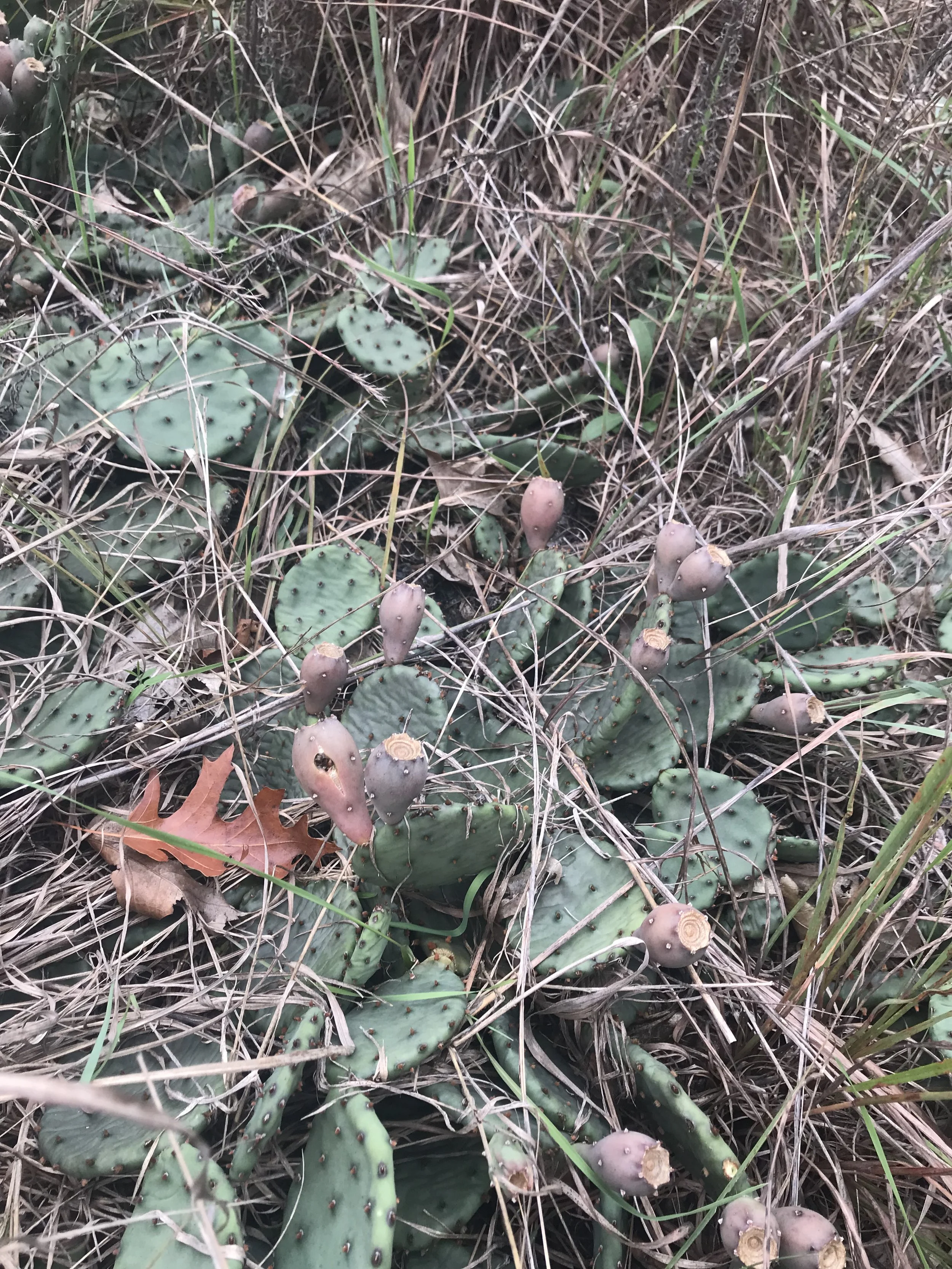 Image 2 of 4
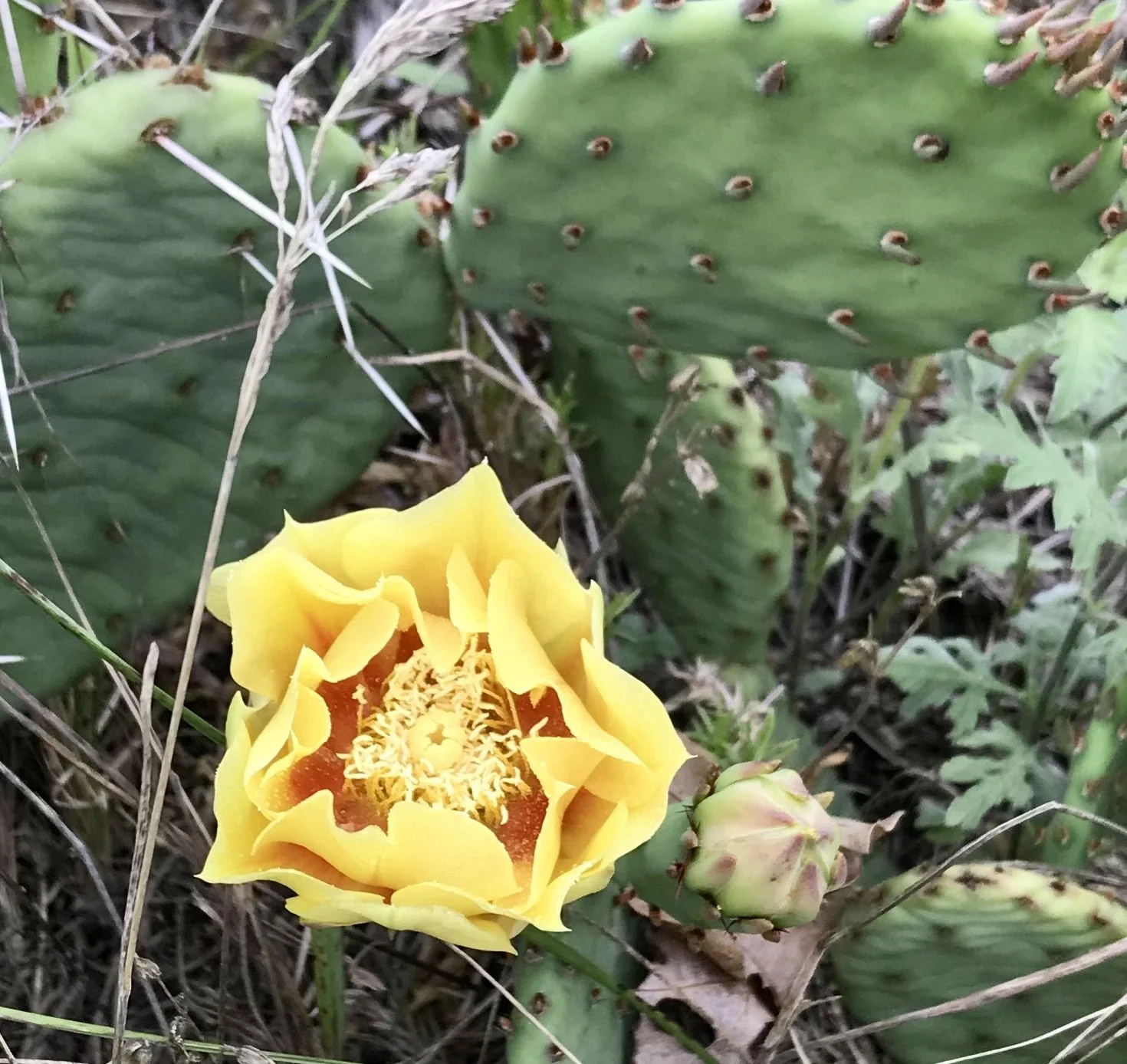 Image 3 of 4
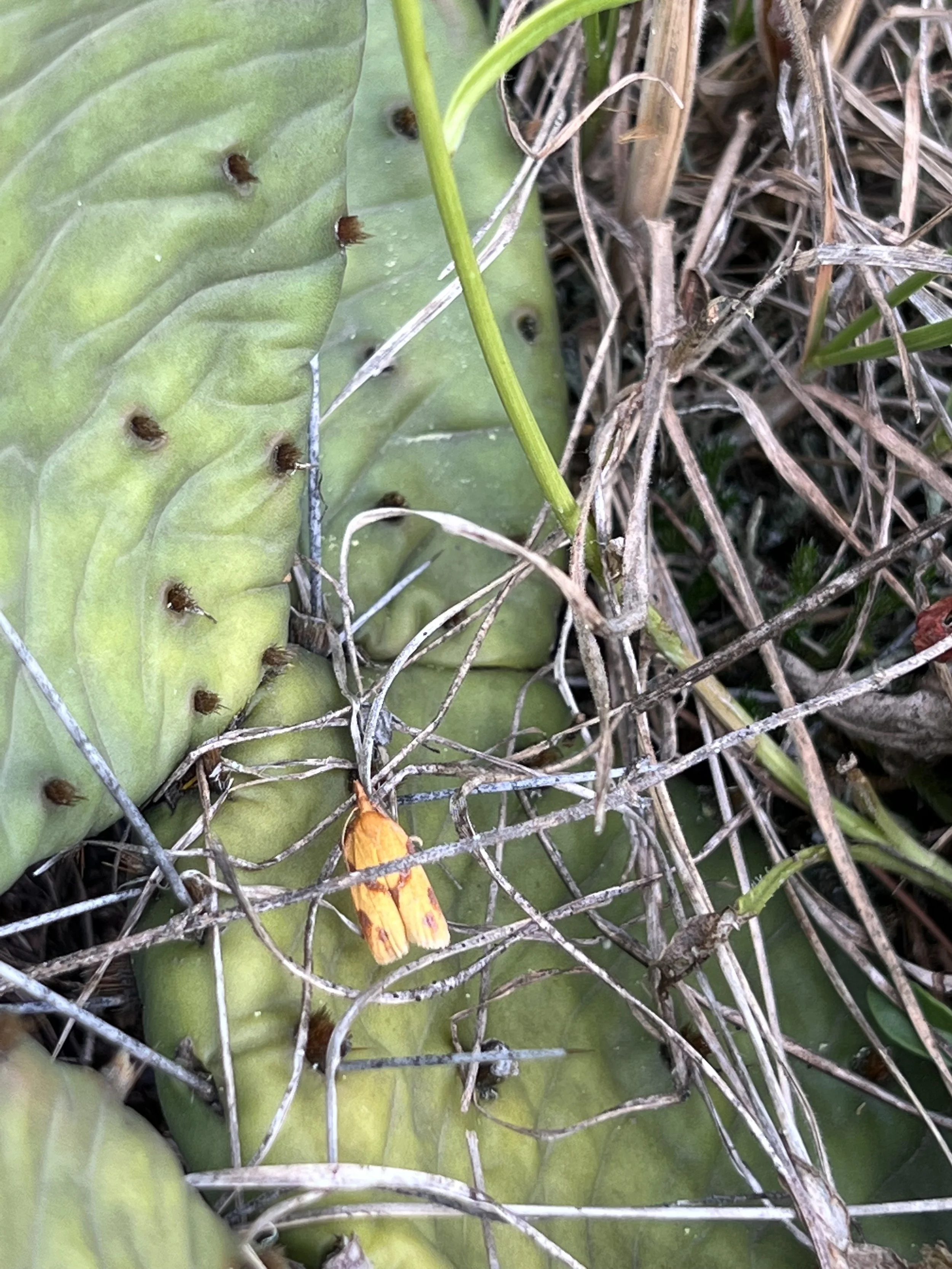 Image 4 of 4