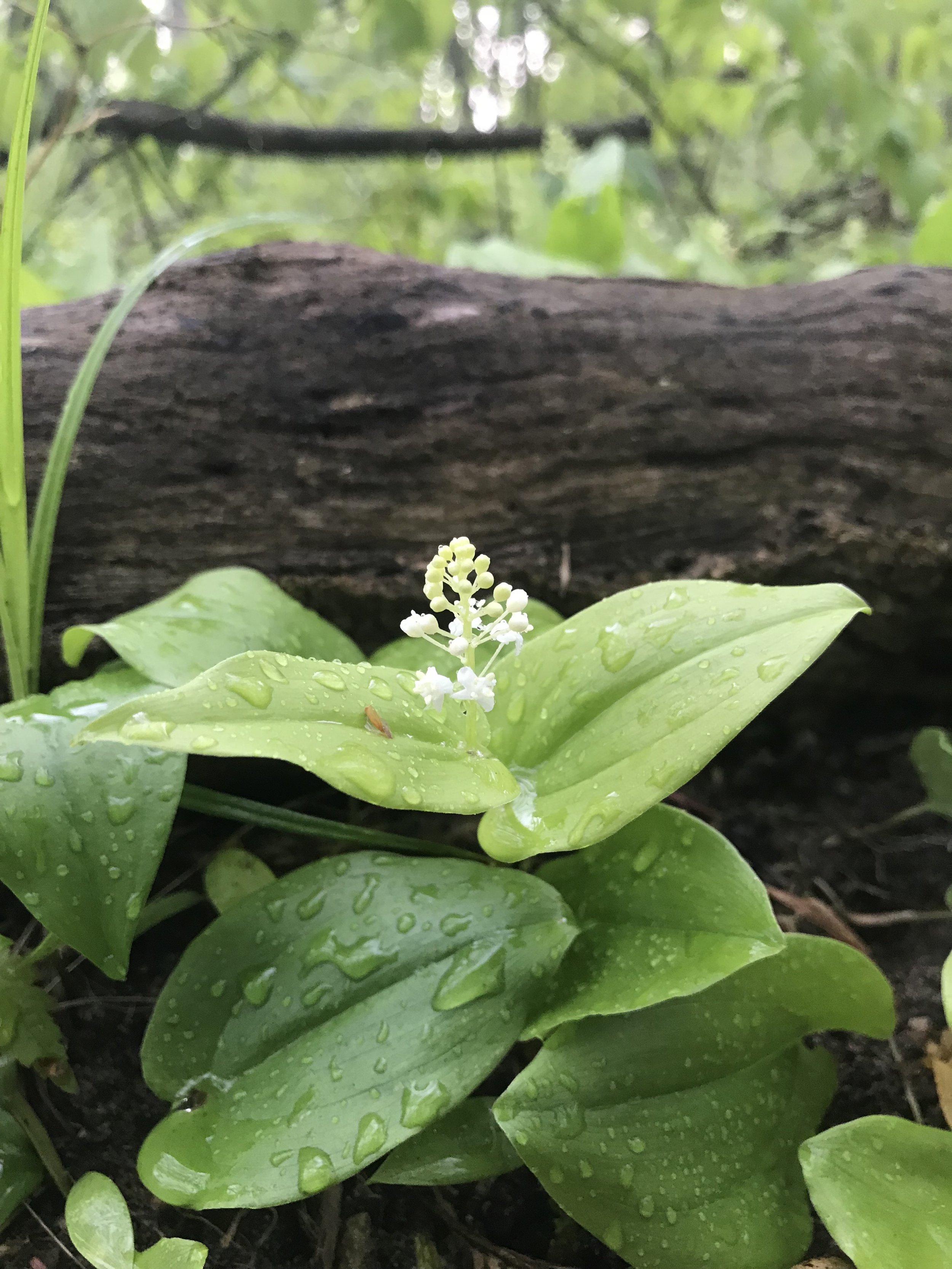
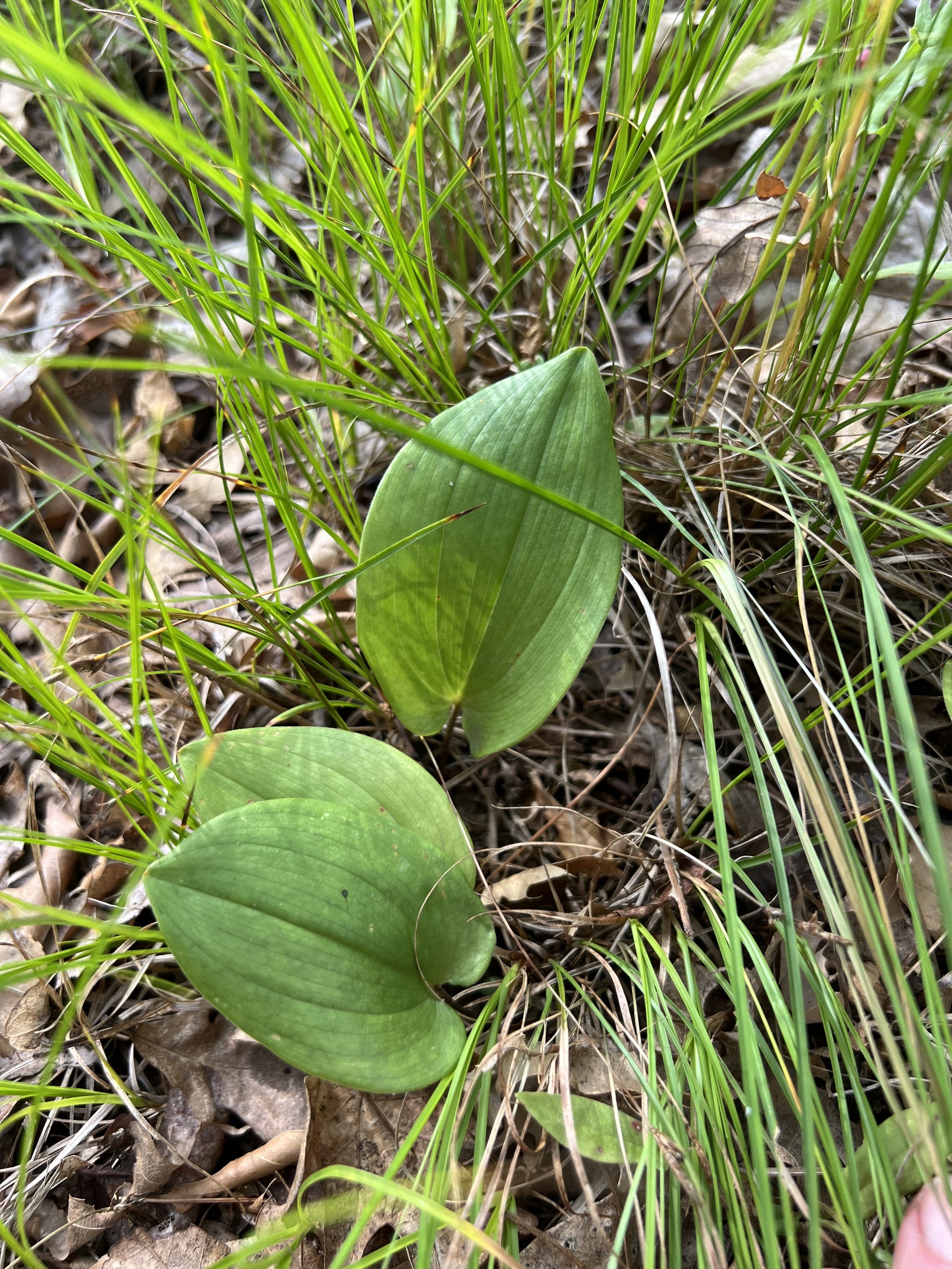
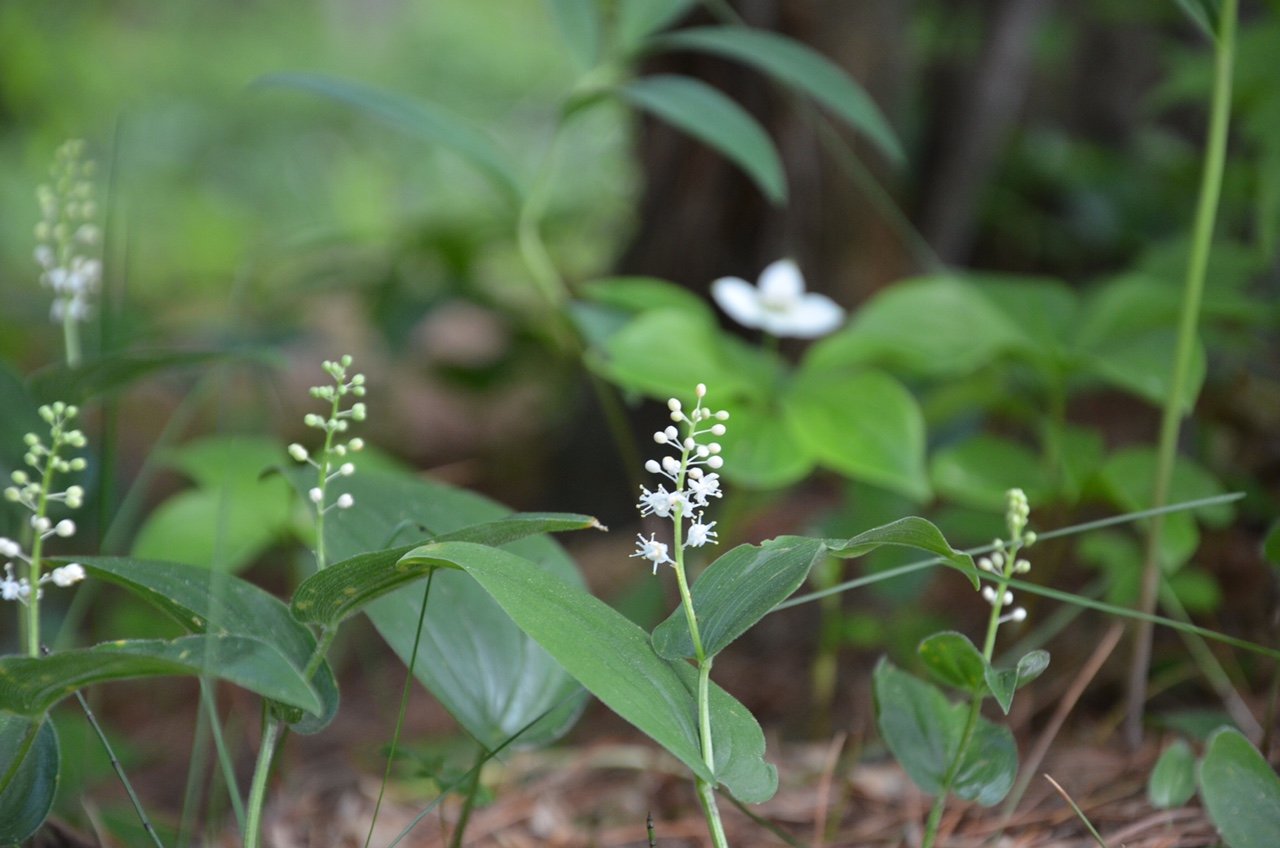
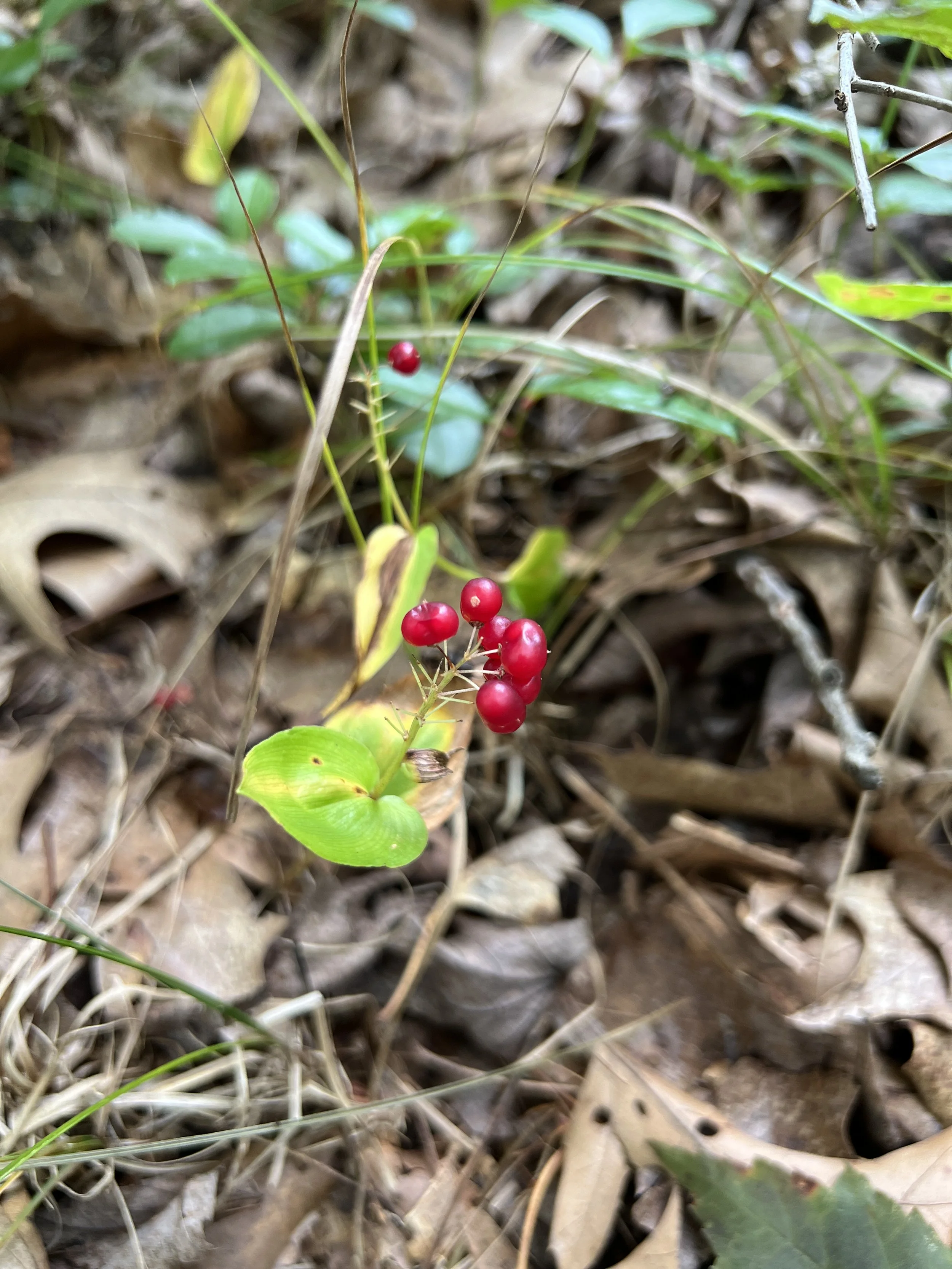
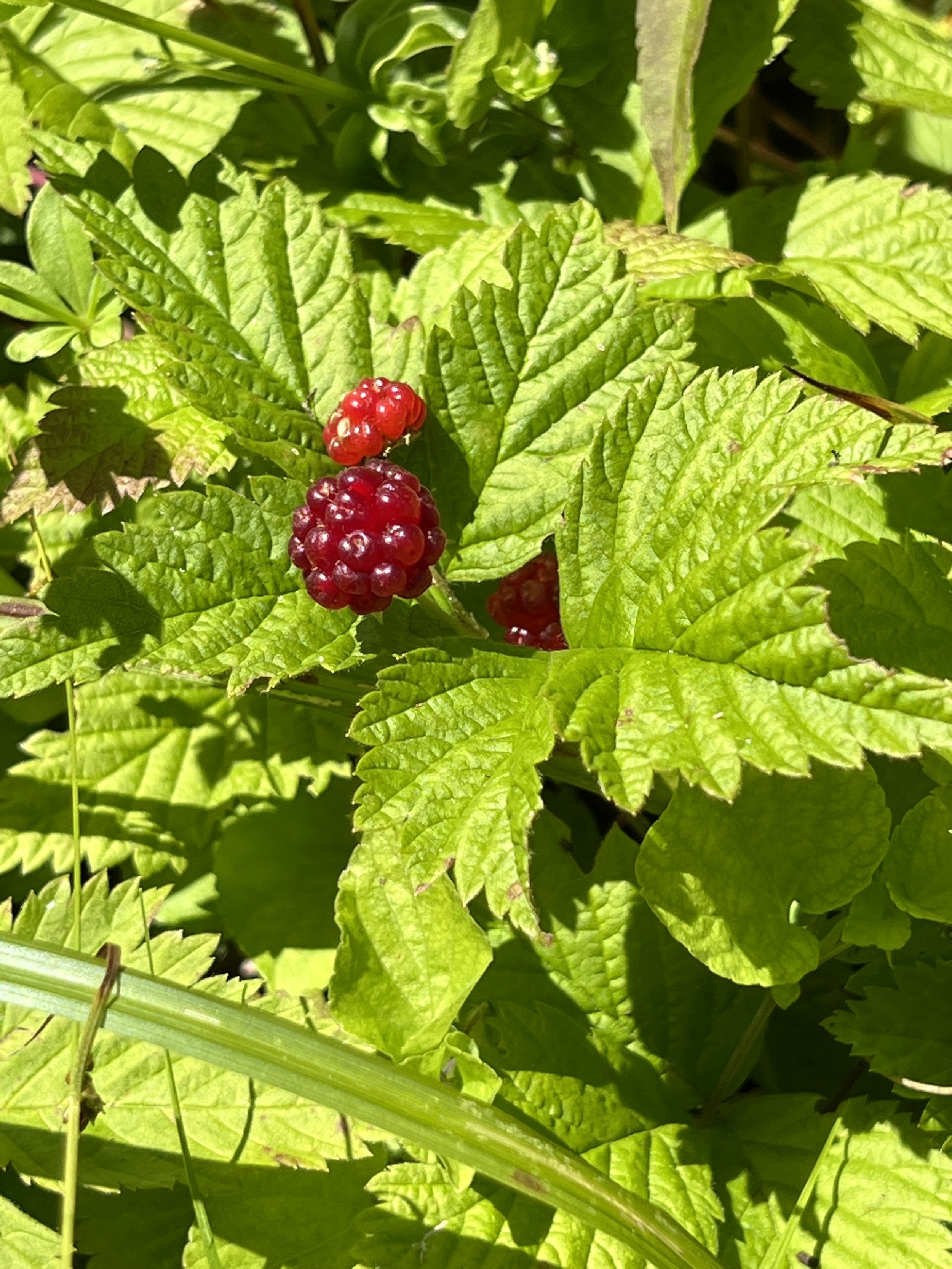
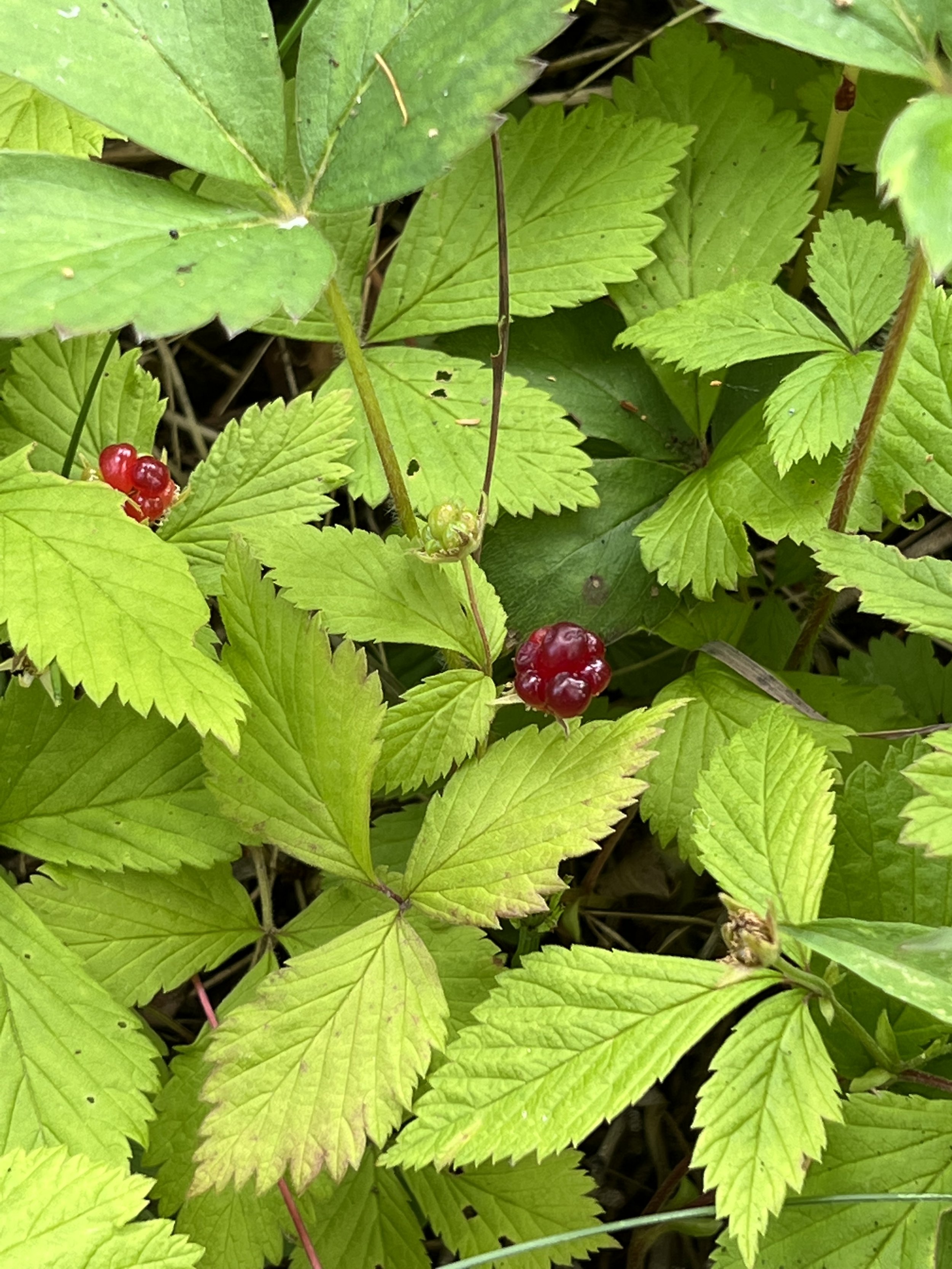
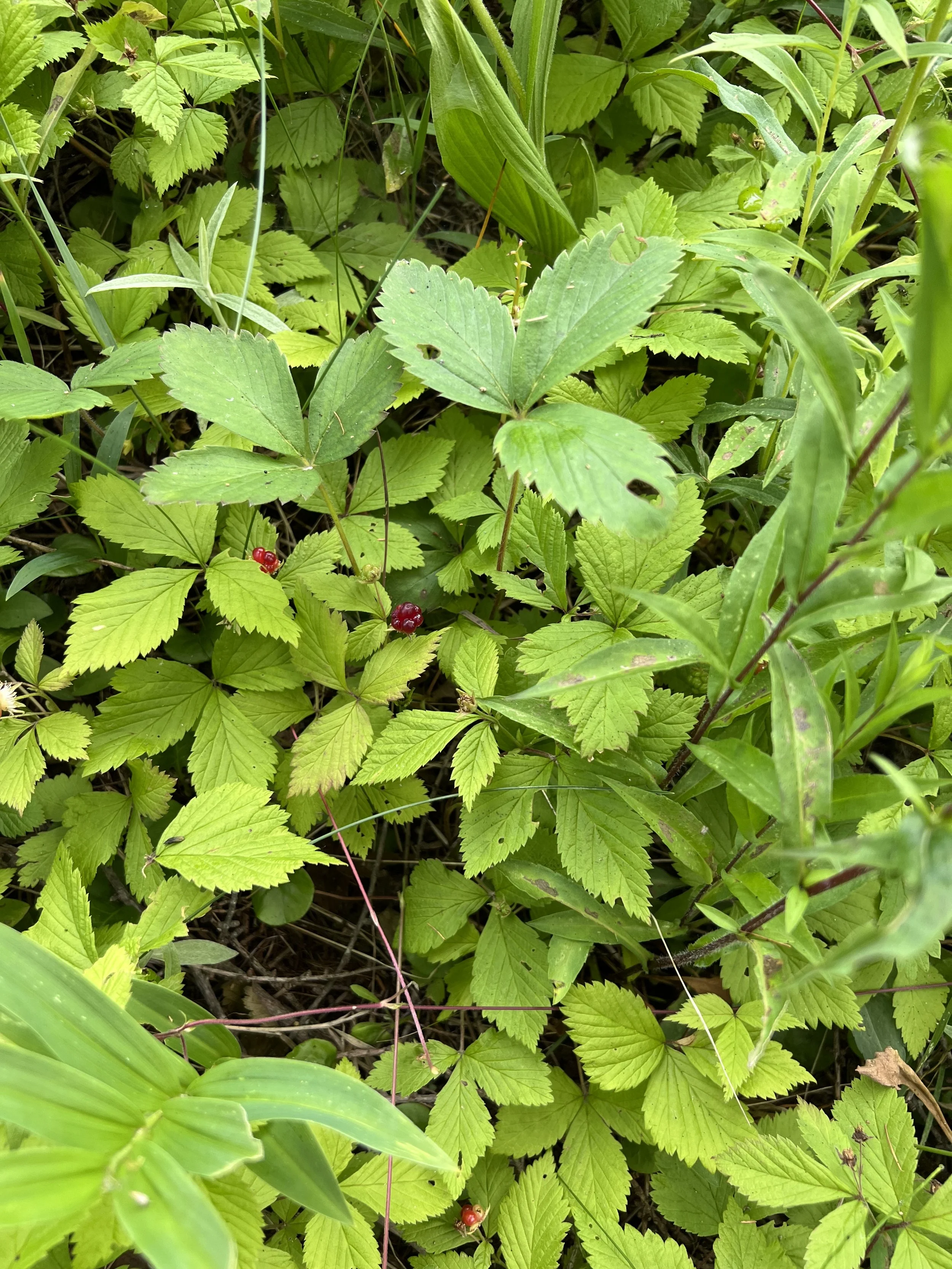
Wintergreen, also known as Tea Berry is actually a tiny shrub which is found throughout the state of Michigan, found in dry savannah-like areas and also in areas of conifer swamps.
This is a plant I see often in my wanderings, but apparently didn’t take the time to photograph it well! When my kids were young, we hiked many miles of trails. One of the ways they would pass the time on long hikes was to put a crushed wintergreen leaf in their mouth. They said it helped to motivate them to keep going.
This plant is very slow growing, slow to spread by rhizome and likes acidic soil with decaying leaf matter in it. I read quite a few posts about people having a very hard time finding a spot where this plant could thrive. When I find a plant like this, if I’m unsure where to put it, I put it in a larger pot and take care of it that way.
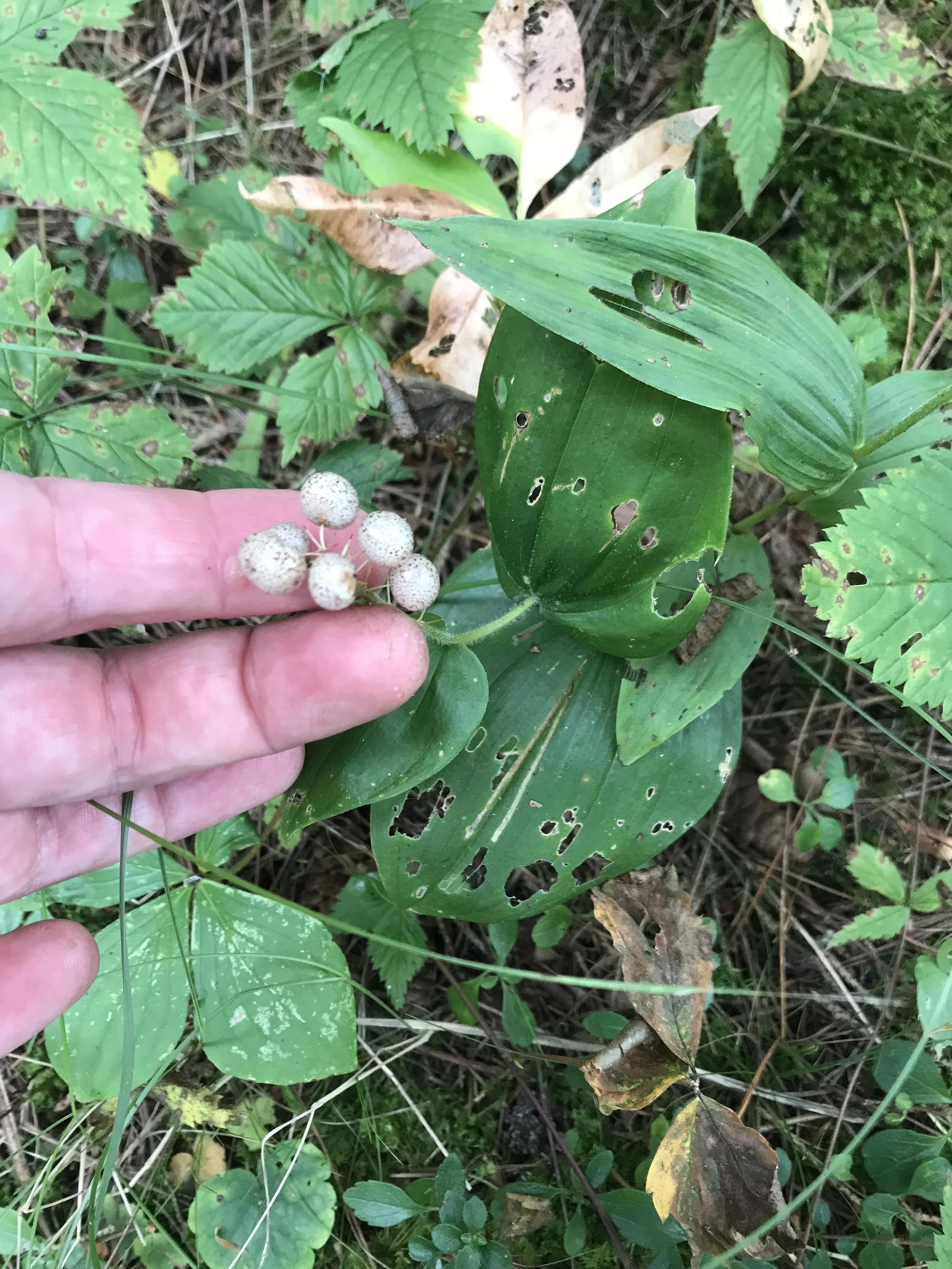
The flowers of this plant are white and bell shaped. The berries are first green and then bright red. They are edible and are just slightly sweet with a minty taste and full of tiny seeds.
Wintergreen has evergreen leaves, though in the fall they can turn red or brown as well. . The leaves host two moth species. Mammals and birds eat the berries and the leaves provide cover for ground-nesting birds including the Kirtland’s Warbler.
Wintergreen (Gaultheria procumbens)
Michigan Flora reference page for statewide distribution: Wintergreen
Height: 4-6 inches
Bloom time: June-July
Soil: loamy, sandy with decaying organic matter
Sun: part-sun to shade
Plant spacing: 6”
Flower: white
Life cycle: perennnial
Family: Ericaceae
Seed source: Michigan
Wintergreen, also known as Tea Berry is actually a tiny shrub which is found throughout the state of Michigan, found in dry savannah-like areas and also in areas of conifer swamps.
This is a plant I see often in my wanderings, but apparently didn’t take the time to photograph it well! When my kids were young, we hiked many miles of trails. One of the ways they would pass the time on long hikes was to put a crushed wintergreen leaf in their mouth. They said it helped to motivate them to keep going.
This plant is very slow growing, slow to spread by rhizome and likes acidic soil with decaying leaf matter in it. I read quite a few posts about people having a very hard time finding a spot where this plant could thrive. When I find a plant like this, if I’m unsure where to put it, I put it in a larger pot and take care of it that way.
The flowers of this plant are white and bell shaped. The berries are first green and then bright red. They are edible and are just slightly sweet with a minty taste and full of tiny seeds.
Wintergreen has evergreen leaves, though in the fall they can turn red or brown as well. . The leaves host two moth species. Mammals and birds eat the berries and the leaves provide cover for ground-nesting birds including the Kirtland’s Warbler.
Wintergreen (Gaultheria procumbens)
Michigan Flora reference page for statewide distribution: Wintergreen
Height: 4-6 inches
Bloom time: June-July
Soil: loamy, sandy with decaying organic matter
Sun: part-sun to shade
Plant spacing: 6”
Flower: white
Life cycle: perennnial
Family: Ericaceae
Seed source: Michigan
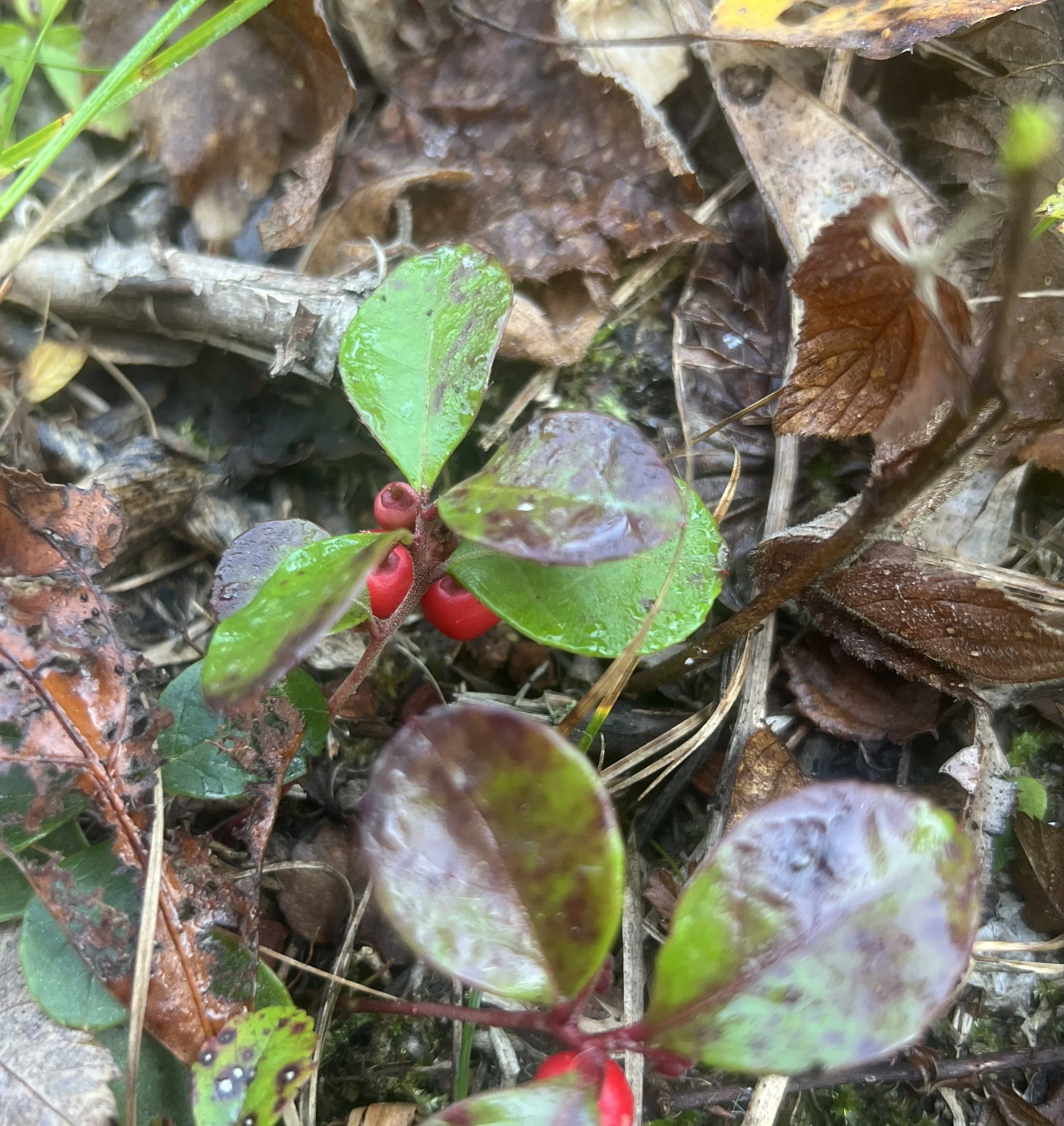 Image 1 of 5
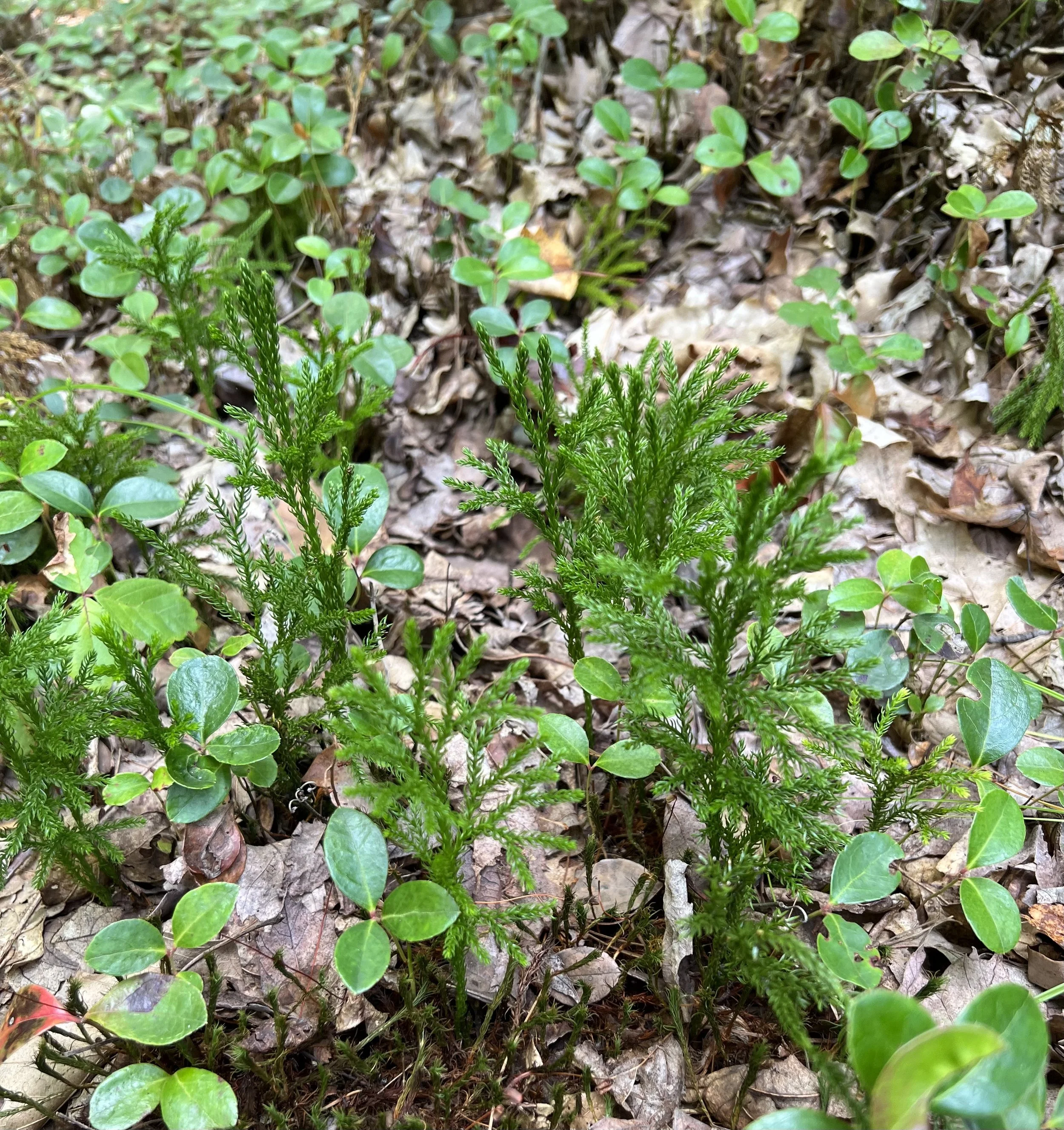 Image 2 of 5
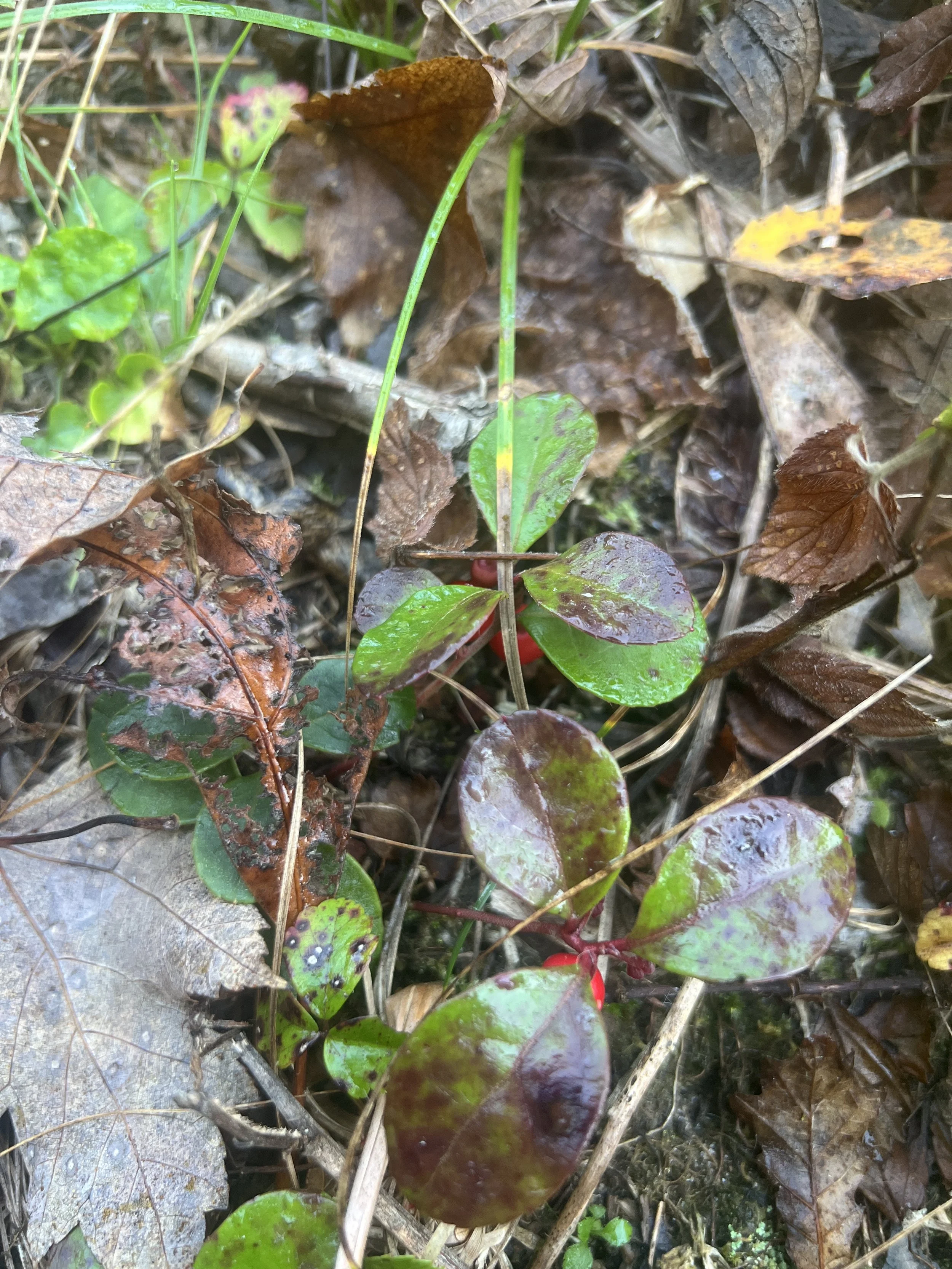 Image 3 of 5
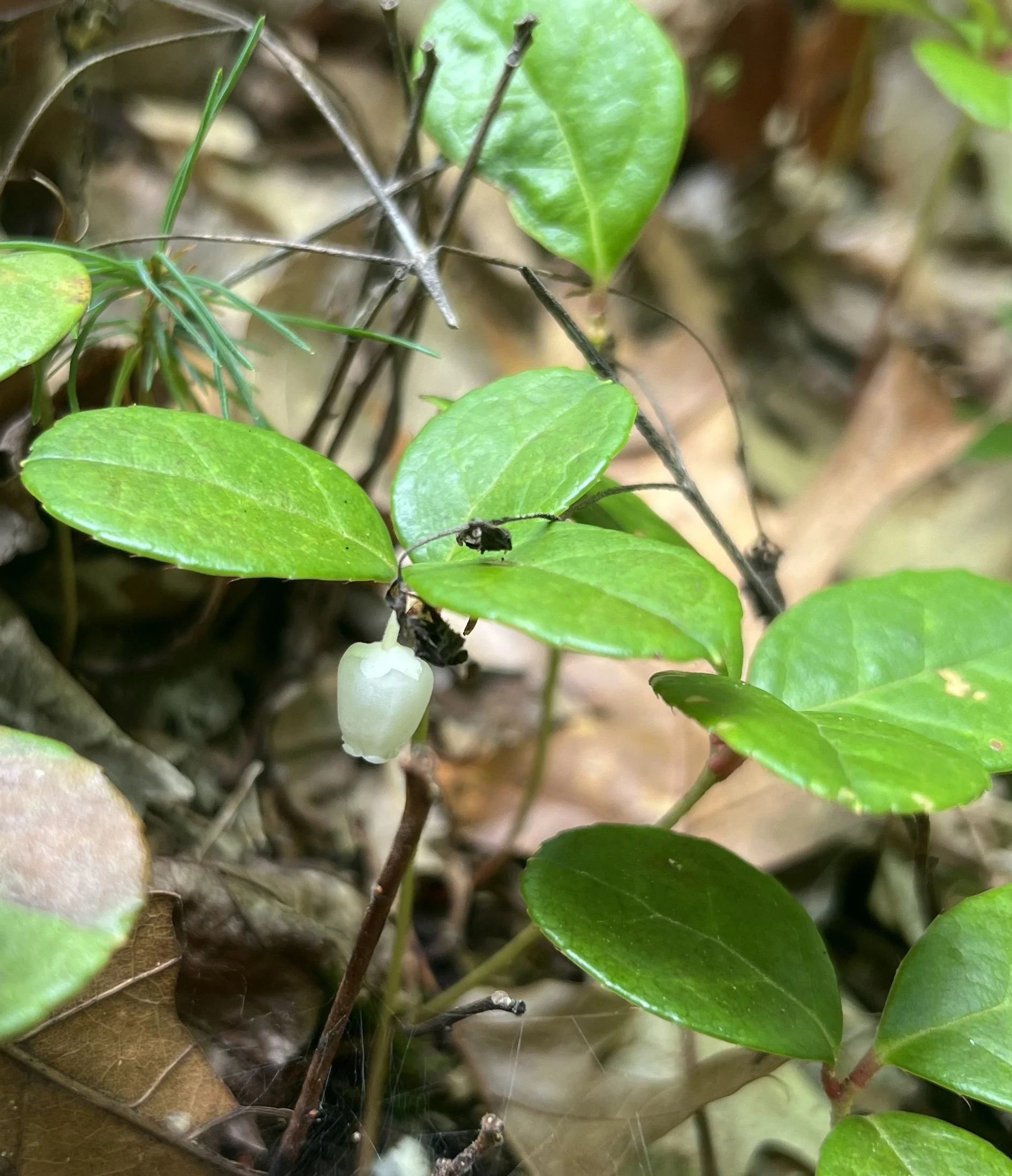 Image 4 of 5
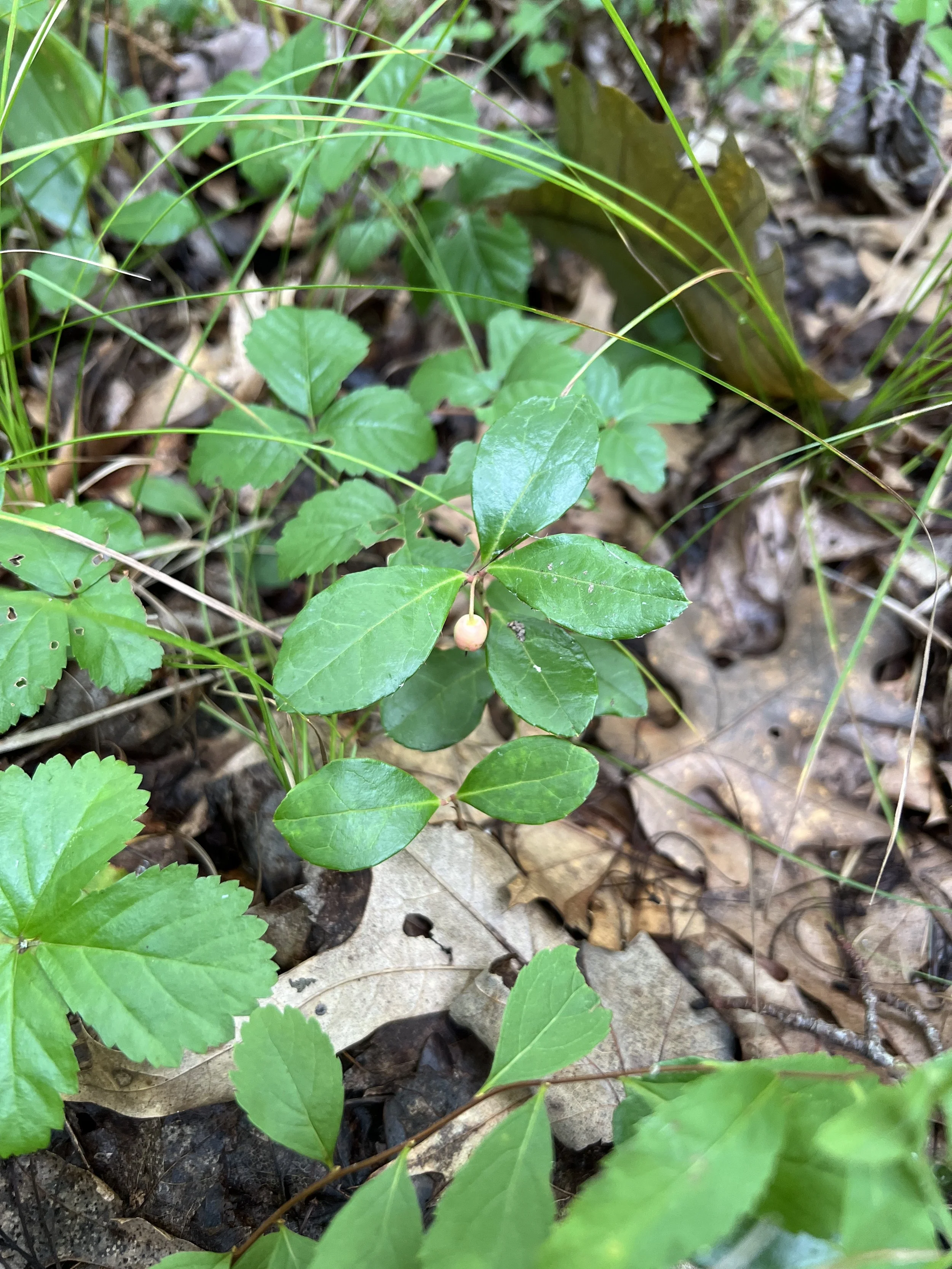 Image 5 of 5